The IRGC: Iran’s most powerful force that outwits formidable rivals, remains an enigma

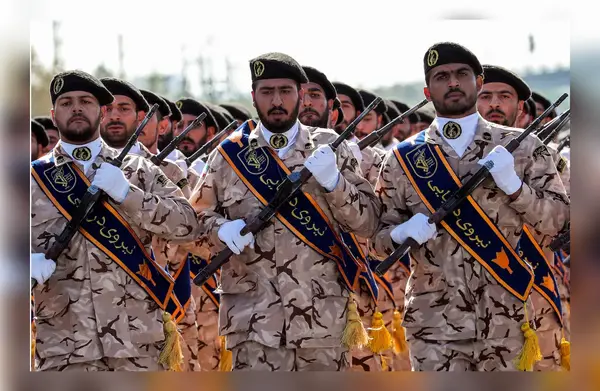
The IRGC was established by Ayatollah Ruhollah Khomeini in May 1979 after the Islamic Revolution Photograph: (AFP)
IRGC critics call it a “state within a state” and an opaque military-security complex that projects Iranian power to the world and wields massive influence over domestic politics and the economy. It is a military force, an intelligence organisation, and economic conglomerate.
Iran’s Islamic Revolutionary Guard Corps (IRGC) has been consistently in headlines since the start of the war with the US and Israel, but not much is known about it. Iran’s most powerful institution today is an enigma that stirs both fear and interest. Its critics call it a “state within a state” and an “opaque military-security complex” that projects Iranian power to the world and wields massive influence over domestic politics and the economy. The IRGC is a military force, an intelligence organisation, an economic conglomerate and a political power centre.
The IRGC was established by Ayatollah Ruhollah Khomeini in May 1979 after the Islamic Revolution, as he distrusted the regular Iranian military, believing it was still loyal to the monarchy he had overthrown. Khomeini created IRGC as a parallel military force to prevent any attempt to reverse the new political order.
The Iran-Iraq War propelled IRGC ahead
Soon the Iran-Iraq War broke out, and as it continued from 1980 to 1988, the IRGC became a formidable military force. The eight-year conflict saw the IRGC expand rapidly in manpower, develop a command structure and gain prestige through battlefield sacrifices.
By the end of the war, the Guards had become an indispensable pillar of the Islamic Republic.
Trending Stories
)
)
)
)
)
)
)
)
)
)
)
)
)
)
)
)
)
)
)
)
)
)
)
)
)
)
)
)
)
)
)
)
)
)
&im=FitAndFill=(700,400))
)
)
)
)
In the next four decades, the IRGC grew rapidly and built its own ground, naval and aerospace forces, independent of Iran’s conventional army. The Aerospace Force took charge of developing the ballistic missile programme and drone technology, both of which have become central to Iran’s military strategy. The IRGC Navy adopted tactics centred on swarms of fast attack boats and anti-ship missiles to challenge the bigger naval forces in the Persian Gulf.
The Quds Force, an IRGC arm, cultivated armed proxy groups
Similarly, the Quds Force, responsible for overseas operations, supports non-state actors like the Hezbollah, Hamas, Palestinian Islamic Jihad, the Houthis, and Shia militias in Iraq, Syria, and Afghanistan. It also deployed personnel in conflicts abroad like the Syrian Civil War and the Iraqi offensive against Islamic State.
IRGC gradually cultivated alliances with armed groups and governments across Iraq, Syria, Lebanon, Yemen and elsewhere and helped Iran build an ‘axis of resistance’ stretching across the region.
Increasing influence, blurring the lines between military authority and civilian governance
The IRGC then started spreading its tentacles and stealthily increased its influence in Iran’s economy by controlling construction firms, energy projects, telecommunications, banking, shipping and even manufacturing.
Its engineering conglomerate, Khatam al-Anbiya, secured major infrastructure contracts, making the Guards one of the biggest actors in Iran’s economy.
Also Read: Youngest delegate? Sweden’s minister Romina Pourmokhtari brings baby to EU meeting on climate
Besides, several former IRGC commanders entered politics, parliament and senior government positions, further blurring the lines between military authority and civilian governance.
The secretive, undecipherable and unknown aspects
However, in spite of its sweeping presence and influence, the IRGC remains highly secretive, and its internal chain of command is difficult to decipher.
The IRGC controls military planning and intelligence operations, but its influence on nuclear policy and domestic political decisions is not known for certain.
The IRGC has helped Iran adapt to sanctions, maintain covert supply routes and support allied groups despite sustained international pressure.
The US designated the IRGC as a Foreign Terrorist Organisation in 2019, but Iran insisted that the Guards are a legitimate branch of its armed forces.
IRGC’s role in the war with US and Israel
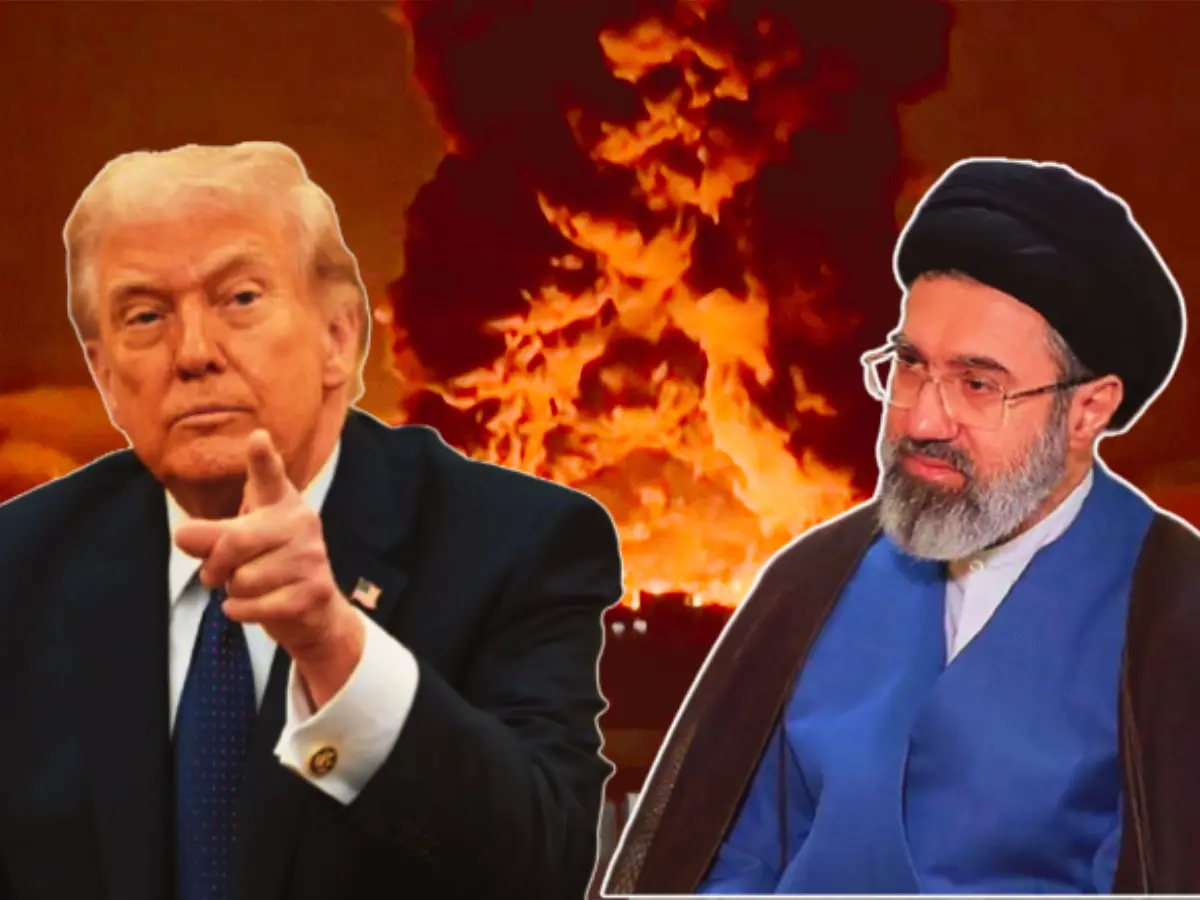
The IRGC has been taking on the United States and Israel in the military confrontation and coordinated Iran’s missile and drone attacks. Its Aerospace Force launched waves of ballistic missiles and long-range drones on Israel and US military assets in the Gulf.
Iran’s projectiles penetrated the formidable Israeli and US air defence systems, highlighting the scale and sophistication of Iran’s missile programme.
IRGC varied launch patterns and used different classes of missiles to test and overwhelm Israeli air defences.
Tehran directly targeted American military assets despite Washington’s overwhelming conventional superiority.
Resilience and operational continuity reinforce dominance in Iran
Israeli strikes eliminated several senior IRGC commanders and targeted military infrastructure, dealing one of the most significant blows to the Guards and exposing its vulnerabilities.
Even after the deaths of several senior commanders in 2025, the organisation demonstrated its institutional resilience by rapidly appointing successors and maintaining operational continuity.
The war further reinforced IRGC’s dominance within Iran’s political and security establishment and its influence over strategic decision-making grew even stronger.
The conflict concentrated power in Iran’s security institutions, as IRGC emerged as the principal architect of national security strategy.
Challenges military might of US and Israel
IRGC is no match for the combined conventional military capabilities of the US and Israel. The US has the world’s most powerful military, while Israel has an overwhelming technological superiority. The IRGC adopted the strategy of asymmetric warfare by using methods that exploited the adversary’s vulnerabilities rather than confronting its strengths directly.
Iran invested heavily in ballistic missiles, drones, cyber capabilities, naval swarm tactics and proxy forces across the Middle East, all relatively low-cost capabilities to tackle technologically superior adversaries.
Over three decades, the IRGC developed one of the largest ballistic missile arsenals in the Middle East. The sheer volume of launches strained sophisticated air defence systems like Israel’s Iron Dome, David’s Sling and Arrow networks.
Besides, the long-range drones provide precision-strike capabilities and psychological impact at a fraction of the cost of advanced fighter aircraft.
The West Asia conflict has shown that relatively inexpensive unmanned systems can threaten far more expensive military assets.
Also Read: 'Foolish violation of our ceasefire agreement': Trump claims drone attack on ships by Iran in Hormuz
However, the limits of the IRGC’s approach have also been exposed. Israel and the US repeatedly demonstrated their ability to penetrate Iranian intelligence networks, conduct precision strikes and target senior military leaders.
The IRGC focused less on achieving outright military victory than on prolonging the conflict and making it costly and politically difficult for its adversaries.
However, the most noteworthy development came when the US and Iranian negotiators sat down together in Switzerland after the MoU signing, and when Washington agreed to set up the deconfliction channel including CENTCOM and IRGC, which the US had designated as a Foreign Terrorist Organisation.