&imwidth=800&imheight=600&format=webp&quality=medium "The invisible poison: Why Iran’s collapse could contaminate the Middle East")
Imagine a country where all the police suddenly disappear. Things break down, buildings get damaged, and thieves roam freely. Now imagine that same country has nuclear materials dangerous enough to poison millions of people. This is exactly what the world fears could happen in Iran.
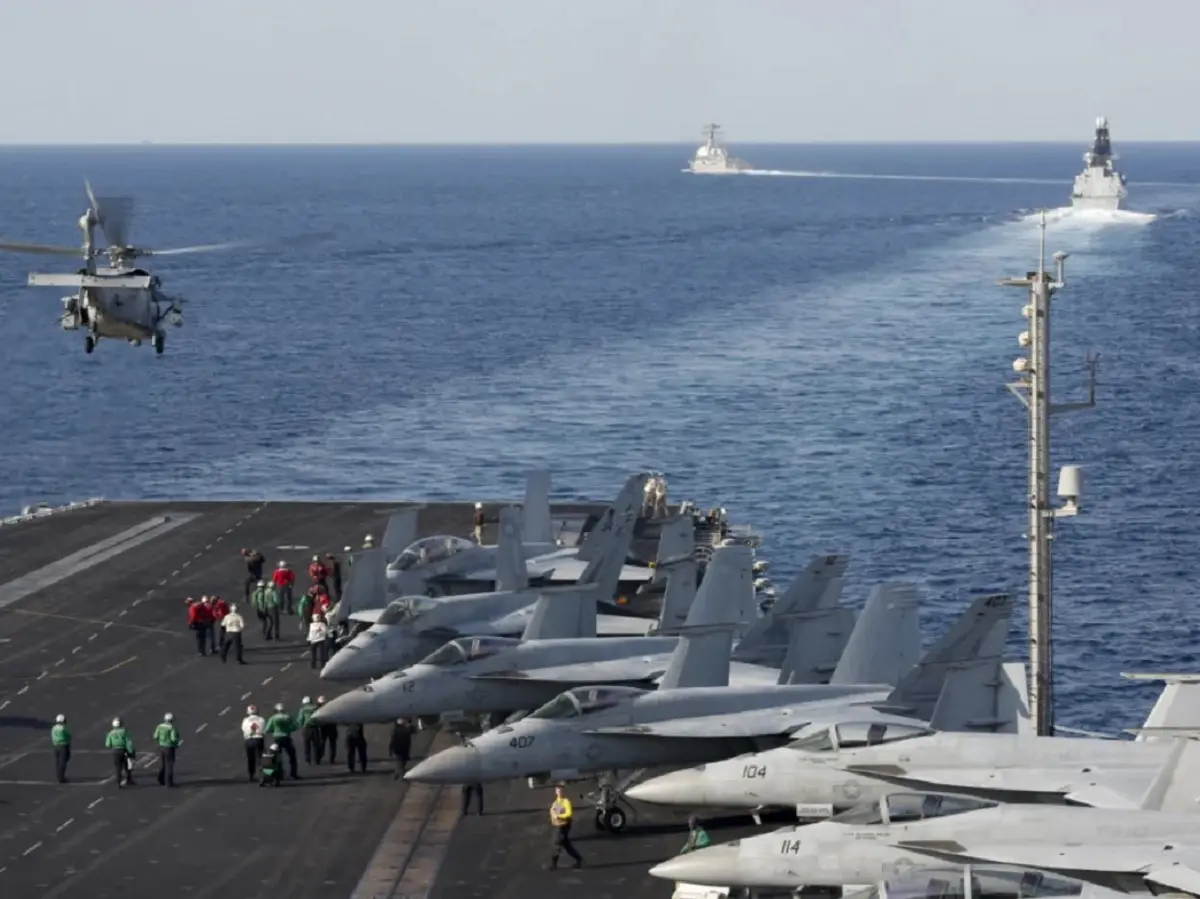
Recently, American President Donald Trump hinted on social media that a “massive armada” is heading towards Iran. The Wall Street Journal has reported that Trump’s administration is considering military action following Iran’s violent crackdowns on protesters. The American armada isn’t just for striking targets. Its presence might be the only way to launch risky “snatch and grab” teams to secure nuclear materials if chaos erupts. This is extremely worrying because Iran possesses large amounts of highly enriched uranium and operates nuclear reactors. If the government falls and chaos breaks out, these nuclear materials could fall into the wrong hands, creating a catastrophe affecting the entire world.
Think of highly enriched uranium like a loaded gun in a secure safe. As long as it’s locked, everyone is safe. But if the safe breaks open, anyone can grab it. Dangerous groups, militias, and terrorist organisations could steal these materials and create weapons of mass destruction. History proves this has happened before, and international experts are genuinely frightened.

Iran has approximately 1,000 pounds of uranium enriched to 60%. This doesn’t need much more processing to create a nuclear bomb. It’s like having the main ingredient ready for a bomb that could destroy an entire city. Scientists believe this material is hidden in tunnel complexes and damaged enrichment facilities. For determined terrorists or countries building nuclear weapons, stealing it could be worth the effort because it’s incredibly valuable on the black market.
Beyond uranium, Iran has the Bushehr nuclear power reactor still operating. Around it are large water-filled pools containing used nuclear fuel rods holding radioactive materials like cesium-137. Here’s what makes this terrifying: cesium-137 is the same radioactive material that made parts of Chernobyl, Ukraine uninhabitable for decades after the 1986 disaster. Decades later, people still cannot live there. If Iran’s pools are damaged, radiation could spread across huge areas, poisoning tens of thousands in Iran and nearby Gulf countries for many years. Wind carries radiation across borders without permission, affecting innocent people far away.
Iran also operates medical and research centres with highly radioactive materials that could be weaponised into “dirty bombs”. A dirty bomb combines regular explosives with radioactive material. When it explodes, it spreads deadly radiation everywhere, contaminating land and water. The damage isn’t as catastrophic as nuclear weapons, but it’s devastating enough to terrify entire cities.
Trending Stories
)
What’s in a name? Trump’s 'Lake America' move gets a tit-for-tat response from Canada
)
Outrage erupts after 3-year-old is married to 60-year-old man in Pakistan, link to her sister's murder being probed
)
Trump gifts Xi a bald eagle sculpture at White House dinner: Here’s what it symbolises
)
‘Not just a local tragedy’: Nepal PM Shah warns UN of growing climate threat, says Nepal floods were 'a warning to the world'
)
Farhan, who went viral for AK47 celebration vs India in Asia Cup, hopes to lead Pakistan beyond Asian Games
)
CNN, Politico and MS NOW back in White House after judge blocks Trump’s media ban
Don't Be Shy movie review: A frothy coming-of-age tale that is too shy to experiment
)
IIT Bombay CCTV footage emerges: Sahil Wakode seen looking at phone in examination hall
)
Tesla is preparing something big for Optimus: new Gen 3 models surface in app
)
Bias or safety concerns? Bengaluru CEO says firm will not hire men from UP, Bihar, Rajasthan, MP. Here's why
)
Trump's welcome to Xi demonstrates 'attraction' to dictators: Chuck Schumer
)
Nations League: Germany draw on Klopp debut; Portugal, Norway win
)
WION Iconic Tourism Summit 2026: Union Minister Shekhawat on 'experiential travel', peace diplomacy
)
Scientists detect first radio signals directly from faraway planet
)
A seven-day roadmap? Iran proposes plan to end war, reopen Strait of Hormuz and resume nuclear talks
)
China to test supersonic jet that moves at Mach 2, double the speed of sound
)
The Vvaan Review: This Ekta Kapoor's Tulsi Virani-coded world can't be saved by Sidharth Malhotra and Tamannaah Bhatia
)
Xi Jinping's 'special plane' vs Trump's Air Force One: What's the difference?
)
UNGA 2026: Israeli PM attacks Britain, France for past colonialism
)
West Indies coach Sammy looking at India series as opportunity to finetune ahead of ODI World Cup 2027 qualifiers
)
‘We’ve never gotten along better’: Trump praises Xi, jokes about White House ballroom at high-stakes state dinner
)
Air India pilot suspended after failing pre-flight alcohol test on Zurich-Delhi route
)
Yemen called Trump for US military support in fight against Houthis: Official
)
2,000-foot tube, laser tests and more: China builds towns to expand nuclear arsenal, satellite images show
)
Meet Adrian Abraham: 9-year-old Indian-origin guitar prodigy aiming for a Guinness World Record
)
US faces fresh cost crunch as mortgage rates hit 7%, oil tops $107 and gas prices surge
)
'Blockbuster' nor'easter develops an eye similar to hurricanes as warnings are issued
)
Alarming video emerges as landslide damages houses in Sikkim’s Rimbi village. Watch
)
OpenAI is building AI to fight cyber threats: What GPT-6 Cyber means for security
)
'Making history': Xi Jinping praises Trump as US-China leaders dine at White House
)
'What kind of confession is this?': Pakistan PM Shehbaz Sharif’s 'terrorists would be roaming New York' remark goes viral, raises alarm online. Watch
&im=FitAndFill=(700,400))
Netanyahu at UN: Mass walkout, attack on Mamdani and Iran threats | In Pics
)
'We do not wish to continue. It's America that must choose': Iran president Pezeshkian calls on US to end war
)
WION Iconic Tourism Summit: How local tourism MSMEs must upskill for AI integration
)
Bollywood mourns Mushtaq Khan: Sunny Deol, Rajpal Yadav and others pay tribute
)
'FIRST LOOK from inside Noah’s Ark': Researchers share video from inside mysterious mound in Turkey
)
Israeli envoy to US Yechiel Leiter’s son critically injured in West Bank ramming attack
)
'Fund people, not bombs': Hundreds take to New York streets as Netanyahu delivers speech at UN; dozens arrested
)
Here’s where history becomes our teacher. When the Soviet Union collapsed in 1991, the world could have experienced a nuclear disaster. But there’s a crucial lesson: America couldn’t simply march in and grab everything. The crumbling Soviet government actually cooperated. Both sides worked together through the Cooperative Threat Reduction Program. America spent hundreds of millions of dollars helping Russia, Ukraine, Belarus, and Kazakhstan secure their nuclear materials and warheads. The Soviet leaders maintained order while handing over control. This cooperation made everything safer and more organised.
But with Iran, if the government completely collapses, there might be nobody left to cooperate with. Nobody in charge. Nobody agreeing to anything. Countries might need aggressive action—what experts call “snatch and grab” or “seal and secure” operations. In simple terms, armed teams would rush in, secure dangerous materials, and seal off dangerous sites without waiting for permission. This is why the armada matters. Its military presence provides the protection and firepower needed for such risky operations. It’s dangerous and messy, but it might become necessary if everything falls apart completely.
In Iraq after the 2003 invasion, the Tuwaitha nuclear complex was left unguarded for days. Local people broke in and stole materials. This showed what happens when nobody acts quickly enough to protect nuclear sites from chaos and looters.
South Africa offers hope. In the early 1990s, when apartheid ended, the government carefully dismantled its nuclear weapons programme. They planned and supervised everything properly with international oversight.
Right now, America and its allies face a dangerous choice. They must prepare emergency plans immediately. If Iran’s government remains stable enough to cooperate, that’s the safest path forward. But if chaos erupts, the world must be ready to move fast. The armada standing by isn’t a threat alone—it’s insurance that rapid action can happen when needed. Either way, waiting does nothing. The clock is ticking, and the stakes have never been higher.
(Girish Linganna is an award-winning science communicator and a Defence, Aerospace & Geopolitical Analyst. He is the Managing Director of ADD Engineering Components India Pvt. Ltd., a subsidiary of ADD Engineering GmbH, Germany)
(Disclaimer: The views of the writer do not represent the views of WION or ZMCL. Nor does WION or ZMCL endorse the views of the writer.)