'Stop doing memes': Carney urges Trump administration to get serious on trade talks

&imwidth=600&imheight=450&format=webp&quality=medium "'Stop doing memes': Carney urges Trump administration to get serious on trade talks")
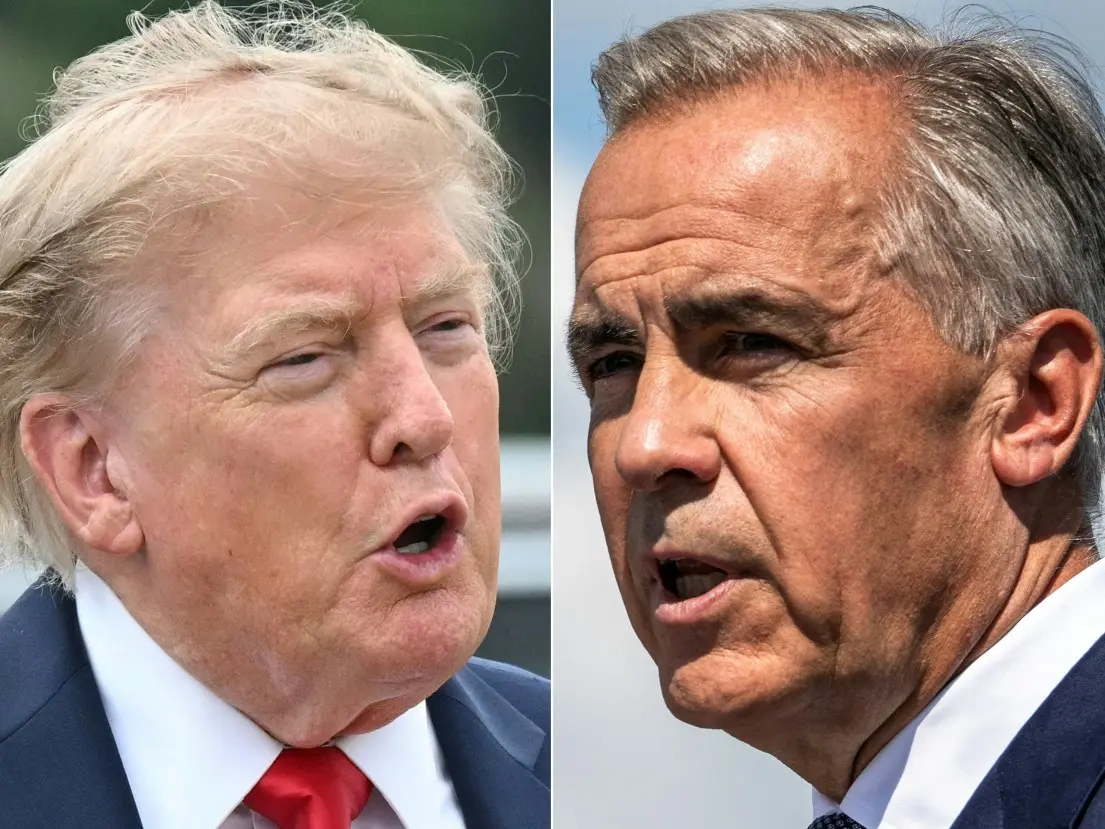
Donald Trump and Mark Carney Photograph: (AFP)
Mark Carney tells Donald Trump to ‘stop doing memes’ as Canada rejects US trade demands and tensions rise over tariffs, sovereignty and industry
Canadian Prime Minister Mark Carney has urged the Trump administration to take a more serious approach to trade negotiations, telling Washington to ‘stop doing memes, stop throwing shade and stop trying to be tough’ following another round of public attacks against Canada. Carney said trade talks could resume if US President Donald Trump and his administration approach negotiations seriously. However, he warned that some of Washington's demands could leave Canadian industries ‘gradually wound down in Canada and wiped out’.
"When the Americans stop doing memes, stop throwing shade and stop trying to be tough, and start being serious about having those discussions, we can have those discussions," Carney said. “It’s not constructive, but that’s their democracy.” Tensions between Ottawa and Washington have intensified since trade negotiations broke down on Aug. 21. Since then, Trump has continued his public criticism of Canada, including his move to rename Lake Ontario "Lake America" and repeated comments about Canada on social media.
US Treasury Secretary Scott Bessent has also dismissed Canada's ability to respond to the United States on an equal footing, saying Ottawa could not go ‘tit for tat’ against an economy 13 times larger. The rhetoric escalated further Monday when US Secretary of War Pete Hegseth mocked Canada's military in an online post featuring an image of two female cadets in British Columbia with the caption “this is real.” Carney criticised the post, describing it as "beneath their office." The Pentagon responded Tuesday by saying, "The X post speaks for itself."
Also Read: 'Russian sky is becoming completely dangerous': Zelensky warns as Ukraine steps up drone strikes
Carney rejects US trade demands
Carney said some of the US proposals would effectively force Canadian companies to operate as subsidiaries of American firms or leave them vulnerable to being eliminated from the Canadian market. "Canada is a sovereign state. We will strike free trade deals with the countries we wish to strike free trade deals," Carney said.
Trending Stories
&imwidth=280&imheight=210&format=webp&quality=medium)
&imwidth=280&imheight=210&format=webp&quality=medium)
&imwidth=280&imheight=210&format=webp&quality=medium)
&imwidth=280&imheight=210&format=webp&quality=medium)
&imwidth=280&imheight=210&format=webp&quality=medium)
&imwidth=280&imheight=210&format=webp&quality=medium)
&imwidth=280&imheight=210&format=webp&quality=medium)
&imwidth=280&imheight=210&format=webp&quality=medium)
&imwidth=280&imheight=210&format=webp&quality=medium)
&imwidth=280&imheight=210&format=webp&quality=medium)
&imwidth=280&imheight=210&format=webp&quality=medium)
&imwidth=280&imheight=210&format=webp&quality=medium)
&imwidth=280&imheight=210&format=webp&quality=medium)
&imwidth=280&imheight=210&format=webp&quality=medium)
&imwidth=280&imheight=210&format=webp&quality=medium)
&imwidth=280&imheight=210&format=webp&quality=medium)
&imwidth=280&imheight=210&format=webp&quality=medium)
&imwidth=280&imheight=210&format=webp&quality=medium)
&imwidth=280&imheight=210&format=webp&quality=medium)
&imwidth=280&imheight=210&format=webp&quality=medium)
&imwidth=280&imheight=210&format=webp&quality=medium)
&imwidth=280&imheight=210&format=webp&quality=medium)
&imwidth=280&imheight=210&format=webp&quality=medium)
&imwidth=280&imheight=210&format=webp&quality=medium)
&imwidth=280&imheight=210&format=webp&quality=medium)
&imwidth=280&imheight=210&format=webp&quality=medium)
&imwidth=280&imheight=210&format=webp&quality=medium)
&imwidth=280&imheight=210&format=webp&quality=medium)
&imwidth=280&imheight=210&format=webp&quality=medium)
&im=FitAndFill=(700,400)&imwidth=280&imheight=210&format=webp&quality=medium)
&imwidth=280&imheight=210&format=webp&quality=medium)
&imwidth=280&imheight=210&format=webp&quality=medium)
&imwidth=280&imheight=210&format=webp&quality=medium)
&imwidth=280&imheight=210&format=webp&quality=medium)
&imwidth=280&imheight=210&format=webp&quality=medium)
&imwidth=280&imheight=210&format=webp&quality=medium)
&imwidth=280&imheight=210&format=webp&quality=medium)
&imwidth=280&imheight=210&format=webp&quality=medium)
"We’re not going to, of course, we’re not going to accept those terms," Carney said. The prime minister described several US demands as unacceptable, particularly proposals involving Canada's auto industry. He said Washington was seeking an "uncompetitive" arrangement that could weaken Canadian businesses.
Carney also identified proposed restrictions involving French-language protections as a potential dealbreaker. Washington had additionally sought limits on Canada's ability to negotiate future trade agreements with other countries. Despite the collapse of negotiations, Carney said the discussions had included some "mutually beneficial" elements that could potentially provide a basis for future talks.
Liberal wins strengthen Carney's position
Carney's comments came after the Liberal Party won all three special elections held Monday, including a victory in Chicoutimi-Le Fjord, Quebec, where the Conservatives finished third. The results leave the Liberals with 173 of the 343 seats in the House of Commons, giving Carney additional political strength as he confronts Washington over trade, economic security and Canadian sovereignty. Nelson Wiseman, professor emeritus of political science at the University of Toronto, said: "Quebecers have the most to lose in an apocalyptic scenario where the US absorbs Canada, and the status of the French language disappears."
Tariffs add to Canada-US tensions
The failure of negotiations has already produced new tariffs. Trump imposed 50% tariffs on $20 billion worth of Canadian goods after the talks collapsed. Canada is set to introduce retaliatory tariffs on $20 billion in US goods beginning Sept. 8. The Canadian measures will range from 15% to 50%. The escalating trade dispute comes as Trump continues to publicly discuss the possibility of Canada becoming the 51st US state, adding another layer to an increasingly tense relationship between the two North American neighbors. For now, Carney has signaled that Canada remains open to negotiations, but only if Washington returns to the table with what Ottawa considers serious and mutually workable terms.

