&imwidth=800&imheight=600&format=webp&quality=medium "India's power move near Malacca Strait: How Great Nicobar project can checkmate China")
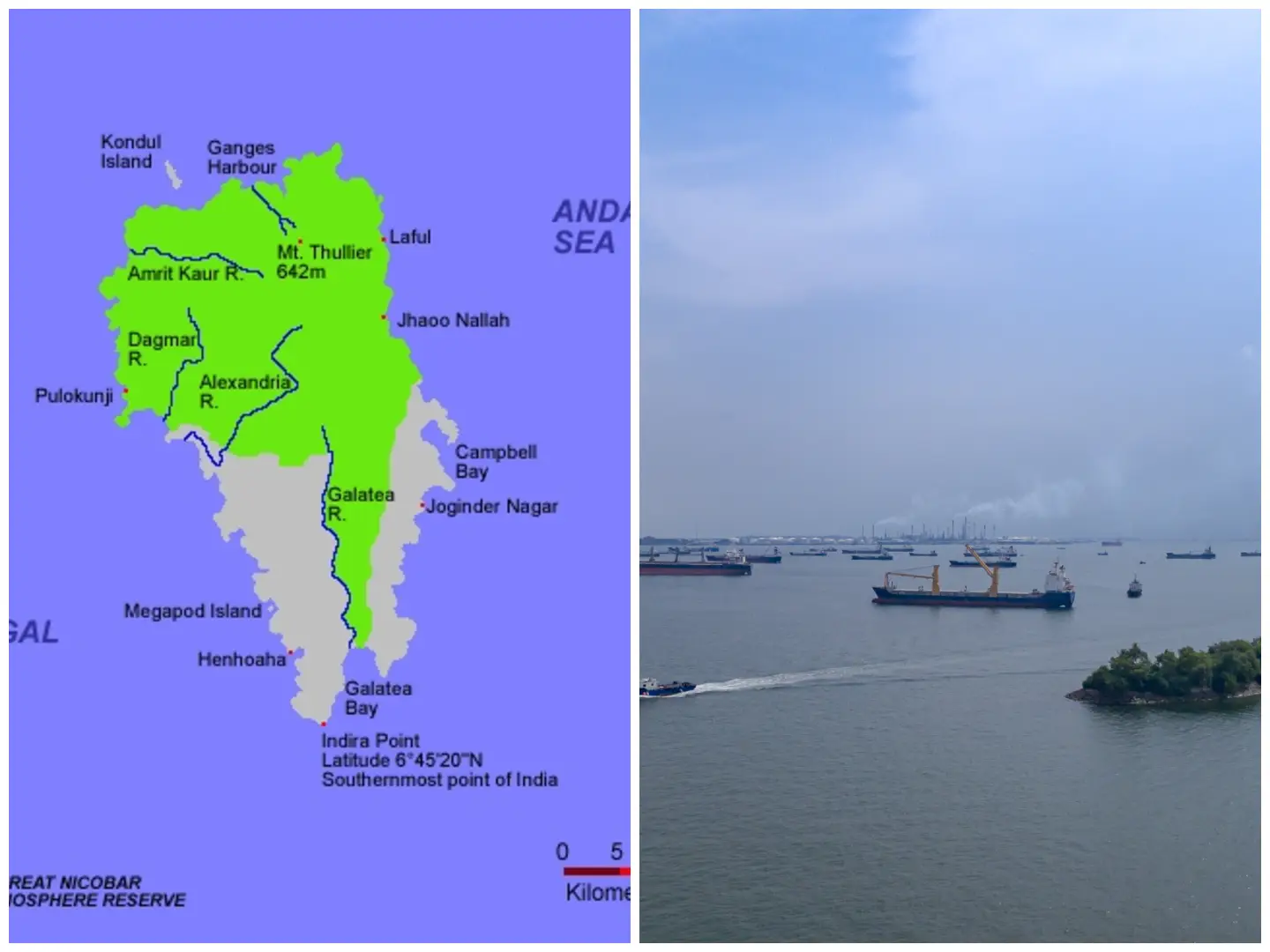
India’s $10 billion Great Nicobar Island Development Project, a commercial-military initiative, could alter the strategic balance in the Indo-Pacific, as it may emerge as New Delhi's observation point for Chinese commercial and energy ships passing through the Strait of Malacca. Recent media reports and analysis have highlighted how the military and commercial infrastructure developments in India's southernmost point could alter geostrategic and defence equations in the Indo-Pacific region. Here is what you should know.
Why the Strait of Malacca is important for China
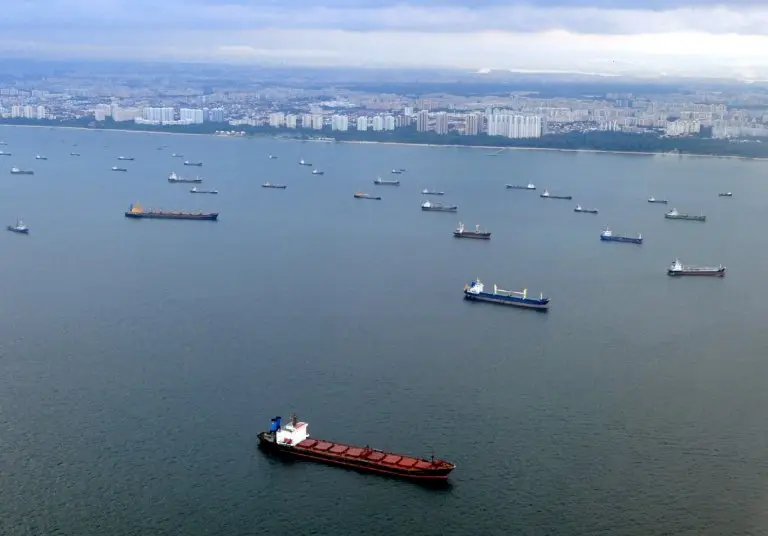
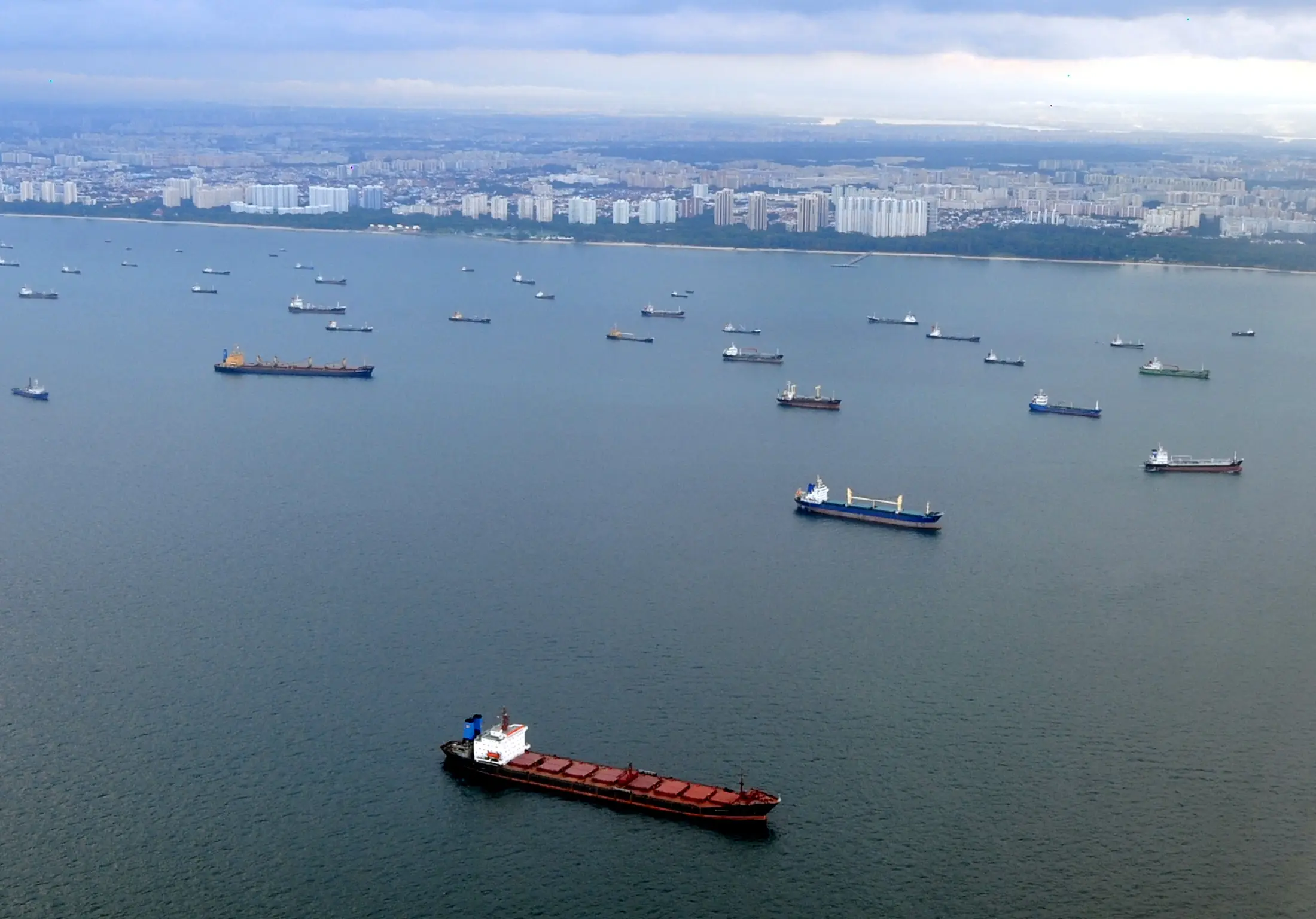
About $3.5 trillion in global trade moves through the Strait of Malacca every year, including around two-thirds of Chinese maritime traffic. One of the world’s narrow maritime chokepoints - only 2.8 km wide at its narrowest point - the Strait of Malacca is used by China to ship 80 per cent of its oil imports each year. The potential blocking or disruption of this strait in the event of a conflict, such as over Taiwan, is a major strategic concern for China.

Why the Great Nicobar project is a power move by India
Great Nicobar Island, the southernmost point of Indian territory, lies near the northern approaches to the Strait of Malacca and overlooks the Six Degree Channel, through which much of Chinese maritime trade passes. India launched the Great Nicobar project in 2021. Construction is progressing on a deep-water transhipment port at Galathea Bay, an international airport, township infrastructure, and a 450 MVA gas- and solar-based power plant. With a natural depth of 18–20 metres, the port is planned to handle 4 million Twenty-foot Equivalent Units by 2028.
Trending Stories
&im=FitAndFill=(700,400))
National Handloom Day 2026: From Alia Bhatt to Samantha Ruth Prabhu; Actresses who celebrated India's textile heritage as brides
)
The Royals enter the Doctor Who universe: King Charles and Queen Camilla beam into Commonwealth Games in TARDIS
)
Unitree Robotics targets $9 billion valuation in landmark IPO backed by DeepSeek and Tencent
)
India names 27 sites in Arunachal Pradesh
)
Bharat Bhhagya Viddhaata OTT: When will Kangana Ranaut's film stream online?
&im=FitAndFill=(700,400))
How many soldiers operate one S-400 battery?
)
Shakib Al Hasan ready to return to Bangladesh—under one condition
)
‘Fake news’: MEA rejects report claiming India sought defence pact with Israel after Pakistan, Saudi Arabia, Turkey deal
)
Rockstar to unveil GTA 6 extended look ahead of November launch
)
Russia forms Ukrainian Volunteer Spetsnaz Brigade to fight Ukraine
)
Drug-resistant fungus that hides in hair and enters bloodstream reported in 23 US states
)
Technology transfer deal boosts India's defence manufacturing ambitions
)
Border row erupts in Europe after Ceuta crossings, Spain imposes border controls on Italy
)
Morale plummets on USS Abraham Lincoln: Are US sailors reaching a breaking point? | GRAVITAS
)
'Security can't be bought with Pakistan, Turkey deal': Iran tells Saudi Arabia
)
Baba Vanga's 2026 prophecy: 2 predictions 'already came true', 3 terrifying ones remain. Details inside
)
Colombia’s new president Abelardo de la Espriella vows to ‘defeat narco-terrorists’, signals hardline shift
&im=FitAndFill=(700,400))
New Friday OTT releases (August 7, 2026): Operation Safed Sagar, Vadhandhi, Main Vaapis Aaunga- 6 movies and TV shows on Netflix, Prime Video and more
)
Squadron Leader Bhawana Kanth scripts history as Indian Air Force gets its first woman ‘Top Gun’ pilot
)
RSS says Gen Z protests reflect genuine distress
)
Trump says Iranian school bombing photos could be AI-generated - 'I don’t think...'
)
IAF officer held for sharing sensitive information in 'honey trap' case, booked under Official Secrets Act
)
Stray Kids under scrutiny? Fans react to Grammy submission silence after BTS boycott
&im=FitAndFill=(700,400))
Why the Su-30MKI doesn't need external fuel tanks to fly vast distances
)
Jugal Hansraj reunites with Shekhar Kapur after 40 years for Masoom: The Next Generation
)
New speed limits, automatic challans: Big traffic change coming to Delhi-Meerut Expressway. All you need to know
)
India officially names 27 places in Arunachal to counter China's renaming claims
)
Trump calls White House ballroom ruling a 'national disgrace' as court says Congress approval needed
)
US sanctions Iran’s crypto network after Strait of Hormuz attacks, offers $15m bounty for intel on IRGC finance
&im=FitAndFill=(700,400))
Why the Su-30MKI is one of the heaviest fighters ever built
)
Uttarakhand young innovator builds India's own flying vehicle, conducts first test flight: WATCH
)
Chilling video shows students take cover as teen opens fire at Thai school
)
Reese Witherspoon's father hospitalised after poolside incident in Nashville: Report
Military significance of the Great Nicobar project
But the real story is about the emerging Indian military capabilities in Great Nicobar, which could soon become a major naval hub capable of monitoring Chinese ship movements, both commercial and military, including submarine activity. To this extent, there are already signs of India expanding strategic facilities across the Andaman and Nicobar Islands, of which Great Nicobar Island is a part. The recent developments include the building of a second airfield at Chingen, expansion of INS Baaz — the southernmost air station of the Indian Armed Forces — at Campbell Bay, new radar and underwater surveillance systems, and improved naval communications infrastructure.
China is likely to view these developments as threats to its sea lines of communication during a conflict. Chinese shipping routes from the Middle East pass close to India’s maritime zone, and India could potentially monitor or restrict Chinese energy flows from the vantage point of Great Nicobar.
China’s infrastructure projects can be seen as attempts to build alternatives to the Strait of Malacca
The Belt and Road Initiative, China’s massive infrastructure project involving multiple nations, could be interpreted as an attempt to create alternatives to the Strait of Malacca for its commercial and energy shipment needs. China’s efforts to create a network of ports and infrastructure across the Indian Ocean include Gwadar in Pakistan, Hambantota in Sri Lanka, and Kyaukphyu in Myanmar. This is part of China’s decades-long “string of pearls” strategy, which India could now counter with its moves in Great Nicobar.
Andamans could emerge as India’s new commercial shipping hub
Once fully developed, the commercial aspect of the Great Nicobar project, particularly the transhipment hub, could reduce India’s dependence on foreign logistics infrastructure for moving its cargo, 25 per cent of which currently passes through foreign ports.
This could help India emerge as a commercial competitor along the sea lines of communication between the Indian Ocean and the Strait of Malacca.
With this strategic move in the Andamans, India may evolve from a passive power in the Indo-Pacific into one capable of influencing or disrupting some of China’s most vital trade and energy routes.