

&imwidth=800&imheight=600&format=webp&quality=medium "Homegrown navigation system to cover area from Africa's East Coast to Malacca: Indian Army General")
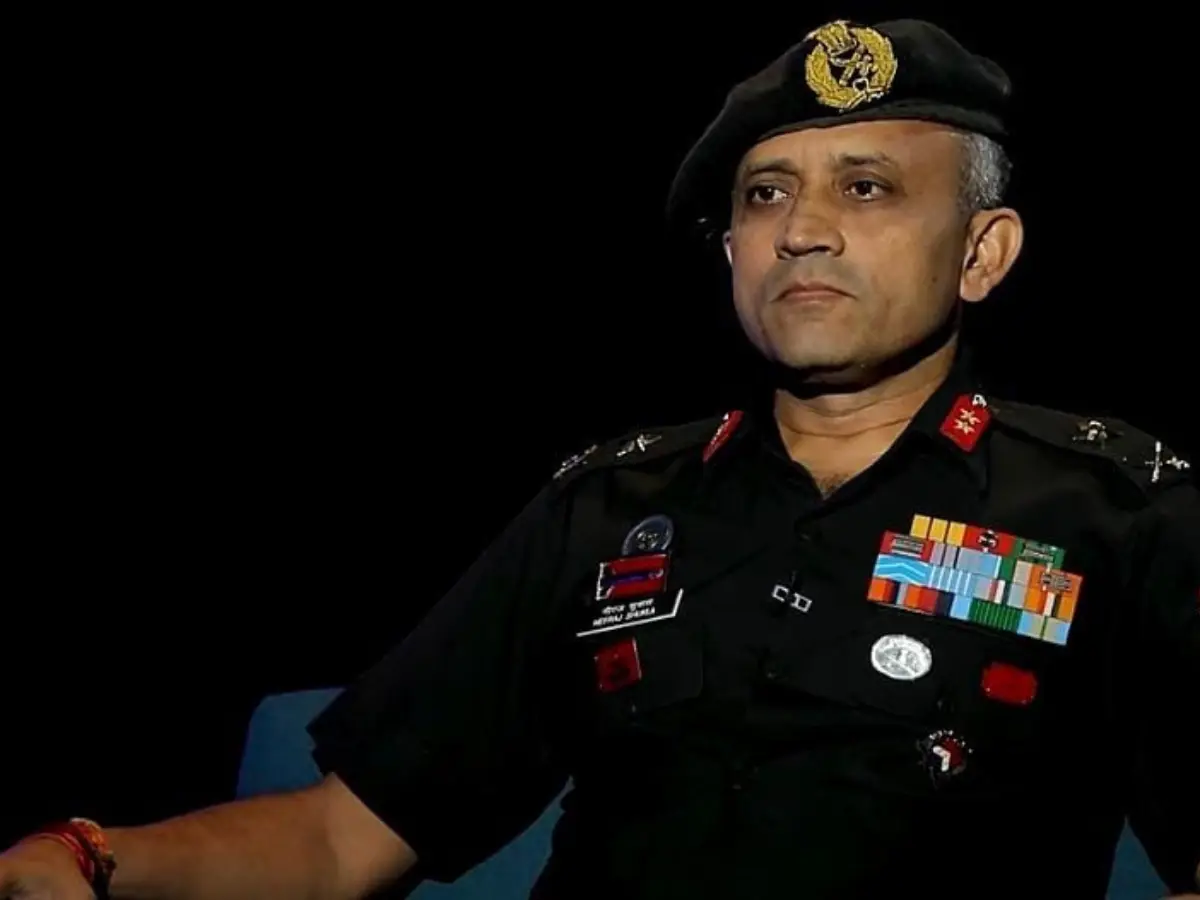
Top Indian Army official, Major General Neeraj Shukla, ADG-Strategic planning, Indian Army has pointed to Indian Army's focus on self-reliance, technology infusion and focus on space domain as part of "decade of transformation" policy that is underway. Speaking to WION's Sidhant Sibal on WION podcast, Major General said, "we have launched it with NavICor Indian Regional Navigation Satellite System (IRNSS), it is supposed to be a constellation of seven satellites. Now out of seven, four are already in place. By February, March next year, we will have three more satellites", pointing that "by any chance, if we are denied the accessibility of GPS, we will have our own regional satellite system, which will give us communication, mobile communication, satellite communication from the East Coast of Africa to Malacca Strait".
He spoke about the upcoming Chanakya Defence Dialogue, the annual international seminar organized by the Indian Army which brings together strategic experts, policymakers, scholars, and representatives from defense, government etc. He pointed, "this year, we are going to be the third edition of Chanakya defense dialog. All the continents of Earth are covered. So we have speakers from all across the continent and we have great speakers, great leaders, great thinkers who are coming together". Ahead of that, on 31st Oct, Dialogue is the Young Leaders Forum -‘Veer Yuva" will take place with the participation of NCC cadets, and top policymakers. Full interview.
In a candid and frank conversation, he explained how "the character of war is changing faster than what changed earlier" and the Indian Army is gearing up for it.
Excerpts from the full interview:
Sidhant Sibal: Sir, India has embarked on a journey to be a developed nation by 2047. How is the Indian Army aligned with this Vision of Viksit Bharat in 2047?
Major General Neeraj Shukla: Thanks Sidhant for having me over. It's a pleasure, and more so to give out the narrative of the Indian Army about being aligned with the vision of Viksit Bharatin 2047. It goes without saying that the military, armed forces are the first ones to start looking at the national objective. We derive our strength from the national objective. So in 2023 on 15th of August, when the Prime Minister announced for the first time on the ramparts of Red Fort about his mission and vision of Viksit Bharat, Indian army around the same time, announced the year of transformation. It was our former Chief, General Pandey, who first announced it, and laid down certain parameters under which we will transform ourselves for modern war fighting. Then this was followed by our present chief, General Dwivedi, when he took over last year. He felt that transformation is a long run process, while the ball has been set rolling, but it will require about a decade to incorporate all the technology to bring about the changes in the tactics, techniques and procedures. So we coined the term, and we thought that it would take about a decade. So we came up with a decade of transformation that started last year. Then this year as part of the major construct of decade of transformation, our honorable Raksha Mantri, felt that we need to have certain catalysts put in certain focus areas so that we are able to achieve things faster. So we came up with a year of reforms. So this year, our honorable Raksha Mantri gave us nine parameters under which we were to focus on for this year. So if you have a look from 2023 just about the time when the Prime Minister started, gave us the vision, national vision, we were also embarking on our journey for transformation. And finally, we have aligned ourselves with the vision of 2047 when we say that we will be a modern army, a futuristic army which is able to carry out effective deterrence and combat into multi domain operations. So as we grow economically, we also need to have a modern military which is able to support our economic rise and provide that security umbrella for the growth of the country.
Trending Stories
&imwidth=180&imheight=135&format=webp&quality=medium)
Other Mommy leads North American box Office as Verity, Resident Evil round out top four
&im=FitAndFill=(700,400)&imwidth=180&imheight=135&format=webp&quality=medium)
Navratri 2026: 9 days, 9 forms of Goddess Durga and 9 colours- Check the complete list
&imwidth=180&imheight=135&format=webp&quality=medium)
Anti-SIR protest in Mumbai: Protestors wear black masks & ribbons in Mumbai
&imwidth=180&imheight=135&format=webp&quality=medium)
BCCI rejects venue shift reports, India vs Sri Lanka 1st ODI to remain in Delhi
&imwidth=180&imheight=135&format=webp&quality=medium)
Diljit Dosanjh’s Delhi concert gets a new date: When and where to catch the singer
&im=FitAndFill=(700,400)&imwidth=180&imheight=135&format=webp&quality=medium)
Is sending robots to Mars easier than sending humans?
&imwidth=180&imheight=135&format=webp&quality=medium)
A watchdog rated 'ChatGPT for Teens' an unacceptable risk and says keep under-18s off it
&imwidth=180&imheight=135&format=webp&quality=medium)
1,500 drones illuminate Mumbai sky as Cordelia Cruises unveils second ship, Cordelia Sky
&imwidth=180&imheight=135&format=webp&quality=medium)
'Just coincidence': Police mistakes protester as AISA chief Neha Bora, arrests her from site
&imwidth=180&imheight=135&format=webp&quality=medium)
Anthropic's AI invented a murder witness and sent the fake tip to Philadelphia police
&imwidth=180&imheight=135&format=webp&quality=medium)
Congress demands action against chief election commissioner
&imwidth=180&imheight=135&format=webp&quality=medium)
CJI Surya Kant declines INDIA bloc leaders’ request for meeting ahead of march to SC, asks them to file petition
&imwidth=180&imheight=135&format=webp&quality=medium)
Saif Ali Khan is finally on Instagram! Here's what he shared in his first post
&imwidth=180&imheight=135&format=webp&quality=medium)
'Turn approver, resign, we'll forgive you': Rahul Gandhi claims receiving messages from CEC Gyanesh Kumar
&imwidth=180&imheight=135&format=webp&quality=medium)
One Indian killed in Riyadh airport attack; 11 others injured : MEA
&imwidth=180&imheight=135&format=webp&quality=medium)
Top AI models flunked a test of inventing new AI research, so much for self-improving AI
&imwidth=180&imheight=135&format=webp&quality=medium)
Wasim Jaffer blames Ajit Agarkar-led selection panel for Virat Kohli’s Test retirement
&imwidth=180&imheight=135&format=webp&quality=medium)
'Ouch!!! That must hurt': Kangana Ranaut hails Kamal Haasan's sharp reply to Elon Musk over Starlink row
&imwidth=180&imheight=135&format=webp&quality=medium)
Sidhu Moose Wala’s younger brother wins hearts by recreating late singer’s signature move at Toronto Hologram Show
&imwidth=180&imheight=135&format=webp&quality=medium)
UK school ditches technology, shifts from screen to pen and paper for learning
&imwidth=180&imheight=135&format=webp&quality=medium)
Telangana ATM heist: Thieves in nighties arrive in ambulance, break into SBI ATM in Kamareddy - VIDEO
&imwidth=180&imheight=135&format=webp&quality=medium)
Houthis claim Riyadh airport attacks, Aramco strikes; issue fresh warning to airlines, travellers and workers
&imwidth=180&imheight=135&format=webp&quality=medium)
Portugal Federation confirms Cristiano Ronaldo’s return to national team despite suspension
&imwidth=180&imheight=135&format=webp&quality=medium)
Delhi protests: 'Court should not be dragged into political activity', says CJI Surya Kant
&im=FitAndFill=(700,400)&imwidth=180&imheight=135&format=webp&quality=medium)
New OTT releases this week (October 12-18, 2026): Sacrifice, Koffee with Karan S9, Roadies Rebirth- 6 titles coming on Netflix, JioHotstar and more
&imwidth=180&imheight=135&format=webp&quality=medium)
Microsoft's Nadella says treat every AI model as already hacked, and build an 'emergency brake'
&imwidth=180&imheight=135&format=webp&quality=medium)
Delhi protest: CJI Surya Kant declines to meet India Bloc leaders
&imwidth=180&imheight=135&format=webp&quality=medium)
Telangana man allegedly recruited into Russian military dies near Ukraine border
&imwidth=180&imheight=135&format=webp&quality=medium)
China imposes first-ever sanctions on ministers from Taiwan allies: What this means
&imwidth=180&imheight=135&format=webp&quality=medium)
McSweeney reveals how studying Virat Kohli’s YouTube clips helped Australia A conquer India
&imwidth=180&imheight=135&format=webp&quality=medium)
Maharashtra appoints FDA commissioner Tukaram Mundhe as secretary of committee for MPSC overhaul amid stir
&imwidth=180&imheight=135&format=webp&quality=medium)
Iran: US accepted some conditions, Clarity needed on others
&imwidth=180&imheight=135&format=webp&quality=medium)
Nana Patekar's cause of death confirmed; here's what his postmortem report says
&imwidth=180&imheight=135&format=webp&quality=medium)
iPhone Duo price index: Tracking Apple’s latest pricing trends
&imwidth=180&imheight=135&format=webp&quality=medium)
'Say no to Muse': Meta has no control over its own moderation AI while it forces a security nightmare on everyone
Sidhant Sibal: What could be the possible nature of future conflicts or wars? In what key aspects will their character differ from the ongoing or existing conflicts?
Major General Neeraj Shukla: Your question is very right and very appropriate, but I like to qualify this and clarify a bit. You used the word nature of warfare, but I would say there is a difference between the nature of warfare and the character of warfare. So what you probably want to know is about the character of warfare. But I must, for the sake of you know, general public awareness. Nature of warfare is all pervasive through all centuries, which remains the same, which is primordial violence, animosity and bloodshed. This will remain in all types of warfare. But what changes, and which is specific to a time, is the character of warfare. The character of warfare changes because of the advancements in technologies, the geopolitical situation, fusion of technologies, and a whole lot of other paradigms. So you will find that in the 16th century we had the machines coming in, the engines. And that remained for about a century and a half. Then in the 18th century came electricity. That again remained for about a century. Then came computing in the 20th century. And the 21st Century is AI, and you know, a whole lot of these things, but now if you find thecharacter of war is changing faster than what changed earlier. So this is how it is. And the future that I see for all of us is that the fusion of AI, machine learning, robotics, you know, Gene Technology, you know, your space, cyber, all of them have made life very complex. And what has actually happened is that what we used to see earlier combats taking place. You know, if you take our mind about, say, thousand years back, it was massing of troops. Hundreds and Thousands of troops are lined up in front of each other. And then there are animals and other horses and all that. Then came the trench warfare that is called the second generation of warfare. Then we came on to the mobile warfare that is Second World War, end of first World War, end of first World War, and Second World War, where the battle tanks started coming in. That was the third generation. The fourth generation of warfare was when, you know, we call it the hybrid warfare, where the terrorists came in, andnow is the fifth generation warfare, where it is non contact and kinetic. So what I mean by non contact and kinetic is that you don't put boots on ground like you saw in OP Sindoor, where you saw missiles flying, non contact. From a distance, troops are much far away, but with your technology, you're hitting the target. So this is the future of warfare, where all paradigms of technologies have fused in and that is why we call it a multi domain operation. So the domains have expanded. So this is the new character of war that we see in the future.
Sidhant Sibal: What are the priorities that will guide this transformation in the coming decades? Could you also list some specific initiatives that are being undertaken by the Indian Army?
Major General Neeraj Shukla: Unless, until you have certain parameters, certain laid down guidelines you cannot transform. So we identified five pillars for transformation. One was jointness and integration. You are hearing about. You know, our processes that we have taken on for theatreization. Now, theatreization cannot happen unless, until we start planning jointly. We integrate ourselves. We start training together, so jointness and integration is one of the pillars of the five. The second one is we call the systems processes and functions. So we are used to working in a certain style. There are certain processes that are involved in carrying out a daily routine and activity, and that leads to certain kinds of functions that we perform. So that system processes and function was the second vertical that we were looking at. Then was an infusion of technology. You know, modernization by infusion of technology. That was a third vertical that we thought about. The fourth again, which is very important, is now the human resource. So unless, until your human resource is prepared or skilled, you will find that you know, you will not be able to embrace the technology. And the last one is for structuring, how the organization is structured, how we go about passing our orders and how they get percolated down, how we do the war fighting. All of that will change, and that might be because of the infusion of technology, that might result in reduction of manpower from somewhere and utilization of manpower somewhere else. So that is, what is force structuring. So we have these five pillars, and we are doing a great job in trying to follow the timelines that we set for ourselves to carry out this transformation.
Sidhant Sibal: In Op SINDOOR we saw extensive usage of drones and counter drone equipment. The night skies were lit with drone lights across towns and villages. What are the changes that IA is looking to make wrt these specific challenges?
Major General Neeraj Shukla: War fighting as understood by any one of us till about, say, 25-30 years back, was only in two dimensions, if I may say, length and breadth. So the army was deployed, it was deployed in width and it was deployed in depth and when it was taking an offensive action, whenever it took it would again go into depth, and it would go into the width of the enemy territory, the adversaries territory. Now what has happened with the infusion of technology, with the character of war, that is changing, the soldier which is deployed, he is now under constant threat over his head, which is the third dimension, which is the vertical dimension. Before this, we were only thinking of 100 feet of security for us when our helicopters were flying and all that. Now, with this infusion of drone technology, usage of unmanned aerial systems, as we call it, this also has three different subsets. We have loiter termination. We have drones as one subset, and we have called it a remotely piloted vehicle, RPVS, which we have seen in the Russia, Ukraine war. We have seen it in Hamas and Israel engagements. Now we have to protect ourselves from the aerial vertical also. At any point of time, if we expect that some other agency will protect us from the top, from the third dimension, then I think we are not preparing ourselves very well. So while we are looking into the front and into the width, we also have to look up to make sure that our soldiers are protected, and he looks into the objective ahead of him. That is why now we have decided that we look into something called the air littoral, which is about, say, three kilometers up in the air, because all these smaller aerial unarmed systems, unmanned systems, they all are flying at that height, at that altitude. So we make sure that, you know, we cover this so our paradigm has changed now from two dimensional to three dimension in the army, and we are working towards it. So we have got our systems counter drone measures which are soft kill and hard kill. Soft kill is by, you know, jamming, by spoofing, and hard kill is by bringing them down physically through fire. So these are some of the ways that we've taken forward.
Sidhant Sibal: Various global conflicts in recent times including Operation SINDOOR have brought to fore the impact of New-Age Technologies in future wars. How is the Indian Army adapting itself to meet these changed paradigms of modern warfare?
Major General Neeraj Shukla: So as you are aware, we have our own supporting arms and services which are all engineering graduates, them and others also in fighting arms, now we are having officers who are coming, who are engineering graduates, who are post graduates, and they are coming in fighting arms. So what we have done is that we have identified 16 technological clusters within our own army locations where we are working on 16 specific technologies. Apart from that, we have opened up regional technological nodes, which are two of them, one is in Bangalore, the other one is in Pune. Then we have kind of paired up for the technological cells that we call it. One is with IIT Kanpur, the other one is with IIT Madras, and third one is IIC Bangalore. So there is always a kind of effort on our requirements, we pose a problem, a problem statement is given to them and those young researchers are doing research for us. Apart from that, what we are also doing is that we are now onboarding with all the five national technological missions of the government. So we have a quantum computing mission, you have AI missions, your drone missions. So we have our officers now being placed there in these missions, so that whatever is the national effort towards enhancement of technology, or advancement of technology, the Army gets on board with that. To add on another dimension to it, is that a part of Atmanirbharata, if I may tell you, an indigenization of 400 of our products, military, various platforms that we have ordered, they have gone to about 500 industries and academia combined. So this is the rate and the ratio with which we are engaging our industry as well.
Sidhant Sibal: Given the turmoil in global supply chains due to the ongoing manifest and latent conflicts, self-reliance is much talked about. Your views General.
Major General Neeraj Shukla: So we've seen what has happened now. What is happening post Russia, Ukraine engagement, even Israeli engagement with Hamas, the supply chain has got disrupted. So we have to, we will only be able to achieve our aim of Viksit Bharat once we are supply chain resilient, and that can only happen when we are self reliant. And for that, if I tell you,in the last four years of 164 orders that we had for various military platforms, 148 have been given to Indian firms, which is nearly 90%. In this year itself, 2024-25 out of 19 projects that we were to undertake, 17 projects have been given to Indian firms. As far as our ammunition is concerned, which is a major challenge. Earlier, about a decade back, now, 90% of our ammunition we are producing ourselves. Then there are a lot of these components and assemblies which are, you know, forming part of various platforms like tanks and guns and all that. Nearly about 1500 components and assemblies which were being manufactured outside and resourced from outside are being manufactured now. And in the next about one year, we are going to be having about 291 more of these components which are going to be indigenous. So we are moving at a very fast pace, and at the same time, if I may add, because of this, self-reliance we are also now creating a market for our military platforms. So in the last about a decade or so, our military sales have gone up by about 350%. We are now having a market of about 25,000 crores, which has been mentioned in various forums, by our Raksha Mantri, by our honorable Prime Minister, and also by our Chief. So if you look at it, we are only looking forward, and only we know the catalyzing of every of our effort in the coming decade in the decade of transformation.
Sidhant Sibal: Space has emerged as a decisive frontier of warfare, offering reach, resilience and real time influence. Beyond traditional roles in surveillance, communication and navigation, it is increasingly a domain of contestation. How is the Indian Army integrating space-domain into its operational architecture?
Major General Neeraj Shukla: Oh, absolutely. It's a very exciting domain and space, actually, if you may ask, and if I may tell you that it has actually changed the character of warfare in a major way. Earlier, till about, you know, 50 Years back, or if I talk about the Second World War, even 71 engagements of ours and all that, we were only looking in three domains, land, air and sea. Now, with the opening up of space, it is cyber,space, now it is electromagnetic spectrum, electronic warfare. And with space is cognitive warfare. There is perception management. So now if I tell you that, how does space change the character of war because space is used for three purposes. One is ISR, as we call it, that is intelligence, surveillance and reconnaissance. Then we have PNT, that is position, navigation and time and there is satellite communication. Now, if you look at it, we have launched it with NavICor Indian Regional Navigation Satellite System (IRNSS), it is supposed to be a constellation of seven satellites. Now out of seven, four are already in place. By February, March next year, we will have three more satellites. So in a chance, by any chance, if we are denied the accessibility of GPS, we will have our own regional satellite system, which will give us communication, mobile communication, satellite communication from the East Coast of Africa to Malacca Strait. That is our, you know, area of operation. Likewise, if I tell you that now, we are going to be placing our satellites in all three orbits, low earth orbit, medium earth orbit and geo earth orbit, geo synchronous and geo positional orbit. Why? Because what you have seen now in Russia, Ukraine, war, if I may, again, give you that example. They use Starlink satellites. Ukrainians were using Starlink satellites. Now, Starlink are the satellites, smaller satellites, nano satellites. They are all placed at the altitude of 500 to 600 kilometers from the earth surface, and they are the ones who provide a very integrated network, round the clock, surveillance, communication and everything. So this is what we are doing, andwe are doing a great job in pursuing our aspirations for exploiting space for the purpose of our national security.
Sidhant Sibal: Sir, the Chanakya Defence Dialogue. We have seen that it has truly come a long way - from an idea within the Indian Army’s strategic community to a major international forum shaping perspectives on security, reform and resilience. If you can talk about its genesis and vision?
Major General Neeraj Shukla: We onboarded on the journey of year of transformation in 2023 when we were given a national mission of Viksit Bharat 2047. So we thought that our Chief, General Pandey, felt that we need to have a platform where, first of all, the voice of the Indian army is heard as to how we are transforming. Secondly, we need a platform where the academia, the industrialists, the think tank, the strategists, the practitioners like us in the uniform, and policy makers, they all come into one platform voice their opinion, brainstorm a particular relevant subject and topic, and finally, the outcome of this should be providing an informed input to the policy makers, to the government. Now, the point is that, why Chanakya? Because, as you are aware, in the new education policy, there is something that we have added on that is called the Indian knowledge system, or, ancient Indian knowledge system. We know that shastra of Kautilya, Chanakya was a beautiful treatise on statecraft, governance, foreign policy, war, fighting. So what better for the armed forces than to relate ourselves with our ancient document, and relate it with our Indian knowledge system, derive our strength of statecraft from Chanakya. So that's how we got the name Chanakya. We timed it in 2023 which was aligned with Viksit Bharat. So this year, we are going to be the third edition of Chanakya defense dialog. And you, if I tell you that now, we are having participants and speakers from nearly a dozen countries from across the globe. All the continents of Earth are covered. So we have speakers from all across the continent and we have great speakers, great leaders, great thinkers who are coming together.
Sidhant Sibal: With the vision that you have set out, are you looking at increasing the global outreach of this dialogue?
Major General Neeraj Shukla: So you see, it's an interconnected world. No war fighting, no supply chain, resilience, can be totally perfectly be indigenous, and you know, you can't be in a cocoon and expect that, you know you'll do a good job. So we are connected globally. To just to give an example, just about a week back, we held a conference, chiefs conclave of all the troop contributing countries of the United Nations. So there were 32 participants, and there were chiefs from 15 different countries which participated just last week. And they are the ones with whom we engage with. Likewise, if you say, if you ask me that, you know, how does the military engage with foreign armies? So it's a political, military, diplomatic kind of an engagement. We partner with countries. We have various engagement dialogs and all that take place. Officers exchanges take place, troop exchanges take place. So it's a constant, ongoing effort, and I think we're doing a great job in the Indian subcontinent by engaging with our friendly foreign countries.
Sidhant Sibal: We have been told that a defining feature of this year’s Dialogue is the Young Leaders Forum -‘Veer Yuva- Empowering Youth for India’s National Security’. What inspired the idea of involving youth in this way, and how do you see them evolving as key stakeholders in building a Sashakt, Surakshit aur Viksit Bharat?
Major General Neeraj Shukla: So this is a very relevant question, and I'm very sensitive to this question. I'm very excited about this question, as you already gave some figures. So if I just add on to your number crunching, the median age of Bharat today is 28 years. That is the average age 63% of our population is within the age group, which is the working population, which is within the age group of 14 to 63. As you are aware today, our Rasha mantri has accepted the proposal, and by the beginning of this year, we have now 20 lakh NCC cadets in the country, we had an increase of three lakh in just about a couple of years, the last two years, of which 40% are girls. So we are giving equal credits to the female population of ours. And apart from that, we are engaging our you know, schools which are there. We have a network of 135 army schools. So all these children are being targeted by us. Wherever they are, we are closer to them. We are building in with them, the sense of national security. NCC has been groomed up to look into the future, and they are being trained now in drone warfare and specifically coming to Chanakya defence dialog, on the 31st of October, we are having a Youth Forum, which is specifically modelled for the younger generation.And in this at least from Delhi, we are having all the participants, who are researchers, who are university students, post graduates from Delhi University, other private colleges. We are going to be having students from NCC, from national, deemed to be University, National Museum Institute, some researchers from archeology, also going to be forming part of it. We are going to be having officers from all our seven commands of the army. They are going to be present in person. All our military training institutions, which are there across the country, the officers will be attending this live through a live streaming that will be carried on 31st, and we are going to be having Mr. Kiren Rijiju, our honorable minister for parliamentary affairs, as one of the keynote speakers, and Mr. Tejasvi Surya, he's the other speaker. And we are going to be discussing almost everything relevant that you've already asked me from cyber to space to electronic warfare.
