India-New Zealand trade deal to take effect on Dussehra, 20 October

&imwidth=600&imheight=450&format=webp&quality=medium "India-New Zealand trade deal to take effect on Dussehra, 20 October")
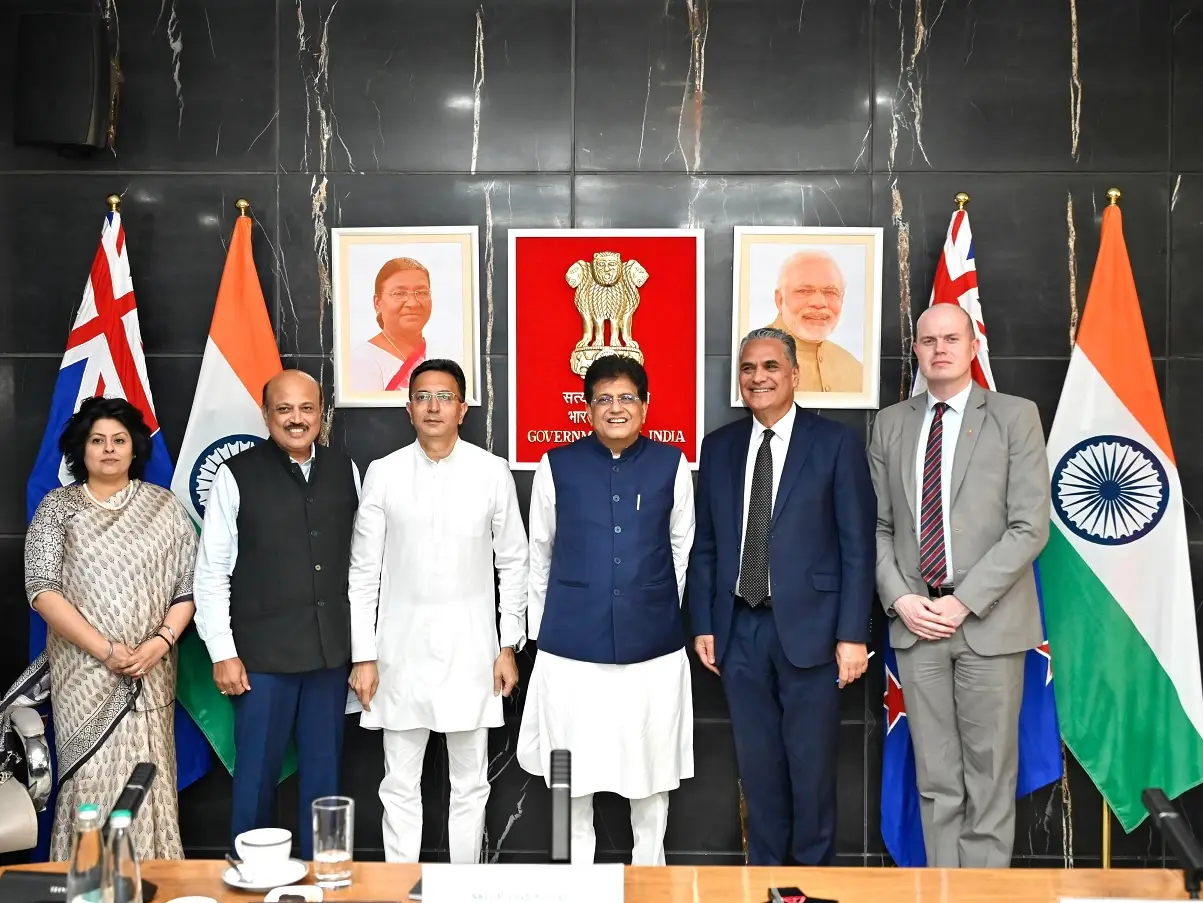
Commerce and Industry Minister Piyush Goyal with with New Zealand’s Trade and Investment Minister Todd McClay and others Photograph: (X)
The pact, signed in New Delhi on 27 April after talks launched in March 2025 and concluded in nine months, gives Indian exporters duty-free access on 100% of tariff lines from day one. New Zealand has also committed to facilitate $20 billion of investment into India over 15 years.
New Delhi: India and New Zealand’s free trade agreement will come into force on 20 October, coinciding with Dussehra, after both governments completed ratification and exchanged diplomatic notes.
Commerce and Industry Minister Piyush Goyal announced the date in a video conference with New Zealand’s Trade and Investment Minister Todd McClay, describing it as the next milestone in a partnership given fresh political impetus by recent prime ministerial visits.
“I’m delighted that we are taking forward the next important milestone in our bilateral economic partnership: the entry into force of the India-New Zealand Free Trade Agreement, which will come into force on the auspicious occasion of Dussehra on 20th of October 2026,” Goyal said. He called the festival “the celebration of good over evil” and “a very auspicious day when people start something new,” adding that both sides had chosen it to open markets to each other.
The pact, signed in New Delhi on 27 April after talks launched in March 2025 and concluded in nine months, gives Indian exporters duty-free access on 100% of tariff lines from day one. New Zealand has also committed to facilitate $20 billion of investment into India over 15 years and agreed an agriculture productivity partnership so that its farm technology can meet Indian demand.
Goyal said the deal was “an important moment for our businesses, for our farmers, for our exporters and MSMEs, for our professionals and consumers who will all benefit from the commitments undertaken in this agreement.”
Trending Stories
)
)
)
)
)
)
&im=FitAndFill=(700,400))
)
)
)
)
)
)
)
)
)
)
)
)
)
)
)
)
)
)
)
)
)
)
)
)
)
&im=FitAndFill=(700,400))
)
&im=FitAndFill=(700,400))
)
)
)
)
)
)
The two countries have set an aspirational goal of doubling bilateral trade in goods and services within four to five years. India has kept dairy and several other farm products outside tariff cuts.
McClay called it “a great day of celebration” that sent “a clear signal to the world” that like-minded countries can still conclude ambitious deals quickly amid rising tariffs and uncertainty.
“Both New Zealand and India can be proud of the very high-quality agreement that will deliver significant benefits for the citizens of our two countries,” he said. “This is one of the highest quality agreements our two nations have been able to negotiate.”
Talks were completed in nine months after Prime Minister Christopher Luxon took New Zealand’s largest-ever trade delegation to India. “It’s actually the start, the beginning of a new era in the relationship,” McClay added.
The FTA is the latest in a run of trade deals New Delhi has pushed this year. It follows the UK pact already in force and sits alongside a concluded EU agreement that could be signed in December during an expected visit of PM Modi to Brussels. Talks with Canada are also being fast-tracked, with a fifth negotiating round due on 5 October and a year-end target.