

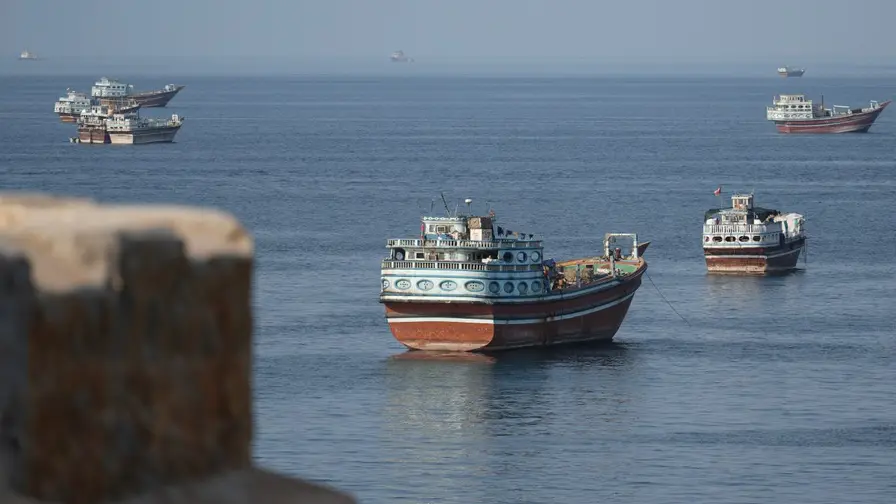
Since closing the Strait of Hormuz on March 2, following the US-Israeli strike which killed Iran's Supreme Leader Ayatollah Ali Khamenei and other senior leaders, Iran has framed Hormuz as its own geographic weapon to leverage and increase its position as a regional superpower. It has maintained that it is open to everyone except its adversaries. On November 3, Amir Hayat Moqaddam, the deputy chairman of the Iranian parliament’s National Security and Foreign Policy Committee, confirmed that the Strait is open for India, China, Iraq and Qatar.
"Ships from these countries pass freely, and the Americans do not intercept them either," Amir Hayat Moqaddam, deputy chairman of the Iranian parliament's National Security and Foreign Policy Committee, told the Iranian Students' News Agency (ISNA).
Why is Iran agreeing to that?
Iran's stated reasons are transactional. The Iranian lawmaker who announced the exemptions said India's is meant to facilitate medicine imports into Iran, while China's aims to secure Beijing's political support. Qatar and Iraq are described as "mutual interests." Qatar is also mediating between Tehran and Washington, so favouring it helps keep that channel open. Indian and Chinese ships reportedly pay transit fees, while Qatari ships pass free. In effect, Iran is using access to the strait as currency, rewarding customers, suppliers and mediators while keeping pressure on its adversaries.
Also Read: 'Defeated on battlefield and at ballot box': Iran mocks Trump as CENTCOM announces land blockade
The exemptions help the buyers most reliant on Gulf crude; according to Kpler data, China and India account for 55% of strait crude throughput. But the strait is still far from normal. The EIA estimated that flows averaged 4.9 million barrels a day in Q2 2026, down from 21.6 million in Q4 2025. Selective passage for four countries, with Saudi Arabia left out, doesn't restore that supply. It mostly reshuffles who gets oil and at what cost.
Trending Stories

US midterms 2026: These Senate and House races are still too close to call. Here's where they stand

Delhi Kia showroom fire: Woman falls trying to escape, shocking viral videos raise fire safety concerns | WATCH

Ramayana: Part 1 post-credit scene explained: Sunny Deol's Hanuman entry, Raghav Juyal as Meghnad steals the show

Ramayana team issues legal notice over theatre recordings, cites High Court orders

'Using US funds to violate int'l law': Michigan's first Muslim Senator-elect questions aid to Pakistan

'India has won its decades-long battle against Naxalism and Maoist terror': PM Modi celebrates with security forces in Bastar

Ariana Grande turns lipstick test into a sweet kissing challenge with Ricky Alvarez

First handshake? Radio signal with all hallmarks of alien technology detected in China

Justin Timberlake sets record straight on Britney Spears rumours surrounding song What Goes Around... Comes Around

US opens new front against Iran, 'Iron Gate' targets land routes and Caspian Sea networks

Gold nears interim bottom despite recent correction, says World Gold Council

Poland shooting: At least six killed, over 12 injured in gunfire near Krakow's main market square; gunman arrested

Salman Khan reacts to Ramayana's Rs 4,000 crore budget: 'I just don’t think...'

Schools in Delhi-NCR ordered to hold classes up to class 5 in hybrid mode due to poor air quality

'Dana, please take the job': Trump make surprise offer to UFC chief to become White House press secretary

China university scraps AI feature tracking students' attentiveness after privacy backlash

WATCH | Plane hits pickup truck during emergency landing on busy road in Florida

Why Iran is allowing India, China, Iraq and Qatar to pass through Strait of Hormuz

'It was a tricky wicket': Mitchell Santner reacts after New Zealand's 2nd ODI loss to India

Ramayana Part 1: Yash and Sai Pallavi’s voices were dubbed by these popular TV actors

NASA livestream shows UFO near Dragon, researcher claims it almost collided with ISS

Pyre faces major theatre setback as Vinod Kapri claims 75% screenings removed: 'We deserve a fair chance'

IND vs NZ: Rohit Sharma becomes leading six-hitter against New Zealand in ODIs

Rajinikanth brings Diwali cheer for fans, steps out of Chennai residence amid rain

'These SLEAZEBAGS...': Trump orders DOJ to investigate Democrats over threats against Republicans after US midterms polls

Poland mass shooting: What we know so far about Krakow attack that killed six; world leaders express solidarity

Poland mass shooting: Shooter who killed 9 was 'fascinated by far-right ideologies', minister says

Meet top 5 bowlers in latest ICC ODI rankings 2026

IND vs NZ: Virat Kohli sets new record for most ODI runs against New Zealand

KATSEYE’s Manon returns to Weverse after months, brief message leaves fans speculating

5.7 magnitude earthquake hits central Japan, at least 22 injured; aftershocks reported

‘Habibi PAC’: First Muslim US Senator-elect El-Sayed launches new political action committee

Nepal eyes $2bn financial package, fresh air routes during PM Balen Shah's upcoming India visit
Did the US agree to the blockade?
US Central Command (CENTCOM) has said the blockade applies to "all vessels of all nations entering or leaving coastal areas or ports in Iran", while vessels avoiding Iranian ports are not affected. The Iranian lawmaker claimed "the Americans do not intercept them either," but that is his claim, and US authorities or CENTCOM have not publicly confirmed it.
Washington's position has been to favour unrestricted navigation through the waterway without transit charges, and it did not agree to Iran collecting fees. The US has also run a naval blockade on ships entering or leaving Iranian ports since April, and it is now planning to extend that blockade via land. So the US is not formally endorsing Iran's exemptions.

