German federal elections 2021: What you need to know about race for chancellor

German elections 2021
As Chancellor Angela Merkel prepares to step down from the political stage and Germans vote infederal (Bundestag) elections,all bets appear to be off as to who will be the next chancellor.
The contest, which once seemed clear, now appears to be close. So much so that Merkel, who had initially preferred to stay away from the campaign fray, had to enter the field to shore up ratings for her would-be successor Armin Laschet. This time the Bundestag is expected to expand more than its minimum size of 598 seats.
Here's a look at who is in the race to be next chancellor of Germany

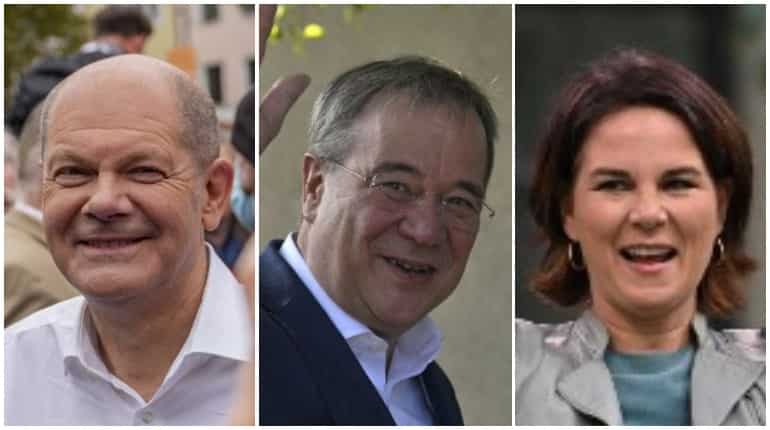
Armin Laschet (Party: CDU/CSU)

Armin Laschet (60) enjoys support from Angela Merkel to be the next chancellor of Germany. He is Merkel's party colleague within Christian Democratic Union (CDU/CSU). He is Minister-President of Germany's North Rhine-Westphalia region.
)
Mushtaq Khan dies at 56: When Welcome actor opened up about his salary for iconic role Ballu
)
Hawaii braces for Hurricane Nolo: NOAA warns of flash flooding and mudslides
)
Bangkok declares flood disaster as heavy rain submerges roads and homes
)
US Supreme Court backs Trump administration's use of SAVE database to check voter citizenship
)
Outrage erupts after 3-year-old is married to 60-year-old man in Pakistan, link to her sister's murder being probed
)
Donald Trump shares image of Xi's arrival in Washington, carries signs of AI
)
Pakistan deploys over 20,000 security personnel as PTI vows march for Imran Khan's release
)
Anthropic says Claude found a new gene-editing enzyme but science isn't confirmed
)
Farhan, who went viral for AK47 celebration vs India in Asia Cup, hopes to lead Pakistan beyond Asian Games
)
Prince Harry offers rare glimpse into Archie and Lilibet’s life after UK move
)
OpenAI AI Agents hacked 4 websites before Hugging Face, researchers reveal
&im=FitAndFill=(700,400))
New Friday OTT releases (September 25, 2026): Don’t Be Shy, Hunkkaar: The Roar, Mango Pachcha- 6 movies and TV shows on Netflix, Prime Video and more
)
Asian Games 2026: India face Afghanistan in quarterfinal on Sep 28; Pakistan clash with Hong Kong
)
‘Attack on Mecca a red line for Pakistan’: Shehbaz Sharif warns Houthis at UN
)
Death toll rises to 64 in Indonesia's Java Sea ferry incident; 71 still missing
)
‘I rejected it’: Trump confirms turning down Iran’s proposal to reopen Hormuz, claims Tehran is losing ‘badly’
)
Nigeria Navy moves to boost oil security, tackle crude theft and infrastructure threats
)
Indian diplomat Petal Gahlot raises deteriorating situation in Pakistan-occupied Kashmir in right of reply at UN
)
'Countries far from conflict are penalised': Jaishankar calls for Gulf peace, seafarer safety at UN
)
Scientists detect first radio signals directly from faraway planet
)
‘It is all possible’: Putin weighs next steps on Ukraine talks, rules out Europe conflict
)
Global community 'absent' in Gulf crisis: Saudi at UN calls for freedom of navigation, pre war status for Hormuz
)
The Paradise: Nani reacts to mixed reviews from critics and audience; ‘I have also learnt from the flaws’
)
Trump rejects Iran's 7-day ceasefire proposal as US weighs renewed bombing after midterms: Report
)
Gaza's war turned environmental damage into second crisis
)
Trump-Xi summit wrap: Big pageantry, Iran talks, few major developments and more meetings planned
)
'What kind of confession is this?': Pakistan PM Shehbaz Sharif’s 'terrorists would be roaming New York' remark goes viral, raises alarm online. Watch
)
Manchester City found guilty: Premier League delivers its verdict on the FFP charges
)
Myanmar training camp case: US national, 6 Ukrainians allowed to meet their families abroad
)
'FIRST LOOK from inside Noah’s Ark': Researchers share video from inside mysterious mound in Turkey
)
Cindy Crawford’s son Presley Gerber cremated as death probe continues
)
WATCH | As Shehbaz Sharif claims Pakistan’s ‘victory’ during 2025 conflict, Indian diplomat R Srinivas laughs at UN
)
'A terrorist country is asking me that question?': Jaishankar hits back at Pakistani journalist at UN; flags attacks on commercial shipping
)
Russia will achieve Ukraine war aims; Europe doing everything to block peace talks: Lavrov at UN
)
‘Serial practitioner of terrorism’: Jaishankar calls out Pakistan’s ‘state-sponsored’ terror at UNGA
)
US court backs Pentagon's decision to exclude Anthropic over Claude AI restrictions
Laschet'sapproval ratings were high in months leading to German election but series of blunders saw his popularity wane. These included getting caught on camera laughing in the background during a tribute to the victims of the recent devastating floods in Germany.
Merkel herself had to enter the campaign fray to shore-up support for her favoured candidate.
Olaf Scholz (Party: SPD)

Olaf Scholz (63) is the current vice-chacellor and finance minister of Germany. He belongs to Social Democratic Party (German: Sozialdemokratische Partei Deutschlands or SPD).
His approval ratings were low at the start of the race but rose as he avoided making embarrassing mistakes like Laschet.
Also Read | Farewell, Angela Merkel. You were once the ‘Leader of the Free World
Annalena Baerbock (Green Party)

Annalena Baerbock is the chancellor candidate from Green Party. At one point, Baerbock even took lead as the most favourite candidate in opinion polls.
But after a series of missteps by Baerbock, including a plagiarism scandal, the Greens are now polling well behind the two leading parties on around 17 per cent.
While the chancellery may be out of reach for the party, it will likely have a role in Germany's next government.
How do German elections work?

Voters do not directly elect the chancellor. Elected members of the parliament decide who the chancellor will be from among them.
Each German voter has two votes. First vote decides who will represent a region in the parliament. Second vote elects the party and decides the makeup of the parliament. The party with the most votes gets to send more number of candidates to the parliament.
For example, if a party scores three direct seats through the first vote but is eligible for 10 seats overall through the second vote, seven more names on the party's candidate list (published before the elections)are also given seats. The candidate list published before the elections has candidates for each of the 16 states. Those higher on the list have better chance of securing a parliament seat.
A complication arises when the direct and party votes are out of balance because voters "split" their ballot. This happens when a voter votes for a candidate from a particular party but prefers a different party in his or her second vote.
This time, the Bundestag is expected to expand more than its minimum size of 598 seats as more voters are expected to split their votes.
This year, there are 47 political parties taking part in the elections.
Opinion polls show the race for the chancellery is headed for a photo finish, with Merkel's CDU-CSU conservative alliance on around 23 per cent, just behind the centre-left Social Democrats (SPD) at 25 per cent -- well within the margin of error.
Who can vote?
Individuals above 18 years of age, having German citizenship and having lived in the country for an uninterrupted period of at least three months are eligible to vote. Mail-in vote is allowed for Germans living abroad.
People who hold German passports but haven't lived in Germany for more than 25 years cannot vote.
As per German government's statistics, 60.4 million Germans are eligible to vote this time. There are 2.8 million first time voters. These are the voters who do not remember any chancellor other than Angela Merkel.
Voter participation four years ago stood at 76.2 percent, up nearly five points from 2013 and higher than in many other Western democracies.
This year, 33 per cent of the candidates for the Bundestag, which ultimately elects the chancellor, are female -- a post-war record.
When will the result be known?
After voting concludes at 1600 GMT (9:30 pm IST) on September 26, counting of votes will begin. The counting will continue well into the night.
Provisional results are expected on the morning of September 27. But official results won't be published until several weeks later.
How did things stand after 2017 elections?
Here is where things stood after the 2017 election:
Christian Democratic Union (CDU) / Christian Social Union (CSU): 32.9 percent - 246 seats
Social Democratic Party (SPD): 20.5 percent - 153 seats
Alternative for Germany (AfD): 12.6 percent - 94 seats
Free Democrats (FDP): 10.7 percent - 80 seats
Die Linke: 9.2 percent - 69 seats
Greens: 8.9 percent - 67 seats
(With inputs from agencies)