

&imwidth=800&imheight=600&format=webp&quality=medium "From teachers agitation to pro-monarchy march: What led to deadly Nepal protest and REAL reason for GenZ's frustration")
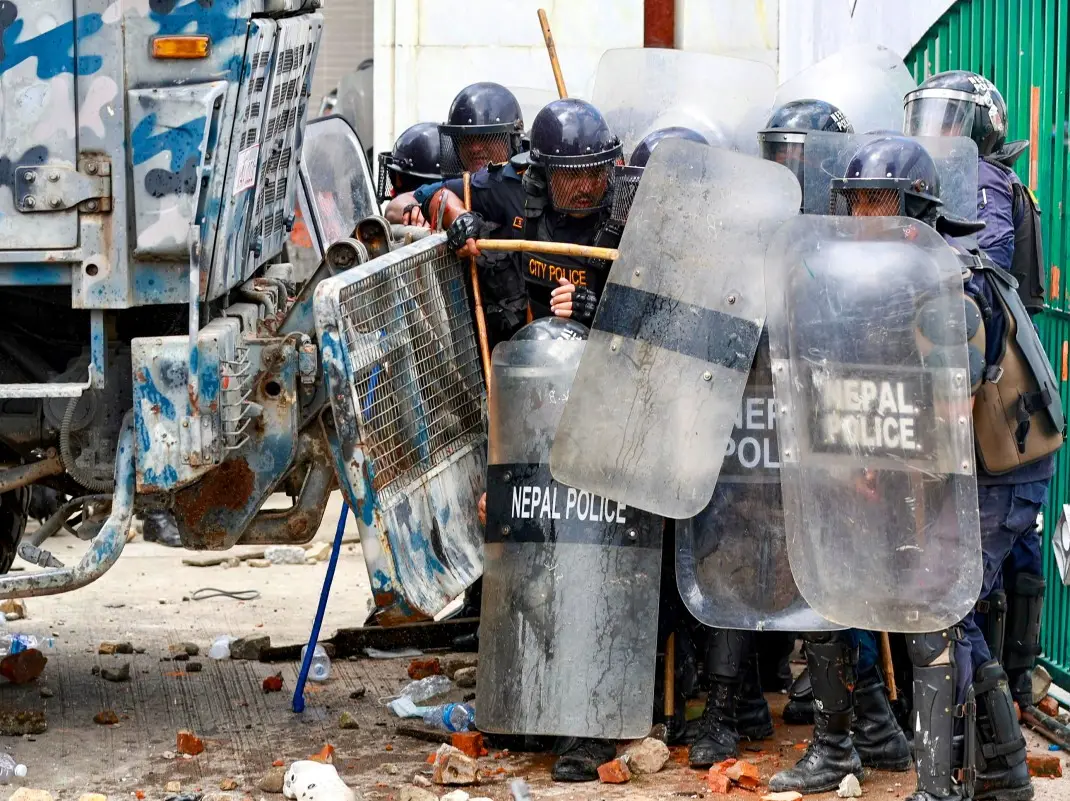
Almost a year after Bangladesh PM Sheikh Hasina was ousted, a youth-led protest has forced Nepal PM KP Oli to resign. The recent social media ban by the Nepalese government acted as a catalyst to trigger widespread protests led by Gen Z, already frustrated by corruption and lack of accountability and action by the government. With the Nepalese government trying to curb the protests using brutal force, the scenario turned ugly and as many as 19 people died in just one day. The protesters refused to bow down to power and soon stormed the Parliament building. Oli has reportedly fled to Dubai after being provided a safe passage by the Nepal army chief. Even though the social media ban was revoked late on Monday, protests continued, demanding larger accountability.
What triggered the protests?
Even as the government’s decision on September 4 to block 26 social media platforms, including Facebook, WhatsApp, Instagram, X, and YouTube became a pivotal point that forced people onto the streets, Nepal has been witnessing several protests in the past few months, which showed common people's anger against the government. The Nepalese government explained that the platforms were blocked as they failed to register locally, appoint a point person, and remove flagged content. The Gen Z protesters refused to buy the explanation, terming it an attack on free speech and expression.
Other protests that happened this year
- Teachers' Protest
Trending Stories
&imwidth=180&imheight=135&format=webp&quality=medium)
Central Park in Delhi shut on October 16, 17 amid CJP's protest call
&imwidth=180&imheight=135&format=webp&quality=medium)
'Will stand with Pakistan in case of war with US': Rajasthan BJP chief's remark sparks row
&imwidth=180&imheight=135&format=webp&quality=medium)
Australian woman charged for adding snail poison to lover's curry at work
&imwidth=180&imheight=135&format=webp&quality=medium)
‘My president, I mean my husband’: Trump's new press secretary Katie Zacharia's first briefing goes off the rails in 14 minutes
&imwidth=180&imheight=135&format=webp&quality=medium)
Girl 'dead' for 8 hours wakes up at her own funeral, dad insists she wasn't breathing
&imwidth=180&imheight=135&format=webp&quality=medium)
Arijit Singh 9-city India stadium tour to start from January: Check venue and ticket prices
&imwidth=180&imheight=135&format=webp&quality=medium)
'Ukraine must get all it needs to protect civilians and infrastructure': Macron
&imwidth=180&imheight=135&format=webp&quality=medium)
Trump says Zelensky 'not a good guy' amid fresh Russia-Ukraine tensions | Watch video
&imwidth=180&imheight=135&format=webp&quality=medium)
Leave India notice to Imran Khan explained: What are OCI rules and why can't foreigners protest in India?
&im=FitAndFill=(700,400)&imwidth=180&imheight=135&format=webp&quality=medium)
Inside the Peshawar school tragedy: 34 dead, building's condition under scrutiny and owner arrested. Here's what all happened
&im=FitAndFill=(700,400)&imwidth=180&imheight=135&format=webp&quality=medium)
World's 7 most innovative countries in 2026 REVEALED: Did India make the list? | In Pics
&imwidth=180&imheight=135&format=webp&quality=medium)
Netanyahu defies Trump, blocks Gaza military base for Board of Peace | Gravitas
&imwidth=180&imheight=135&format=webp&quality=medium)
US sanctions Cuban state-owned bank BICSA over alleged financial links to Iran
&imwidth=180&imheight=135&format=webp&quality=medium)
Russian woman and Bihar boy's love story goes viral after she reaches India to marry him
&imwidth=180&imheight=135&format=webp&quality=medium)
'White supremacist' terror plot against Illinois Hindu temple foiled by jammed gun: Who is Alexandros Paporakis?
&imwidth=180&imheight=135&format=webp&quality=medium)
Ukraine blinded: Musk deflects blame on Trump, Putin sharpens attack | Gravitas
&imwidth=180&imheight=135&format=webp&quality=medium)
Oregon school shooting: 16-year-old identified as suspect after at least four killed, including three children
&imwidth=180&imheight=135&format=webp&quality=medium)
'Turns out the future does have flying cars': Musk's Tesla unveils 'flying' sports car with SpaceX technology | Watch
&imwidth=180&imheight=135&format=webp&quality=medium)
Nine former FBI employees fired over investigation into Trump's classified records sue Kash Patel, DOJ over alleged unlawful dismissal
&imwidth=180&imheight=135&format=webp&quality=medium)
Majid Majidi's new film Midday Meal takes top prize at Asia's biggest film festival
&imwidth=180&imheight=135&format=webp&quality=medium)
'Turn approver, resign, we'll forgive you': Rahul Gandhi claims receiving messages from CEC Gyanesh Kumar
&imwidth=180&imheight=135&format=webp&quality=medium)
Broke Your iPhone Duo? Here’s how much screen repair could cost
&imwidth=180&imheight=135&format=webp&quality=medium)
NASA captures strange structure with tentacle-like formation from space
&imwidth=180&imheight=135&format=webp&quality=medium)
Russia-Ukraine War: Putin vows retaliation against Ukraine
&imwidth=180&imheight=135&format=webp&quality=medium)
US-Iran War: Trump eyes mother of all bombs; Iran in crosshairs
&imwidth=180&imheight=135&format=webp&quality=medium)
Earthquake measuring 7 magnitude strikes Russia’s Kamchatka Peninsula
&imwidth=180&imheight=135&format=webp&quality=medium)
Portland stabbing: Multiple people reportedly stabbed hours after deadly Bend school shooting
&imwidth=180&imheight=135&format=webp&quality=medium)
Ukraine running out of patriot missiles as Russian ballistic attacks intensify: Report
&imwidth=180&imheight=135&format=webp&quality=medium)
Who is Abu Dhabi royal Mahrah Al Nahyan, found unconscious on London street with toddler after cocaine use
&imwidth=180&imheight=135&format=webp&quality=medium)
Katie Zacharia, White House Press Secretary admits she never passed bar exam amid credentials controversy
&imwidth=180&imheight=135&format=webp&quality=medium)
US midterms 2026: FBI investigates suspicious mailings containing 'unknown substance' sent to election offices
&imwidth=180&imheight=135&format=webp&quality=medium)
India’s naval priorities: Ex-Navy Chief calls for third aircraft carrier, more warships and submarines
&imwidth=180&imheight=135&format=webp&quality=medium)
Was Trump in danger at Alaska rally? Viral video shows Secret Service agents reacting
&imwidth=180&imheight=135&format=webp&quality=medium)
Turkey Floods: Heavy rains flood homes and submerge vehicles in Istanbul
&imwidth=180&imheight=135&format=webp&quality=medium)
Saudi Arabia executes Two Bangladesh nationals over immoral act
&im=FitAndFill=(700,400)&imwidth=180&imheight=135&format=webp&quality=medium)
Inside Tesla's Roadster: 10 features of Elon Musk's 'flying car' that push the limits of electric vehicles | In Pics
&imwidth=180&imheight=135&format=webp&quality=medium)
'Troubling pattern of threats': Hindu groups issue advisory after man arrested for alleged plot to target Illinois temple
&imwidth=180&imheight=135&format=webp&quality=medium)
Abhishek Sharma sets all-time record for most T20I sixes in a year
&imwidth=180&imheight=135&format=webp&quality=medium)
Trump's tariff strategy faces new test: India wants preferential access and tariff stability
In March-April this year, school teachers across Nepal protested against the delay in passing the new School Education Bill from the government. The protest was organised by the Nepal Teachers' Federation (NTF). To curb the protests, Nepali police brutally attacked teachers who were peacefully protesting in Kathmandu, injuring as many as 60 people, including a journalist. The protest initially began in March, and despite protesting peacefully for approximately a year, the Nepalese government responded with force towards the end of April. The teachers' protest at that time was organised under the Confederation of Nepalese Teachers (CNT) – comprising the Nepal Teachers’ Association (NTA), Nepal National Teachers Association (NNTA), Institutional School Teachers Union (ISTU), and Nepal School Employees Council (NSEC). From job security to relief for quota teachers to implementation of agreements reached with the government in 2019, the teachers demanded enactment of the long-delayed School Education Act.
- Pro-monarchy protest
In February 2025, Nepal witnessed a massive pro-monarchy protest that again brought out the deepening political unrest in the country. The protests were primarily led by supporters of former King Gyanendra Shah. The movement gained momentum following his February 18th statement on Democracy Day, where he hinted at a potential return to politics. This sparked widespread demonstrations across the country, with participants chanting slogans like “Come Back King, Save Nepal!” and “Restore the Monarchy!” Even at that time, three people died, and over 125 were injured, and the authorities arrested more than 130 individuals for their involvement in the violence.
The protests reached a peak on March 28, when thousands of protesters marched through Kathmandu, and police tried stopping them, leading to a violent clash. Protesters breached security perimeters, resulting in vandalism and arson of several buildings, including political party offices and media outlets. The ruling CPN-UML party condemned the violence, while the Rastriya Prajatantra Party (RPP), which has been advocating for the restoration of the monarchy, denied involvement in the violent acts and called for peaceful dialogue to address the protesters' demands.
- #NepoBaby
Even before the protest, hashtags like #NepoKids, #NepoBaby, and #PoliticiansNepoBabyNepal gained popularity on TikTok and Reddit. In Nepal's political context, it referred to children of powerful leaders who seem to inherit wealth and influence without earning it. One protest sign captured this frustration: “The leaders’ children return from abroad with Gucci bags, the people’s children in coffins.” With youth unemployment at 19.2% for ages 15–29, many young Nepalis take dangerous jobs overseas, including as mercenaries in the Ukraine–Russia conflict. This economic hardship contrasts sharply with the lavish lives of politicians’ offspring, fueling public anger. Demonstrators targeted the families of Prime Minister KP Sharma Oli, former PM Sher Bahadur Deuba, and Pushpa Kamal Dahal ‘Prachanda,’ accusing them of corrupt enrichment. This “nepo kids” outrage, intertwined with demands for free speech after social media ban, triggered what we now see as Gen Z protest.

