&imwidth=800&imheight=600&format=webp&quality=medium "Expecting Iran response on Friday: Rubio says Trump reviewing allies’ military base denial")
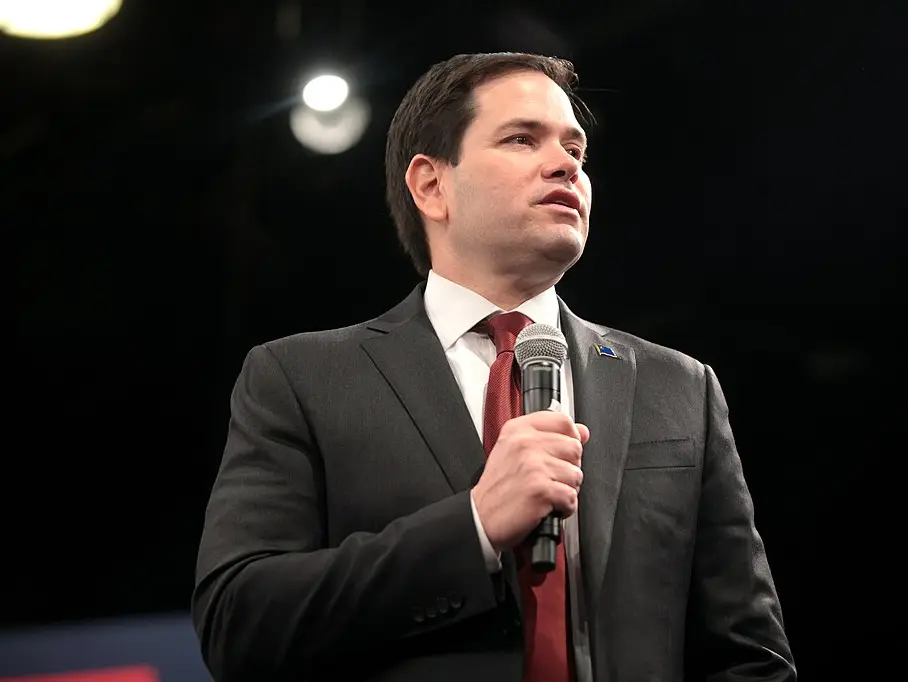
US Secretary of State Marco Rubio on Friday (May 08) said Washington was awaiting Iran’s response to the latest US proposals aimed at ending the ongoing conflict, while also warning Tehran against attempts to control the strategically crucial Strait of Hormuz.
Speaking to reporters during a visit to Rome, Rubio said the United States expected a formal reply from Iran later in the day. “We’re expecting a response from them today at some point... I hope it’s a serious offer, I really do,” he said.
Rubio added that Washington was looking for a path toward meaningful negotiations. “The hope is it’s something that can put us into a serious process of negotiation,” he stated, signalling that the US was still seeking a diplomatic route despite escalating tensions in the region.

The remarks come amid growing international concern over security in the Strait of Hormuz after reports that Tehran had established an authority to approve maritime transit through the waterway. The route remains one of the world’s most critical energy corridors, carrying a significant share of global oil shipments.
Reacting strongly to the development, Rubio said Iran’s actions were unacceptable. “Iran now claims that they own, that they have a right to control, an international waterway... That’s an unacceptable thing that they’re trying to normalise,” he said.
Trending Stories
&im=FitAndFill=(700,400))
National Handloom Day 2026: From Alia Bhatt to Samantha Ruth Prabhu; Actresses who celebrated India's textile heritage as brides
)
The Royals enter the Doctor Who universe: King Charles and Queen Camilla beam into Commonwealth Games in TARDIS
)
No connection between Jantar Mantar protesters and Pakistan-based ISI terror module, Punjab Police clarify
)
'Massive attack coming... wait, never mind': Iran mocks US 'theatre diplomacy,' rejects Trump's claim of Hormuz progress
)
Reels vs Results: Why political messaging alone won't win over India's young voters
)
Major relief for TN CM Vijay as wife Sangeetha withdraws infidelity and divorce petition
)
France offers deal for 114 Rafale fighter jets, with 94 to be made in India
)
Ukrainian astronomers see gargantuan objects dashing at 39,600 kmph on the Moon - 'They can reach Earth in 20 minutes'
)
Drug-resistant fungus that hides in hair and enters bloodstream reported in 23 US states
)
India avoids higher US tariff, secures lower 10% rate. Here's how
)
Explained | Can India reach WTC final with a series win in Sri Lanka?
)
'Security can't be bought with Pakistan, Turkey deal': Iran tells Saudi Arabia
)
Primetime trailer: Robert Pattinson channels Chris Hansen in A24's dark crime thriller
)
Zendaya and Tom Holland celebrate their marriage with private reception in England
)
Vishal Bhardwaj to develop film on Tarun Tejpal case after latest court verdict: Report
&im=FitAndFill=(700,400))
Can an S-400 operate in the desert?
)
Lightning bolt strikes football field in Thailand, killing a player during a match
)
Thailand teen killed grandparents before shooting teachers at school – What we know about suspect
&im=FitAndFill=(700,400))
New Friday OTT releases (August 7, 2026): Operation Safed Sagar, Vadhandhi, Main Vaapis Aaunga- 6 movies and TV shows on Netflix, Prime Video and more
)
The genetic roots of Tamils: 75,000 DNA markers decoded in latest study of Sangam-era settlement
)
NZ female politician joins meeting from bathroom with underwear hanging - 'You can see my washing, you can see me'
)
‘We are ready to talk’: Jharkhand CM Hemant Soren reaches out to protesting students
)
Squadron Leader Bhawana Kanth scripts history as Indian Air Force gets its first woman ‘Top Gun’ pilot
)
Trump says Iranian school bombing photos could be AI-generated - 'I don’t think...'
)
Bluefly: Priyanka Chopra joins Russell Crowe for new sci-fi action thriller
)
'Dhoni Made Fleming Great': Panesar says ECB made the wrong choice for England Test coach
&im=FitAndFill=(700,400))
Why the Su-30MKI doesn't need external fuel tanks to fly vast distances
)
Born in the USA? Trump targets 'birth tourism' with new birthright citizenship executive order
)
Michael 2 plans revealed: Makers to start filming soon with THIS release window
)
OpenAI reportedly building donut-shaped ChatGPT smart speaker for homes
)
‘Certain munitions are unlimited, others...’: Did Trump admit some US weapons supplies were limited?
)
At least 4 killed 15 injured in shooting at school near Bangkok
)
US may force more visa applicants to make social media accounts public under Trump's new plan
&im=FitAndFill=(700,400))
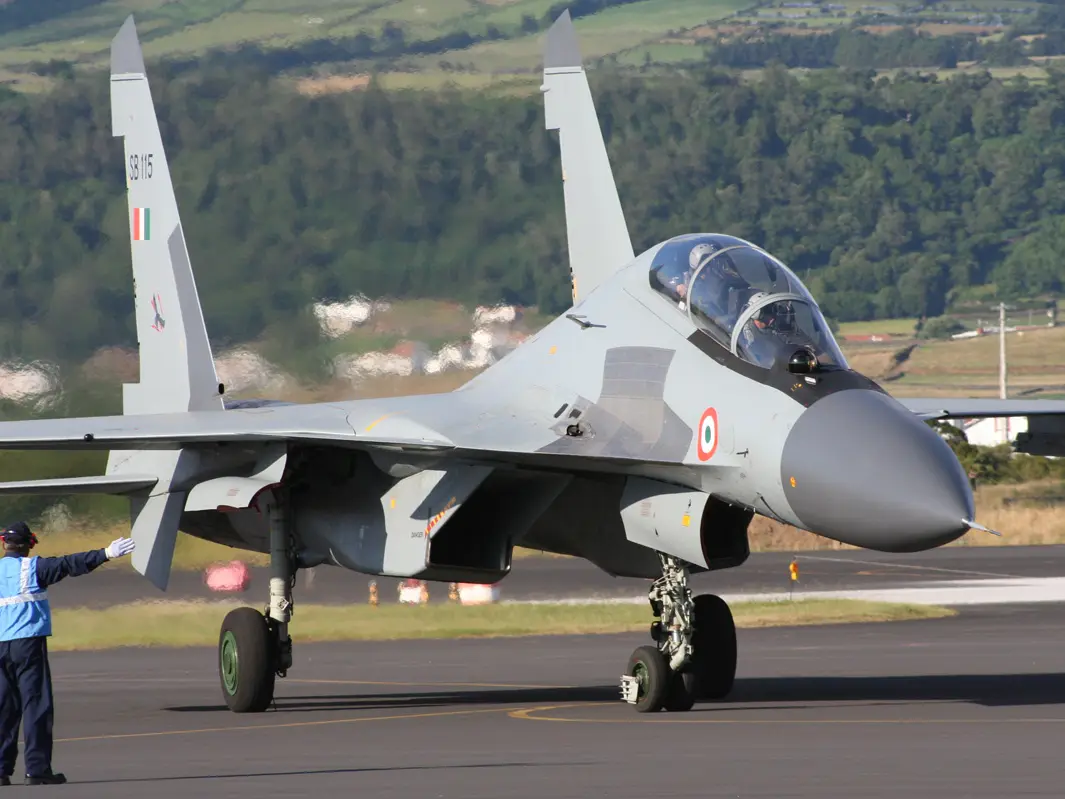
Why the Su-30MKI is one of the heaviest fighters ever built
The conflict intensified after US-Israeli strikes on Iran on February 28, following which Tehran largely shut down movement through the Strait of Hormuz. The United States later imposed its own restrictions on Iranian ports, further worsening regional tensions.
Rubio also addressed reports that several US allies had denied Washington the use of military bases for operations linked to the conflict. During his remarks in Rome, he acknowledged that President Donald Trump was reviewing the issue, particularly in relation to NATO allies such as Italy and Spain.
“If one of the main reasons why the US is in NATO is the ability to have forces deployed in Europe that we could project to other contingencies, and now that’s no longer the case, at least when it comes to some NATO members, that’s a problem, and it has to be examined,” Rubio said.
However, he clarified that no final decision had yet been taken on troop withdrawals or changes to US commitments in Europe. “Ultimately, that’s a decision for the president to make,” Rubio added.
The comments come as Washington reassesses military deployments and alliance commitments amid the widening Middle East conflict and mounting pressure over maritime security in the Gulf region.