American manufacturing is reshoring faster than its factory floors can absorb

&imwidth=600&imheight=450&format=webp&quality=medium "American manufacturing is reshoring faster than its factory floors can absorb")
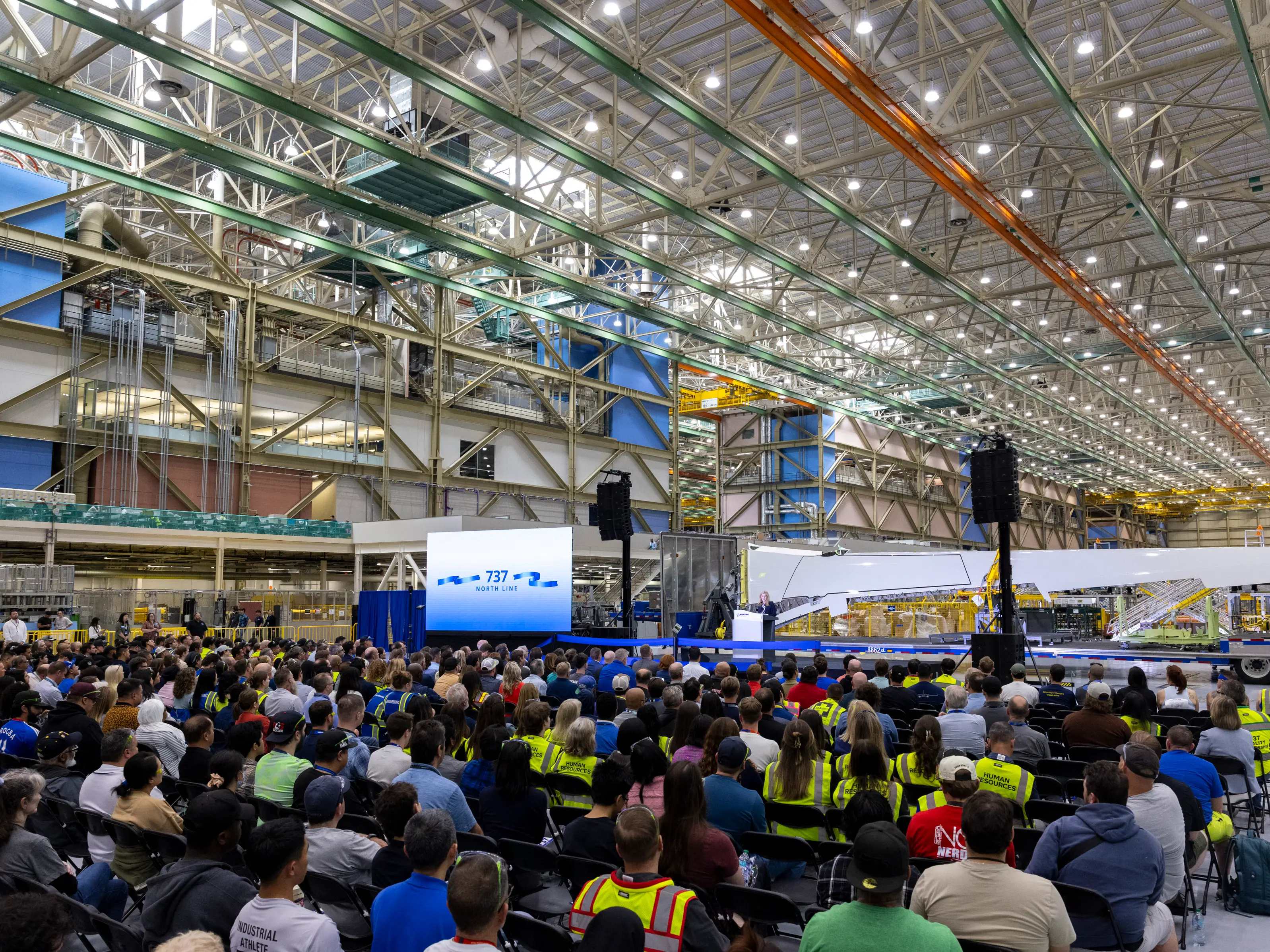
Before the next plant gets built, the existing ones are hiding capacity nobody has counted Photograph: (WION)
American manufacturers are bringing production back home, but experts say many existing factories could unlock significant unused capacity by fixing warehouse layouts, inventory systems and material flow before investing in new facilities or technology.
The announcements arrive on a predictable rhythm now. A new plant in the Midwest, a supply chain pulled back from overseas, a ribbon cutting with a number attached that runs into the billions. Reshoring has become one of the few industrial stories in America that everybody agrees is good news.
Factory floors are a different story. Walk into an existing plant that has been told to absorb additional volume and the constraint is rarely the machinery. It is that nobody can reliably say where the material is. Inventory records disagree with the racks. Lines stop because a part that the system insists is on site cannot be found. Storage that ran out years ago has been quietly rented, one trailer at a time, until there are dozens of them parked outside.
Sai Prasad Ravulapally has spent his career inside that gap between what a plant is asked to do and what its processes will permit. A continuous improvement manager who came up through production and warehouse floors before moving into plant-wide improvement leadership, he works across both discrete assembly and process manufacturing, and his argument is blunt.
"American manufacturing capacity is not just a question of building factories," he says. "It is a question of whether existing floors can absorb new volume, and most cannot in their current state."
His estimate is that a typical facility is sitting on thirty to a hundred percent more effective capacity than it knows about, locked up in poor layouts, inaccurate records and processes that generate more transactions than output.
That is a large claim, and the work behind it is unusually specific. At one facility he redesigned warehouse racking to convert floor storage into high-density vertical storage, which by his account more than doubled pallet positions inside the same building and cut the rented trailers outside by more than eighty five percent. The project paid for itself in under eighteen months. No new building was involved.
Trending Stories
)
)
)
)
)
)
)
)
)
)
)
)
&im=FitAndFill=(700,400))
)
)
)
)
)
)
)
)
)
)
)
)
)
)
)
)
&im=FitAndFill=(700,400))
)
)
)
)
)
)
The second example involved no capital at all. Reworking how material flow was controlled through the plant's existing ERP system, using functionality the company already owned, he reports lifting inventory accuracy from roughly sixty per cent to ninety-eight, and cutting material-related production downtime from twenty-six per cent to between two and three. He puts the annual savings above a million dollars. The tooling cost nothing because it was already installed and underused.
The third is the one that produced the most interesting failure. A three-bin Kanban replenishment system, piloted and then rolled out across twelve assembly lines and roughly eighteen thousand six hundred parts, initially ran on physical cards. Within two months, somewhere between four and five hundred of those cards had gone missing. Every lost card was a replenishment signal that never fired.
Conventional practice would answer that with discipline: audits, retraining, a supervisor whose job is to chase cards. Ravulapally went the other way and redesigned the signal so it could not be lost, making permanently labelled bins the Kanban themselves. The failure mode was removed rather than managed. He reports the system cut monthly material-shortage downtime by eighty-nine per cent, and notes that the card-free variant is rarely documented in the published literature.
That instinct has hardened into a rule he now states plainly. "If a signal can be lost, it will be." Design for the factory as it is at two in the morning on a Saturday, not as it appears in a process document.
He is equally direct about sequencing. Fix the process before buying the technology, on the reasoning that broken fundamentals create problems automation cannot solve, and that fixed fundamentals tend to deliver the gains the automation was supposed to produce. Pilot on the hardest line rather than the easiest, because misleading early confidence costs more than early failure. And count hidden costs honestly, which is where his argument turns uncomfortable for a lot of operations.
"Many facilities rent their capacity problem, one reasonable decision at a time," he says, through storage trailers, overtime and expediting that never surface anywhere as a single line item.
Ravulapally holds a master's in industrial and systems engineering from Northern Illinois University and is working toward a Doctor of Business Administration. He belongs to the Institute of Industrial and Systems Engineers and SAE International, and reviews submissions for international conferences in industrial engineering. A practitioner article of his on warehouse capacity optimisation has been accepted by ISE Magazine, the institute's flagship publication, and two further manuscripts are under peer review at international journals.
The reshoring debate tends to be conducted in the language of construction, incentives and equipment orders. What Ravulapally is describing sits underneath all of that, and it is considerably less photogenic: racking layouts, master data cleanups, the unglamorous business of making a system's version of reality match the building's.
It is also, on his numbers, where the cheapest capacity in American manufacturing is currently sitting. Unbuilt, unfunded, and already paid for.
(Disclaimer: This article is from the Brand Desk. User discretion is advised)