‘World on edge of wider war, people are already struggling,’ says UN chief Antonio Guterres

&imwidth=600&imheight=450&format=webp&quality=medium "‘World on edge of wider war, people are already struggling,’ says UN chief Antonio Guterres")
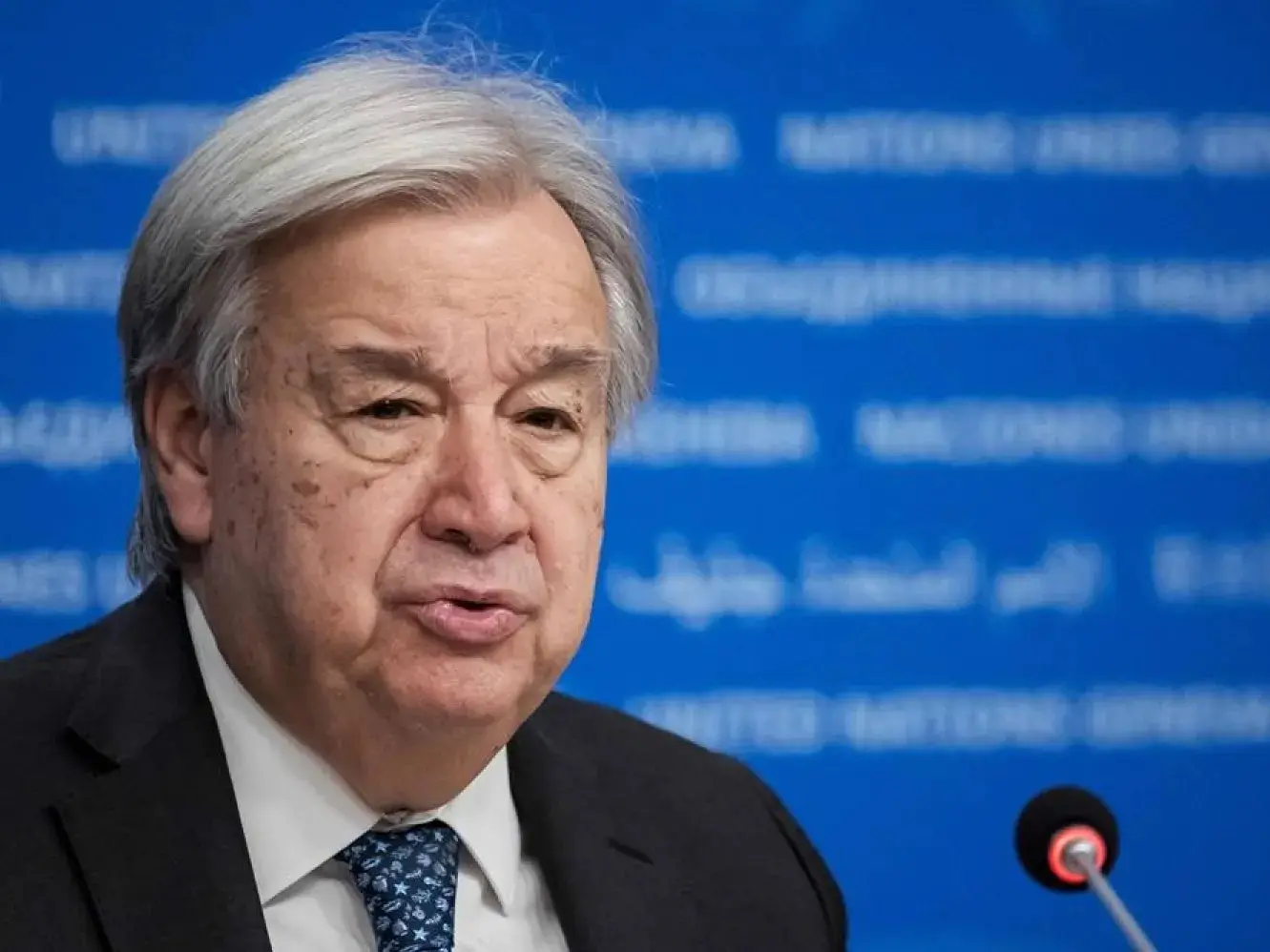
UN Secretary General Antonio Guterres painted a grim picture of the rapidly deteriorating situation Photograph: (AFP)
UN chief Antonio Guterres said he is dispatching his personal envoy Jean Arnault to the region to assist in ongoing peace initiatives and stressed that the spiral of death and destruction must stop. He said that any resolution must be anchored firmly in international law and the UN Charter.
UN Secretary General Antonio Guterres warned on Thursday that the ongoing Middle East conflict risks escalating and the impacts of the crisis are no longer contained within the region. He called for an immediate end to the war and cessation of hostilities on all sides. “We are on the edge of a wider war that would engulf the Middle East with dramatic impacts around the globe,” Guterres told reporters in New York.
The UN Secretary General pointed to the international consequences of the disruption to maritime routes and cited rising costs, saying people are already struggling from rising energy and food prices.
“When the Strait of Hormuz is strangled, the world’s poorest and most vulnerable cannot breathe,” he said.
The UN chief painted a grim picture of the rapidly deteriorating situation, as the US and Israel continue to bomb Iran while Tehran carries out attacks on neighbouring Gulf States and threatens ships it deems hostile in the crucial Strait of Hormuz.
“Every day this war continues, human suffering grows. The scale of devastation grows. Indiscriminate attacks grow,” Guterres said.
Trending Stories
)
)
)
)
)
)
)
)
)
)
)
)
)
)
)
)
)
)
&im=FitAndFill=(700,400))
)
)
)
&im=FitAndFill=(700,400))
)
&im=FitAndFill=(700,400))
&im=FitAndFill=(700,400))
)
“The consequences are already visible in the daily lives of people struggling with rising food and energy costs from the Philippines…to Sri Lanka…to Mozambique,” he added.
Guterres called for disputes to be resolved peacefully, appealing directly to all sides to de-escalate the conflict.
“My message is clear, to the United States and Israel, it is high time to stop the war that is inflicting immense human suffering and already triggering devastating economic consequences. To Iran, to stop attacking their neighbours,” he said.
‘The spiral of death and destruction must stop’
The Secretary-General also announced that he is dispatching his personal envoy, Jean Arnault, to the region to assist in ongoing peace initiatives.
“The spiral of death and destruction must stop,” he implored.
Guterres stressed that any resolution must be anchored firmly in international law and the UN Charter.
He called for disputes to be settled peacefully, for the sovereignty and territorial integrity of all Member States to be respected, and for the protection of civilians and nuclear installations under threat in Iran and elsewhere.
Reiterating that the Security Council has already condemned the attacks and reaffirmed the need to respect navigational rights in critical maritime routes, the UN chief reminded world leaders that the power to end the crisis lies in their hands.
“Conflicts do not end on their own. They end when leaders choose dialogue over destruction. That choice still exists. And it must be made—now," Guterres said.
Gulf States decry Iranian attacks
The Secretary-General of the Gulf Cooperation Council (GCC), Jassim Albudaiwi, told ambassadors that Iran had targeted vital civilian infrastructure, including airports, oil facilities, residential and commercial areas, fuel depots, service facilities, and diplomatic missions.
“The GCC strongly condemns these blatant Iranian attacks, which constitute a flagrant violation of the sovereignty of GCC states, as well as the principle of good-neighbourly relations, international law, and the UN Charter,” he stressed.
“GCC states do not seek war. They seek the peace, security, and stability that all peoples deserve,” he said.