

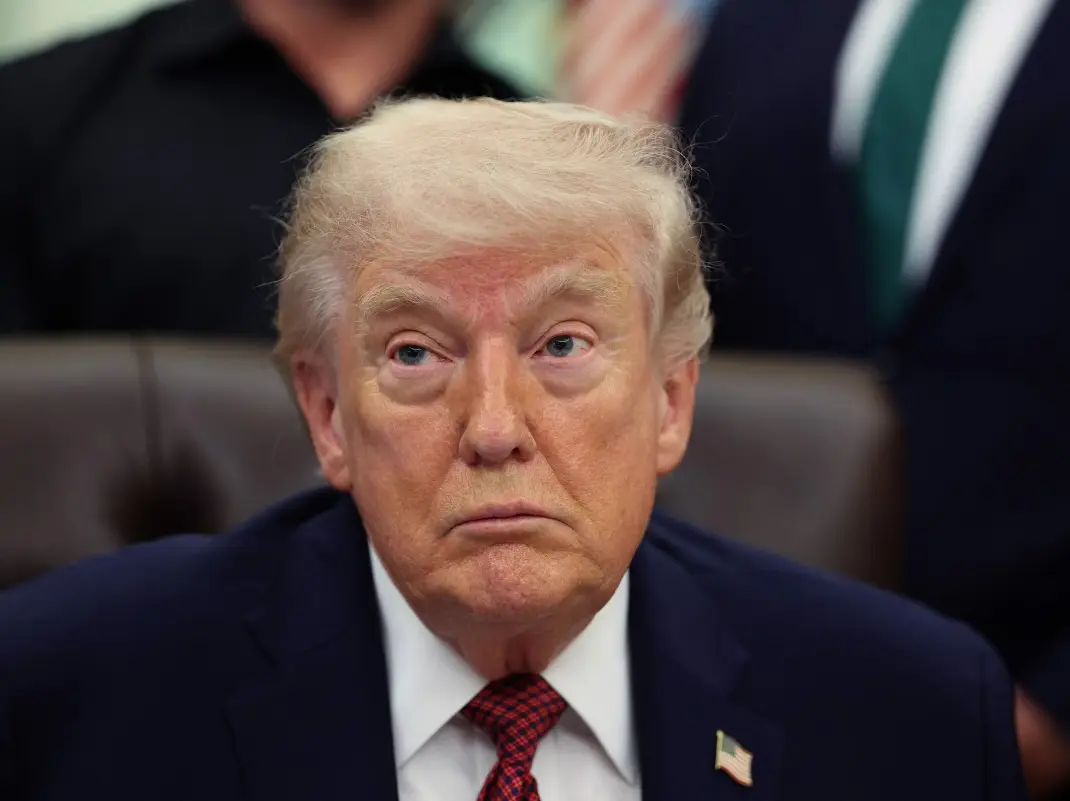
&imwidth=800&imheight=600&format=webp&quality=medium "‘No one knows what’s going on except…’: Ex-US official says Trump has ‘absolutely brilliant’ strategy to force Iran to ‘capitulate’")
A former US national security official has defended President Donald Trump’s approach towards Iran, describing it as a calculated strategy aimed at forcing Tehran into “capitulation” through sustained military and economic pressure.
Robert Harward, speaking to Fox News on Sunday (April 19), said the campaign was already placing a significant strain on Iran. He cited a recent maritime incident in which US forces intercepted an Iranian vessel attempting to breach a naval blockade. “There was an Iranian ship that came through today and tried to break the blockade, which the US intercepted,” Harward said, adding that ship movements were being shaped both by choice and by perceived threat.
Rising tensions over Hormuz
Also read: Indian NSA Ajit Doval visits Riyadh, meets Saudi leaders amid West Asia war, Hormuz tensions
His remarks came amid heightened tensions in the Strait of Hormuz, a critical global shipping route. After a brief reopening, Iran shut the strait again following the imposition of a US-led naval blockade. Reports have indicated that forces fired on vessels attempting to pass, with two Indian merchant ships among those hit. The situation escalated further after the US seized an Iranian-flagged cargo ship in the Gulf.
Trump said the vessel was intercepted after attempting to breach the blockade. Tehran condemned the move as a ceasefire violation and described it as an act of armed piracy, warning of retaliation.
Trending Stories
&imwidth=180&imheight=135&format=webp&quality=medium)
Viral video shows cross falling on Colombia priest, no official confirmation | WATCH
&imwidth=180&imheight=135&format=webp&quality=medium)
Trump’s approval ratings hit a new low, Democrats want US president to campaign more
&imwidth=180&imheight=135&format=webp&quality=medium)
France reports first human case of livestock virus Shamonda, patient dies; what we know so far
&imwidth=180&imheight=135&format=webp&quality=medium)
Trump called Musk to lift Starlink restrictions affecting Ukraine's military operation: Report
&imwidth=180&imheight=135&format=webp&quality=medium)
Two BrahMos missiles on Tejas, triple the range and 100% indigenisation, says former BrahMos CEO
&imwidth=180&imheight=135&format=webp&quality=medium)
Ilhan Omar breaks silence over alleged marriage to her brother; Trump thinks it's 'really good answer'
&imwidth=180&imheight=135&format=webp&quality=medium)
Pakistan signs another defence pact even as Makkah Alliance shows no teeth. This time, it's with Qatar, Indonesia, Turkey
&imwidth=180&imheight=135&format=webp&quality=medium)
Netanyahu dials PM Modi, invites him and Capt Smit Machchhar to light torch on Israel’s Independence Day
&imwidth=180&imheight=135&format=webp&quality=medium)
'This time I’m not doing it': Trump reveals Google CEO refused his Atlantic Ocean renaming idea
&imwidth=180&imheight=135&format=webp&quality=medium)
Acton was raped by her stepfather as a child, Ramaswamy mocks it
&imwidth=180&imheight=135&format=webp&quality=medium)
Iran to invade neighbours soon, Israeli jets in action, American troops ready to strike any moment
&imwidth=180&imheight=135&format=webp&quality=medium)
US midterms 2026: US Supreme Court allows New Hampshire to restrict student IDs for voting
&imwidth=180&imheight=135&format=webp&quality=medium)
Putin fires nuclear capable hypersonic missiles, Zelensky ready to surrender 25% territory
&imwidth=180&imheight=135&format=webp&quality=medium)
Trump ordered to answer questions under oath in BBC defamation lawsuit by December 11
&imwidth=180&imheight=135&format=webp&quality=medium)
Putin says Russia is ready to resume Ukraine-US peace talks but rejects 'short ceasefire' amid deadly attacks
&imwidth=180&imheight=135&format=webp&quality=medium)
From Agni-V to Project Kusha: How are India’s indigenous missile systems and defence shield reshaping modern warfare
&imwidth=180&imheight=135&format=webp&quality=medium)
'It's a crime not to see this scene': Tehran puts Trump 'behind bars'
&imwidth=180&imheight=135&format=webp&quality=medium)
What is the ‘heat ray’ weapon? Pete Hegseth reportedly authorises DHS to test it at US-Mexico border
&imwidth=180&imheight=135&format=webp&quality=medium)
Will Rohit and Kohli play ODI World Cup 2027? BCCI president Manhas says board 'not in a position to comment'
&imwidth=180&imheight=135&format=webp&quality=medium)
China's dancing robot turns violent bodyguard, lifts cars and fights intruders - Watch
&imwidth=180&imheight=135&format=webp&quality=medium)
Watch: India rejects ‘imprecise and unsupported’ references in UN migrant rights report
&imwidth=180&imheight=135&format=webp&quality=medium)
US to get 850 F-35 stealth fighter jets under 10-year Pentagon-Lockheed deal
&imwidth=180&imheight=135&format=webp&quality=medium)
GRAVITAS | Putin fires nuclear-capable hypersonic missiles, Zelensky ready to surrender 25% territory
&imwidth=180&imheight=135&format=webp&quality=medium)
IIFA 2026: Salman Khan warns paps, kisses little fan and hugs Kareena Kapoor at press conference
&imwidth=180&imheight=135&format=webp&quality=medium)
US business activity grows in June, but tariffs and inflation cloud outlook
&imwidth=180&imheight=135&format=webp&quality=medium)
'That was great, who threw that punch?': Trump asks as protester punched at rally
&imwidth=180&imheight=135&format=webp&quality=medium)
‘I caution the president...’: Trump’s ex-press secretary warns after Zacharia’s exit
&im=FitAndFill=(700,400)&imwidth=180&imheight=135&format=webp&quality=medium)
Serbia elections: Nearly 150,000 people take to streets in massive rally against Aleksandar Vucic | In pics
&imwidth=180&imheight=135&format=webp&quality=medium)
Trump’s bid to put his name on everything: This time, it was Atlantic Ocean; a look at past efforts
&imwidth=180&imheight=135&format=webp&quality=medium)
'This is despicable': Amy Acton hits back at Vivek Ramaswamy over Ohio campaign ad featuring her estranged mother
&imwidth=180&imheight=135&format=webp&quality=medium)
Finance influencer dies by suicide in Chennai; father accuses tech CEO, who denies charge
&imwidth=180&imheight=135&format=webp&quality=medium)
'Vivek should keep it up': Trump defends Ramaswamy's controversial campaign ad targeting Amy Acton
&imwidth=180&imheight=135&format=webp&quality=medium)
One man, 8 months of work, and a river dirty again: Why Bittu Tabahi may quit
&imwidth=180&imheight=135&format=webp&quality=medium)
ENG vs SL: Harry Brook’s 202 goes in vain as Sri Lanka pull off second-highest ODI chase
&imwidth=180&imheight=135&format=webp&quality=medium)
ENG vs SL: Harry Brook breaks Shubman Gill’s record for fastest ODI double century
&imwidth=180&imheight=135&format=webp&quality=medium)
Saudi Arabia targeted yacht carrying 14 Indians in Red Sea, rescue underway, Houthis claim
‘No one really knows what’s going on except the president’
Harward also suggested that the broader US strategy involved an element of unpredictability. “No one really knows what’s going on except the president,” he said. “I don’t know if that’s part of his deception plan or not, but the campaign has been absolutely brilliant.” He added that recent US actions had defied expectations, including strikes on Iran and the recovery of a pilot.
“At the end of the day, this strategy will force the Iranian government to capitulate,” Harward said.
‘We’re crushing them economically’: Iran
Iran, however, has responded by tightening its control over the strait, warning that if its oil exports are restricted, it will not allow other countries to pass freely. Harward maintained that Washington’s objective was to restore free navigation while compelling Iran to abandon its nuclear ambitions. He argued that the ongoing blockade was already having a severe economic impact, saying, “We’re crushing them economically. I’ll be shocked if the regime doesn’t come back to the negotiation table.”
Meanwhile, Iran has rejected claims that it agreed to resume peace talks with the US. On Sunday (April 19), Tehran denied reports of a second round of negotiations in Pakistan, citing what it called excessive US demands, shifting positions and the continuing naval blockade as reasons for refusing dialogue.

