Venezuela earthquake update: Was the 'doublet' a single Big One? Experts think it was

&imwidth=600&imheight=450&format=webp&quality=medium "Venezuela earthquake update: Was the 'doublet' a single Big One? Experts think it was")
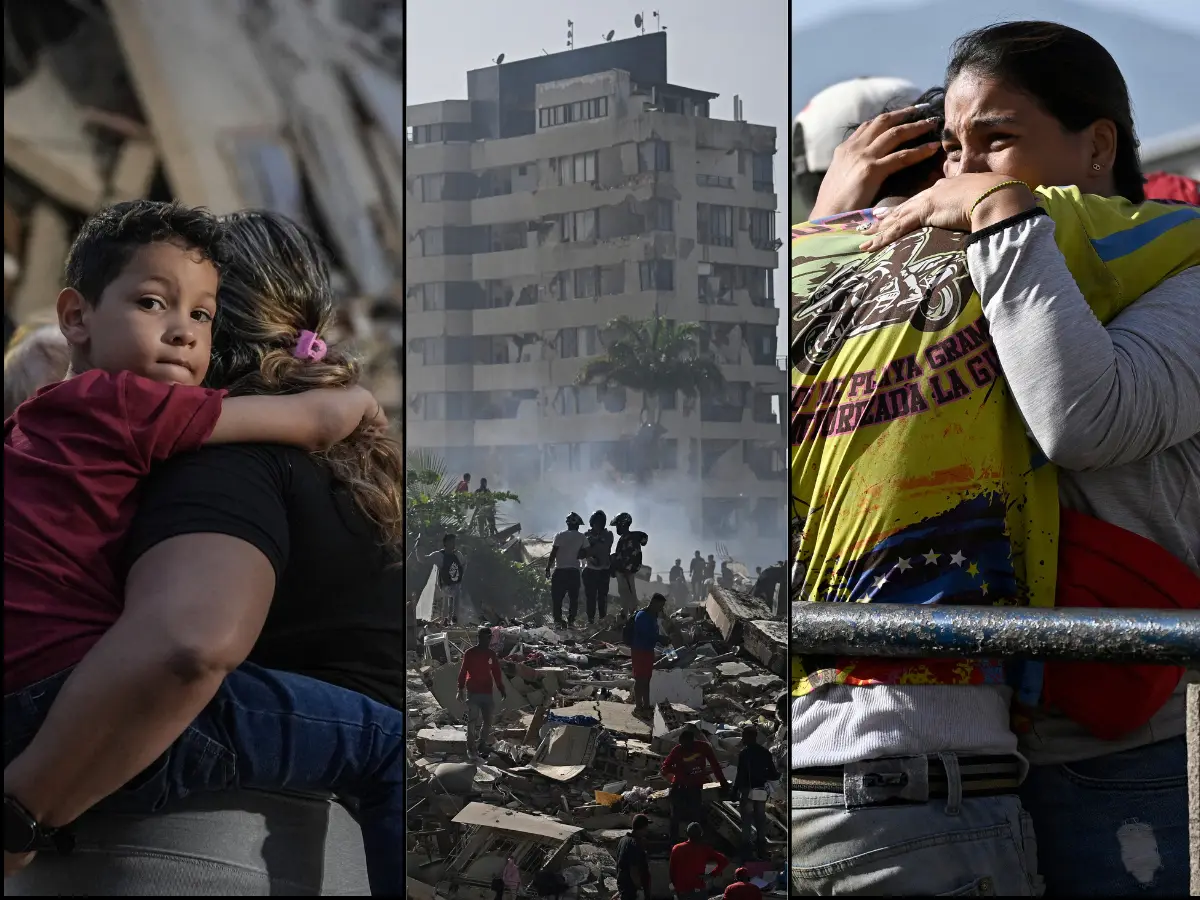
Venezuela witnessed the deadliest earthquake in over 125 years. Photograph: (AFP)
The twin earthquakes in Venezuela could actually have been one large temblor instead of two separate ones, experts say. As the fault ruptured, several pulses were triggered, and the domino effect likely led to a bigger pulse, the 7.5 quake.
Experts think that Venezuela was not struck by two major earthquakes on Wednesday, but it was actually a single temblor. According to the US Geological Survey, what the country witnessed was a rare phenomenon called a "doublet", where two major earthquakes struck back-to-back. However, scientists say that an analysis in the coming days could show that it was one large earthquake and not a duo. Judith Hubbard, an earthquake scientist at Cornell University, said that as seismologists piece together what happened in Venezuela on June 24, "they may not have a conclusive idea of whether it was one earthquake or two earthquakes," according to CNN.
Double earthquakes are more destructive as both release the same amount of energy. When aftershocks are much weaker than the primary earthquake, it is defined as a single earthquake. Doublets are not rare since Venezuela was slammed by 6.2- and 6.3-magnitude earthquakes in September 2025, according to USGS.
Venezuela was shaken by a 7.2-magnitude earthquake first, followed by a 7.5-magnitude quake 39 seconds later. While it was detected as two separate earthquakes on seismometers, people in the region would have felt it as one big one, Judith says.
A larger pulse within the first one
"A magnitude 7.2 earthquake, like the first one, would take about 30 or 40 seconds to finish," she told NPR, adding that defining a break between that one and the next one is a little unclear. She says that people's accounts show that they felt "one very large earthquake." Hubbard added that an earthquake measuring 7.5 doesn't happen all at once. It starts at one location, propagates along the fault, and ruptures different parts as it moves. "In Venezuela’s case, the first pulse, responsible for the 7.2 quake, could have triggered a domino effect of pulses that turned into the larger sequel," Hubbard says.
Trending Stories
)
)
)
)
)
)
)
)
)
)
)
&im=FitAndFill=(700,400))
)
)
)
)
)
)
)
)
)
)
)
)
)
)
)
)
)
)
)
)
)
)
)
)
)
)
Experts say that what could have happened in the case of Venezuela is that the second and bigger earthquake was triggered while the first one was still actively shaking. It was like a "double rupture". So when the first quake was shaking the ground, triggering chaos, an even larger fracture ripped open on the fault. The larger pulse happened inside the shaking of the first one, making it really hard to see in the current data, Hubbard said.
If it were a single earthquake, its magnitude likely stood at 7.6, according to Hubbard. It is hard to tell the difference between these two fault orientations and slip directions until more data is available, she added.
Aftershock warning for Venezuela
Meanwhile, the USGS has warned that one aftershock of about magnitude 6.5 could occur in the region in the coming days or weeks. It can even be a bigger one, possibly larger than magnitude 7.5, although the chances are low. The death toll from the twin quakes has risen to 235, with 4,300 reported injured.

