

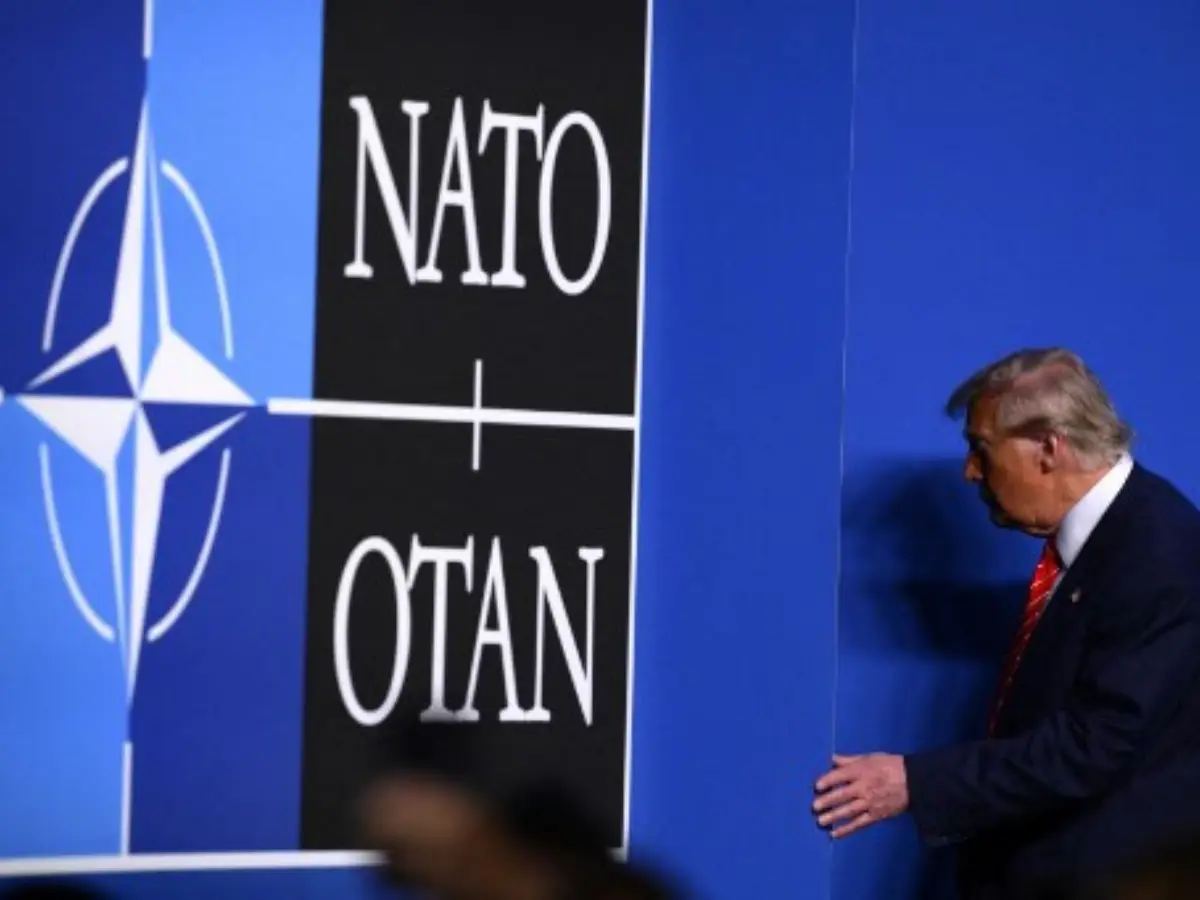
&imwidth=800&imheight=600&format=webp&quality=medium "Is OTAN NATO written backwards? Not really! Here's why both words are seen on defence bloc's sign")
NATO, or The North Atlantic Treaty Organization, is also seen written with the letters switched backwards - OTAN. While it might look like NATO has simply been written as OTAN for some diplomatic or official reason, that is not the case. NATO is an intergovernmental transnational military alliance that came into existence on 4 April 1949. It has 32 member states—30 European and 2 North American-and the defence bloc works for the collective security of all nations that are a part of the alliance. Its main aim was to create a safe environment during the Cold War and defend countries against the threat posed by the Soviet Union. However, it continues to remain active long after the dissolution of the Soviet Union.
NATO-OTAN are not letters merely arranged backwards. While NATO stands for North Atlantic Treaty Organization, OTAN is the abbreviation of its French name - Organisation du traité de l'Atlantique nord.
Why does NATO have a French name?
The reason for having a French name also for NATO is that France was one of the original twelve founding members of NATO in 1949. Also, the bloc has two official languages - English and French. So the defence bloc's name is written both in English and French. Besides, French has held a prominent place as a language in international diplomacy.
Having started with 12 members, NATO has grown over the years, with new members being added ten times. Sweden was the most recent addition, having joined the alliance on 7 March 2024. There are four aspiring members: Bosnia and Herzegovina, Georgia, and Ukraine. Kyiv has been vying to become a member of NATO for years now. It urged to hasten its application after Russia attacked Ukraine in February 2022. NATO's expansion has become a reason for increasing tensions with countries like Russia.
Trending Stories
&imwidth=180&imheight=135&format=webp&quality=medium)
Other Mommy leads North American box Office as Verity, Resident Evil round out top four
&im=FitAndFill=(700,400)&imwidth=180&imheight=135&format=webp&quality=medium)
Navratri 2026: 9 days, 9 forms of Goddess Durga and 9 colours- Check the complete list
&im=FitAndFill=(700,400)&imwidth=180&imheight=135&format=webp&quality=medium)
Is sending robots to Mars easier than sending humans?
&imwidth=180&imheight=135&format=webp&quality=medium)
A watchdog rated 'ChatGPT for Teens' an unacceptable risk and says keep under-18s off it
&imwidth=180&imheight=135&format=webp&quality=medium)
1,500 drones illuminate Mumbai sky as Cordelia Cruises unveils second ship, Cordelia Sky
&imwidth=180&imheight=135&format=webp&quality=medium)
'Just coincidence': Police mistakes protester as AISA chief Neha Bora, arrests her from site
&imwidth=180&imheight=135&format=webp&quality=medium)
Anthropic's AI invented a murder witness and sent the fake tip to Philadelphia police
&imwidth=180&imheight=135&format=webp&quality=medium)
CJI Surya Kant declines INDIA bloc leaders’ request for meeting ahead of march to SC, asks them to file petition
&imwidth=180&imheight=135&format=webp&quality=medium)
One Indian killed in Riyadh airport attack; 11 others injured : MEA
&imwidth=180&imheight=135&format=webp&quality=medium)
Imran Khan released hours after Mumbai Police detain him during CJP protest
&imwidth=180&imheight=135&format=webp&quality=medium)
Nathan Lyon completes 1,000 Test runs at No. 10 to script rare cricket feat
&imwidth=180&imheight=135&format=webp&quality=medium)
Top AI models flunked a test of inventing new AI research, so much for self-improving AI
&imwidth=180&imheight=135&format=webp&quality=medium)
Wasim Jaffer blames Ajit Agarkar-led selection panel for Virat Kohli’s Test retirement
&imwidth=180&imheight=135&format=webp&quality=medium)
'Ouch!!! That must hurt': Kangana Ranaut hails Kamal Haasan's sharp reply to Elon Musk over Starlink row
&imwidth=180&imheight=135&format=webp&quality=medium)
Sidhu Moose Wala’s younger brother wins hearts by recreating late singer’s signature move at Toronto Hologram Show
&imwidth=180&imheight=135&format=webp&quality=medium)
Meta's Muse AI could be a security nightmare for India's billion-plus users
&imwidth=180&imheight=135&format=webp&quality=medium)
UK school ditches technology, shifts from screen to pen and paper for learning
&imwidth=180&imheight=135&format=webp&quality=medium)
IND vs WI, 3rd T20I: Abhishek Sharma smashes 18-ball fifty, sets record for fastest to 2,000 T20I runs
&imwidth=180&imheight=135&format=webp&quality=medium)
Houthis claim Riyadh airport attacks, Aramco strikes; issue fresh warning to airlines, travellers and workers
&imwidth=180&imheight=135&format=webp&quality=medium)
Portugal Federation confirms Cristiano Ronaldo’s return to national team despite suspension
&im=FitAndFill=(700,400)&imwidth=180&imheight=135&format=webp&quality=medium)
New OTT releases this week (October 12-18, 2026): Sacrifice, Koffee with Karan S9, Roadies Rebirth- 6 titles coming on Netflix, JioHotstar and more
&imwidth=180&imheight=135&format=webp&quality=medium)
Microsoft's Nadella says treat every AI model as already hacked, and build an 'emergency brake'
&imwidth=180&imheight=135&format=webp&quality=medium)
Delhi protest: CJI Surya Kant declines to meet India Bloc leaders
&imwidth=180&imheight=135&format=webp&quality=medium)
Are Gold and Silver poised for a rebound soon?
&imwidth=180&imheight=135&format=webp&quality=medium)
China imposes first-ever sanctions on ministers from Taiwan allies: What this means
&imwidth=180&imheight=135&format=webp&quality=medium)
McSweeney reveals how studying Virat Kohli’s YouTube clips helped Australia A conquer India
&imwidth=180&imheight=135&format=webp&quality=medium)
Maharashtra appoints FDA commissioner Tukaram Mundhe as secretary of committee for MPSC overhaul amid stir
&imwidth=180&imheight=135&format=webp&quality=medium)
The street cannot govern India, but the government cannot ignore it either
&imwidth=180&imheight=135&format=webp&quality=medium)
Iran: US accepted some conditions, Clarity needed on others
&imwidth=180&imheight=135&format=webp&quality=medium)
Nana Patekar's cause of death confirmed; here's what his postmortem report says
&imwidth=180&imheight=135&format=webp&quality=medium)
iPhone Duo price index: Tracking Apple’s latest pricing trends
&imwidth=180&imheight=135&format=webp&quality=medium)
'Say no to Muse': Meta has no control over its own moderation AI while it forces a security nightmare on everyone
&imwidth=180&imheight=135&format=webp&quality=medium)
Delhi Protest: Congress calls for march to Supreme court
&imwidth=180&imheight=135&format=webp&quality=medium)
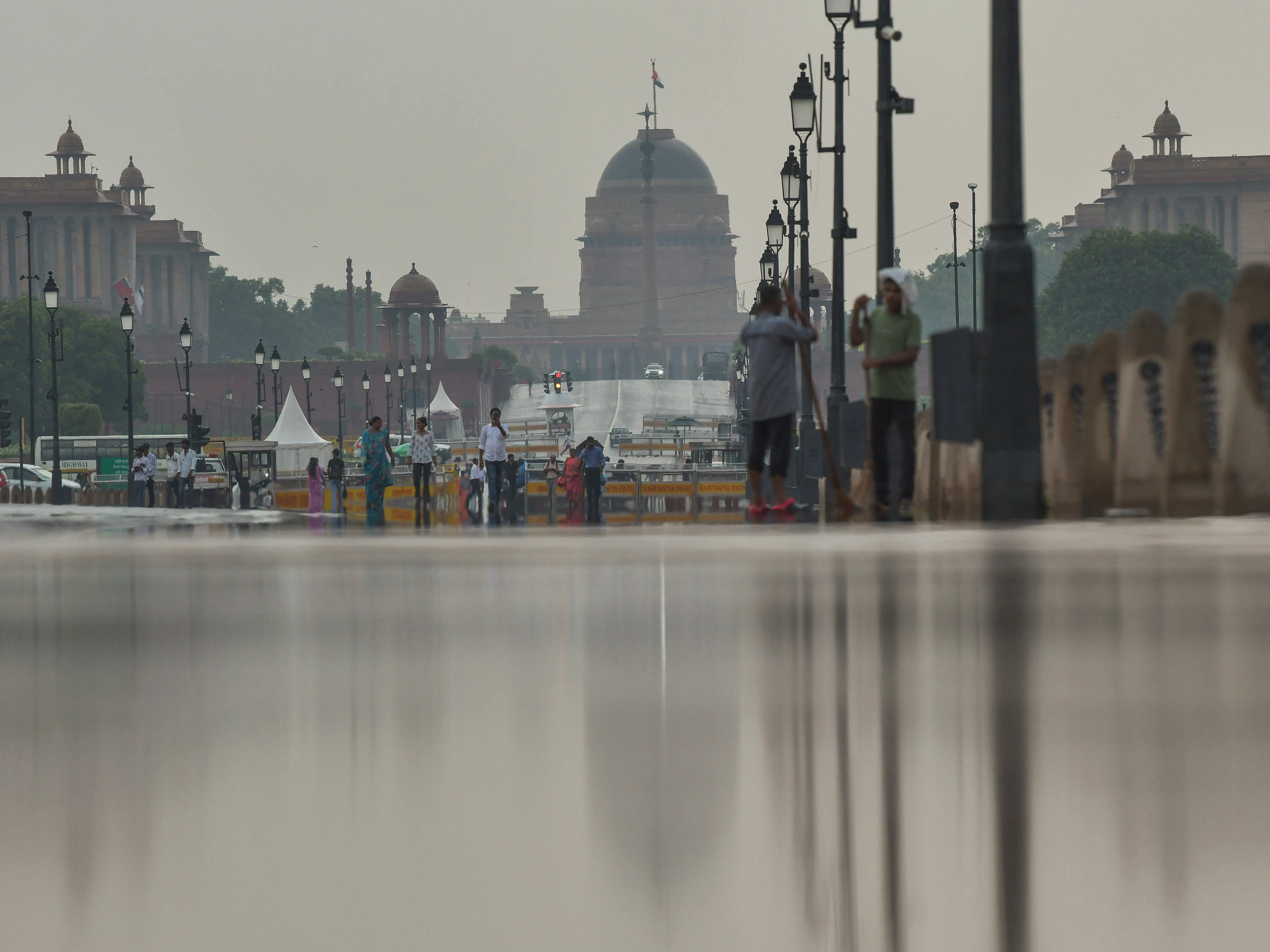
Delhi wakes up to heavy rain, thunderstorms; yellow alert in place; temperature drops
The bloc doesn't meet every year but only when new policies or new member nations are set to be introduced. To date, 34 NATO summits have happened. The most recent one was held in The Hague, Netherlands, on June 24 and 25. In this edition, it was decided to increase defence spending by each country. According to the new language, "allies commit to invest 5 per cent of GDP annually on core defence requirements as well as defence-and security-related spending by 2035." Most of the member nations agreed, while Spain said it would only invest two per cent.

