Asian Hornet may have established presence in UK, threatening native bees

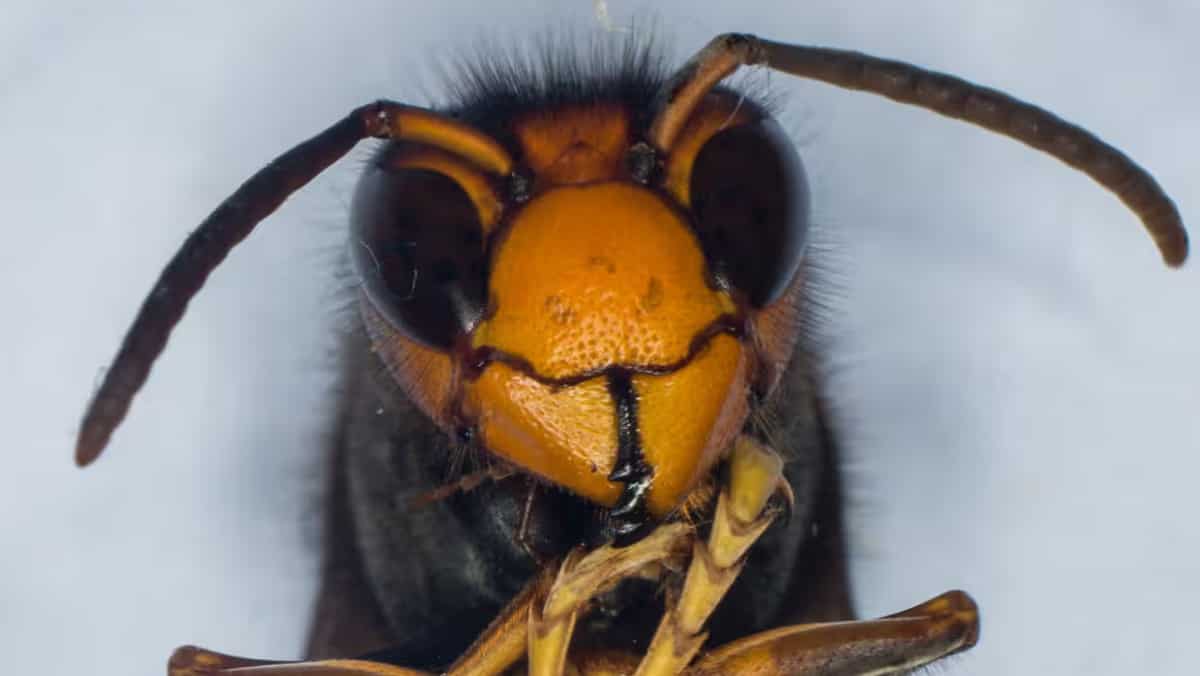
Asian hornet
Conservationists fear that the Asian hornet has likely established itself in the UK, following the discovery of a record number of nests, reported Guardian. The UK has witnessed a significant surge in sightings of this invasive species in 2023, with 22 confirmed cases, in stark contrast to just two sightings in each of the last two years. This brings the total number of sightings since 2016 to 45.
Kent emerges as concern
The majority of these sightings have occurred in Kent, prompting concerns that the species may have firmly rooted itself in the region. The government's strategy involves locating and eliminating every hornet and nest to prevent overwintering and multiplication, as eradicating them once established is a formidable challenge.

Expert apprehension
Renowned bumblebee conservation expert, Professor Dave Goulson from the University of Sussex, expressed his apprehension, suggesting that it may be too early to confirm, but the situation appears ominous.
He reportedly told the media outlet, “If even one nest evades detection and reproduces it will then probably become impossible to prevent them establishing.”
)
Three labourers killed as DU student loses control of his car, rams into them on Dwarka Expressway
)
Pentagon revives mandatory testosterone testing for male troops aged 30 and above
)
FACT CHECK: Why did PM Modi ask Xi ‘is it okay’ at BRICS Summit? New video reveals...
)
India seeks to build a full semiconductor supply chain
&im=FitAndFill=(700,400))
From Abhishek Sharma to Sahil Chauhan, 5 batters with fastest T20I hundreds
)
Indian activist-lawyer Prashant Bhushan's post brings focus on ‘conflict of interest’ appointments of ex-govt officials at Reliance, Adani groups
)
US And Denmark reach Greenland deal, Trump announces expanded military presence
)
Former India player Diana Edulji wants Smriti Mandhana to replace Harman as skipper at the earliest
)
China may have gained access to US's classified F-35 jets; parts meant for repairs diverted to Hong Kong, sparking Pentagon inquiry
&im=FitAndFill=(700,400))
Meet top 5 batters in the latest ICC T20I Rankings
)
Godfather of AI Geoffrey Hinton gives US lawmakers a one-year warning on AI
)
Shivakumar attends 79th Kalyana Karnataka Utsav in Kalaburagi
)
Trump signs Russia sanctions law: India faces fresh 100% tariff threat over Russian oil
)
Why Ranveer Singh’s Dhurandhar missed India’s Oscar entry; FFI jury member reveals what happened
)
How did an Australian river with 500 crocodiles pass the Olympic test? Here's how
)
‘Will go to any extent’: Pakistan vows to defend Saudi Arabia amid Houthi attacks
)
The Verdict | When precision fails: US commits war crime in Minab school strike, UN finds
)
Trump signs Russia sanctions bill into law, targets Moscow’s energy sector
&im=FitAndFill=(700,400))
New Friday OTT releases (September 18, 2026): Lust Stories 3, You+Me, Best of the Best- 8 new titles coming on Netflix, Prime Video and more
)
Fast bowler Brydon Carse faces no charges over Derby nightclub incident
)
Flying cars in UAE: Ras Al Khaimah signs deal with Chinese company to test new transport
)
Africa is splitting, and a lot sooner than estimated, giving way to a new ocean
)
'Gangsta' crab shoves knife blade at man and his dog in Florida - Watch
)
Trump bans CNN, MS NOW and Politico from White House over ‘FAKE NEWS’
)
Trump 2.0: Dark days ahead for America’s ‘imperial presidency’
)
Trump's Greenland dream comes true? POTUS announces 'Infinite Life' deal with Denmark, claims permanent US control
)
Laura Wolvaardt sets new world record for most WT20I runs in a year
)
Drone strikes cooling tower at Russia's Kursk Nuclear Plant, IAEA confirms
)
Who is Khalilur Rahman? All you need to know about 81st UN General Assembly President
&im=FitAndFill=(700,400))
Meet top 5 bowlers in latest ICC T20I rankings
)
Indian Cinema bets big on mythology, brings ancient stories to modern audiences
)
Ukraine plans record $109 bn defence spending, nearly two thirds of budget amid Russia war
)
Russia holds first parliamentary elections since the beginning of the Ukraine war
&im=FitAndFill=(700,400))
Meet top 5 Indian batters with fastest T20I centuries
Also Read | Microsoft's WordPad, launched in 1995, set to be removed from Windows
Goulson stressed that once established, Asian hornets are likely to persist indefinitely, posing a substantial threat to native bee populations.
He added, “The arrival of Asian hornets would provide a significant new threat to insect populations that are already much reduced due to the many other pressures they face, such as habitat loss, pesticide use, and so on.”
Asian hornets are notorious for dismembering and preying on native bees, particularly honeybees.
Their presence in France has also caused concern due to the large number of insects they've killed. Positioned outside honeybee hives, they capture incoming and outgoing bees, dismember smaller insects, and feed their thoraxes to their offspring.
Hope remains for control
Matt Shardlow, Chief Executive of the insect charity Buglife, echoed Goulson's concerns but suggested that it might be premature to abandon control efforts.
Also Read | Convicted Proud Boys member claims Trump will pardon him in 2024
“Removing nests has probably managed to slow its colonisation, and the abundance of different wasps can be strongly influenced by weather, so we can still hope that eradication efforts, perhaps with some lucky weather, might nip this colonisation in the bud.”
Watch | Labour reshuffle: Sir Keir Starmer to shake up shadow cabinet
Julie Coleman, a trustee of the British Beekeepers Association in Kent, speculated that hornets might have already overwintered in the region.“The fact that we seem to have a cluster around the coast in Kent, also Dorset, Plymouth, Weymouth and Hampshire, makes me think they are coming across on the wind. And there could have been an overwintered nest in Kent which has sent out hibernating queens in the autumn.”
Asian hornets first arrived in Europe in 2004, likely transported inadvertently via cargo from Asia. They quickly spread across western Europe and have now reached Britain, possibly aided by post-Brexit trade rules.
WATCH WION LIVE HERE You can now write for wionews.com and be a part of the community. Share your stories and opinions with us here.