
&imwidth=800&imheight=600&format=webp&quality=medium "Cosmic ray pinging across universe can trigger life on bodies far from their Sun")
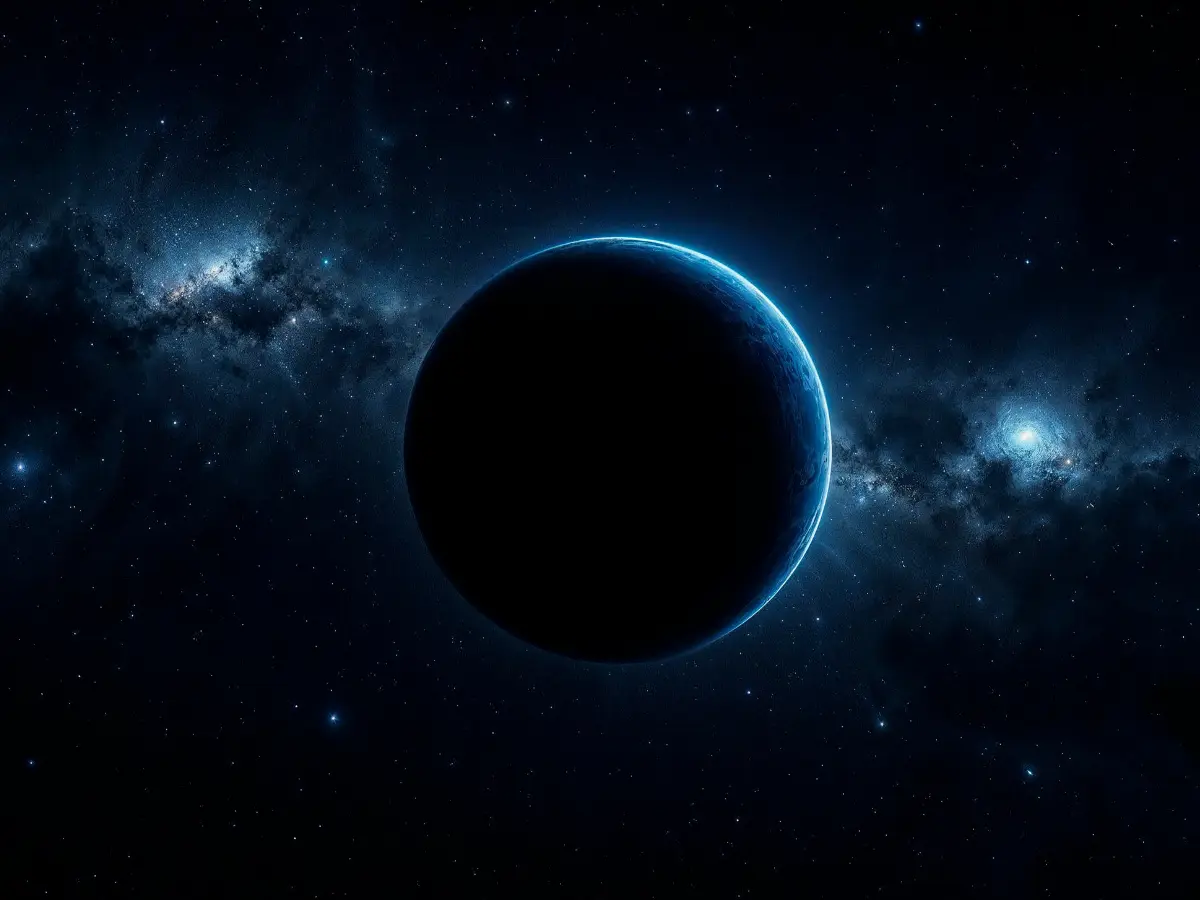
The search for alien life is mostly limited to the “Goldilocks Zone”, that is, the distance from a star where liquid water and ample light could exist for life to thrive. However, a new study has raised questions about this theory. It states that even if a planet is far away from its host star, it could still support life. Scientists from New York University Abu Dhabi’s Centre for Astrophysics and Space Science state that cosmic rays can also carry enough energy to sustain life in a remote world. These rays are high-speed beams of particles that bounce from one point to another across the universe. They theorise that a process known as radiolysis can begin in bodies that are far away from their host star. When the cosmic rays reach a planet, they can penetrate deep inside and strike underground reservoirs of water, splitting the water particles. The study can change the definition of a habitable zone in different star systems. Also Read: Can a country barricade the Moon? NASA fears losing out to China because of its own safety zone rule
Also Read: Between Japan and Alaska, a dark alien world at 31,000 feet has stunned scientists. Here's why
Mars, Jupiter and Saturn moons were analysed for cosmic rays

The subject of their experiments includes Mars, Saturnian moon Enceladus and Jovian moon Europa. They carried out simulations to determine how exposure to different levels of cosmic rays could influence the surfaces of the three bodies. The moons were chosen because years of research have led scientists to believe that both of them contain water below their icy surface. The experiment aimed at understanding whether radiolysis could happen on these three bodies. They ended up with some promising results, especially with regard to Enceladus. The paper states that all three bodies could support some level of radiolysis, with the Saturnian moon emerging as the frontrunner. The revelation was published in a paper in the International Journal of Astrobiology. Also Read: Scientist reveals HOW and WHEN alien 'mothership' could attack Earth, warns governments to take action
What is the habitable zone? Which alien planet could host life?
Trending Stories
)
Why asking questions could be more important than memorising answers
)
BRICS Summit 2026 full schedule: Day-wise agenda, timings and key issues - All you need to know
)
BRICS Summit 2026: Iran's Pezeshkian praises PM Modi at BRICS
)
BRICS rejects EU carbon tax as ‘punitive’, ‘discriminatory’; warns of burden on Global South
)
'Iran won't surrender': Pezeshkian sends blunt message to US while attending BRICS Summit in India
)
Why dehydration is the hidden cause of travel fatigue on long flights
)
Top 5 places to visit in Goa beyond its famous beaches
)
'He is popular...': Malaysian PM Anwar Ibrahim's praise for PM Modi during bilateral meeting | WATCH
)
BRICS Summit 2026: 30+ countries seek BRICS membership
)
Frustrated man demolishes his kitchen after thousands flock to see Mother Mary his wife spotted on the wall
)
BRICS Summit 2026: PM Modi, Xi reach key consensus on ties, China to assume BRICS chairmanship in 2027
)
Trump says Canada eager to reach a deal, it could come ‘fairly soon’ if Ottawa treats US farmers better
)
From drones to KAAN fighters: Turkey outlines 229% surge in defence spending amid regional shifts
)
‘Partners, not rivals’: Xi outlines four point plan for stronger India-China ties
)
Could staying indoors all day affect your health?
)
Bigg Boss 20: Uditi Singh reacts to ex Karan Wahi’s possible wildcard entry
)
Why going digital does not always mean becoming more efficient
)
800 million years old - Scientists discover 'fingerprints' of supercontinent Gondwana in ancient rocks
)
Israel spent nearly $470,000 on PM's hair, makeup since 2019, data shows
)
From severe mobility problems to recovery: Madhuri the elephant’s journey of wildlife care
)
BRICS Summit day 1: New Delhi declaration adopted with full consensus, big diplomatic win for India
)
From India, Putin warns Europe against sending troops to Ukraine, Zelensky expresses willingness to meet him at G20 Summit
)
Did Iran President Pezeshkian touch feet of Hindu spiritual leader at Delhi event as shown in viral video?
)
9-year-old Chennai prodigy clears Cambridge IGCSE grade 10 exams
)
Reacher actor Alan Ritchson, wife Catherine part ways after 20 years of marriage
)
Why does your body need time to adjust after a long journey?
)
Baba Vanga's first prophecy for 2027 is out, and straight out of science fiction
)
Why does your skin need protection from UV rays?
)
How does the loss of forests affect the way wildlife lives and moves?
)
IND vs AFG, 1st T20I: When and where to watch live streaming in India?
)
Anthropic is giving Claude to schools free, and the reason is not philanthropy
)
BRICS Summit: China resumes Guangzhou-New Delhi flight, issues 'good-neighbourliness' remark ahead of Xi-Modi meet
)
Why do wild animals need quiet places to survive?
)
Humans may lose control of AI: Anthropic CEO calls for slowdown, Altman, Musk back him
The team also gave a new name to this zone where life could possibly thrive, calling it the Radiolytic Habitable Zone. Following their analysis, the researchers believe the thinking behind the habitable zone should be altered. Lead author of the study, Dimitra Atri, said in a statement, “This discovery changes the way we think about where life might exist. Instead of looking only for warm planets with sunlight, we can now consider places that are cold and dark, as long as they have some water beneath the surface and are exposed to cosmic rays. Life might be able to survive in more places than we ever imagined." Astronomers across the world are constantly looking for habitable worlds in the universe. The latest candidate that is believed to be capable of hosting life is the exoplanet K2-18b orbiting a small, red star in the constellation Leo.

