Balochistan wants independence: How Pakistan exploited Balochistan and suppressed its quest for freedom

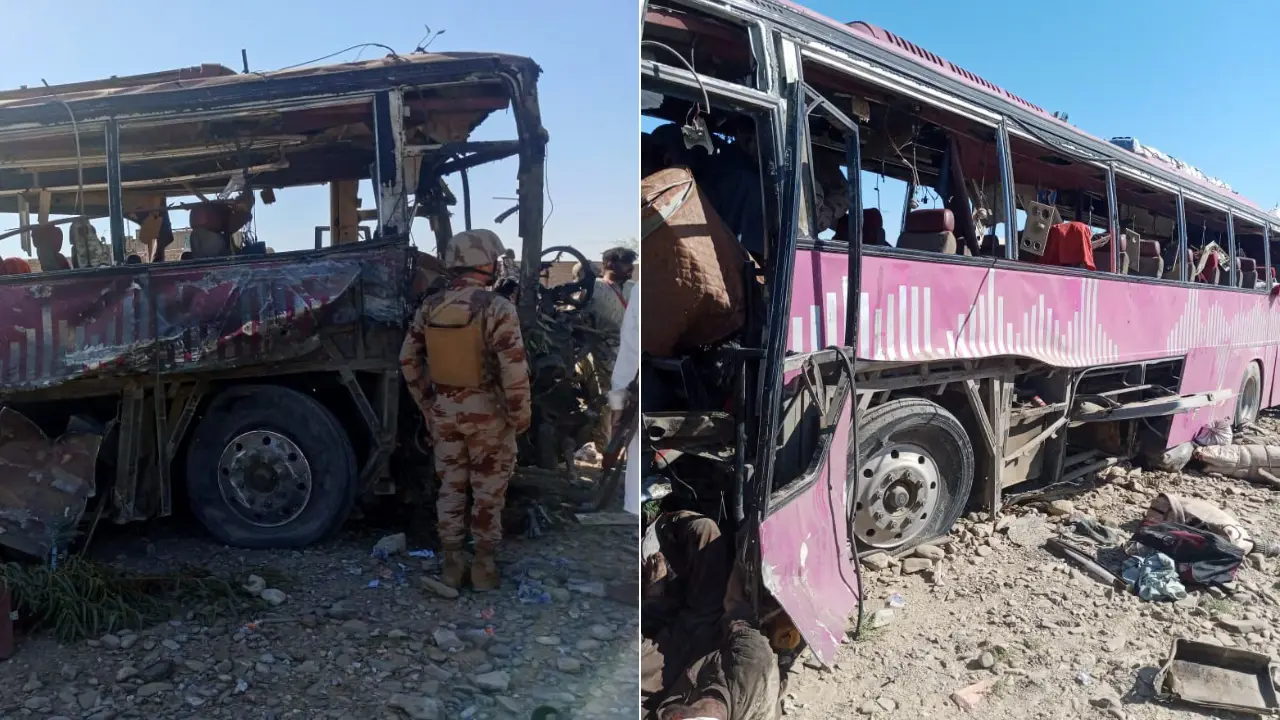
Balochistan wants independence: How Pakistan exploited Balochistan and suppressed quest for freedom. Balochistan attacks Baloch insurgency in South Asia
Balochistan independence movement: In recent days, several developments related to the Balochistan independence movement took place, including a declaration of a separate Baloch state by some of its leaders, and a coordinated 71 attacks on Pakistani forces. Pakistan has been suppressing the Baloch independence movement, even as it exploits the resource-rich province. Here is what you should know about the Balochistan quest for freedom from Pakistan.
Where is Balochistan?

Balochistan is Pakistan’s largest province by area, spanning around 44 per cent of the South Asian nation’s territory.
It is also Pakistan's poorest province.
Balochistan has some 13 million ethnic Baloch population.The Balochis are an Iranic group with a distinct language and tribal culture different from Pakistan.
In fact, historically, the Balochistan region included parts of Iran and Afghanistan, besides Pakistan.
The Balochistan independence movement seeks autonomy or full independence for Balochistan.
&imwidth=180&imheight=135&format=webp&quality=medium)
'Hell of a beautiful a**': Trump compliments Nicki Minaj as rapper joins him in Michigan rally
&imwidth=180&imheight=135&format=webp&quality=medium)
'Hire the robot, fire the human': Bill Gates's words hint at a bleak future
&imwidth=180&imheight=135&format=webp&quality=medium)
'Lousy president': Trump hits back at Obama over 'cheesecake factory' White House jibe
&imwidth=180&imheight=135&format=webp&quality=medium)
Jordan strikes 'terrorist organisations' in Syria after deadly church attack as Damascus shuts main border crossing
&imwidth=180&imheight=135&format=webp&quality=medium)
Microsoft offers voluntary exit packages to 60,000 employees in India, US, UK and Canada
&imwidth=180&imheight=135&format=webp&quality=medium)
WATCH | Virat Kohli returns to training ahead of New Zealand ODI series
&imwidth=180&imheight=135&format=webp&quality=medium)
'He is a red flag': Ex-India strength and conditioning coach on Rohit's fitness regime
&imwidth=180&imheight=135&format=webp&quality=medium)
One dead, six injured in Elizabeth, New Jersey mass shooting; suspect flees
&imwidth=180&imheight=135&format=webp&quality=medium)
Maurene Comey, daughter of ex-FBI director James Comey, was unlawfully fired as federal prosecutor, judge rules
&imwidth=180&imheight=135&format=webp&quality=medium)
Hijack scare unfolds on United flight over suspicious text message. Here is what happened
&imwidth=180&imheight=135&format=webp&quality=medium)
‘That is a miss’: Ravi Ashwin questions Sooryavanshi’s demotion to No. 3 in 2nd T20I vs NZ
&imwidth=180&imheight=135&format=webp&quality=medium)
Pakistan airline PIA unveils new crew uniforms, faces online criticism
&imwidth=180&imheight=135&format=webp&quality=medium)
Police called after 3-year-old scores 10 goals in 12 minutes at Florida youth soccer game
&imwidth=180&imheight=135&format=webp&quality=medium)
Trick or Treat -Anthropic's IPO sales pitch is the perfect Halloween scare for AI enthusiasts
&im=FitAndFill=(700,400)&imwidth=180&imheight=135&format=webp&quality=medium)
New OTT releases this week (October 26-November 1, 2026): Baththa, Akka, The One About Matthew Perry- 7 titles coming on Netflix, Prime Video and more
&imwidth=180&imheight=135&format=webp&quality=medium)
Mohra re-release in 4K: Akshay Kumar, Raveena Tandon’s film to clash with Ranbir Kapoor’s Ramayana
&imwidth=180&imheight=135&format=webp&quality=medium)
US Midterms 2026: Last leg polls and forecasts indicate Democratic momentum, but Senate control remains uncertain
&imwidth=180&imheight=135&format=webp&quality=medium)
'Already tired of his 9-to-5': Baby born with a moustache becomes internet sensation, video goes viral | Watch
&imwidth=180&imheight=135&format=webp&quality=medium)
Zimbabwe slips four places to 14th out of 29 in Africa’s Digital Rights and Inclusion ranking
&imwidth=180&imheight=135&format=webp&quality=medium)
Storm Boelo’s fierce winds push passenger plane onto grass in UK, terrifying landing caught on cam
&imwidth=180&imheight=135&format=webp&quality=medium)
Democrats allege 'desperate efforts to cover up' Trump's involvement in Jeffrey Epstein sex crimes, release 50-page report
&imwidth=180&imheight=135&format=webp&quality=medium)
'She is a beautiful woman': Trump mocks Mexican President Sheinbaum, mimics her voice at US Midterms rally
&imwidth=180&imheight=135&format=webp&quality=medium)
Uttarakhand innovator Ravi Tamta builds flying car without any formal engineering degree
&imwidth=180&imheight=135&format=webp&quality=medium)
US midterms 2026: Democrat Annie Andrews gains bipartisan backing against Trump's pick Darline Graham in South Carolina Senate race
&imwidth=180&imheight=135&format=webp&quality=medium)
Chris Brown given suspended eight-month jail term for London nightclub attack
&imwidth=180&imheight=135&format=webp&quality=medium)
Shah Rukh Khan unveils new poster of King, Internet reacts
&imwidth=180&imheight=135&format=webp&quality=medium)
'Shove that ballroom up your a**': Trump heckled at Mississippi rally over White House ballroom renovations | WATCH
&imwidth=180&imheight=135&format=webp&quality=medium)
Trump accused of 'brutal' rape by ex-Miss Switzerland; Beatrice Keul alleges 'Don's best friend' Epstein facilitated assault in 1993
&imwidth=180&imheight=135&format=webp&quality=medium)
Meta’s AI bet is getting more expensive: What its $95 billion share plan means
&imwidth=180&imheight=135&format=webp&quality=medium)
Trump’s oil and gas holdings surge to $81.6 million amid Iran war as Americans face rising fuel costs
&imwidth=180&imheight=135&format=webp&quality=medium)
'I've done my work sincerely': AR Rahman on facing backlash over Ramayana soundtrack
What is Balochistan independence movement?
The Balochistan's independence movement is as old as the creation of Pakistan in 1947. The erstwhile princely state of Kalat declared independence after the Partition of the Indian subcontinent by the departing British colonisers.
But Balochistan was forcibly annexed by Pakistan in 1948.
Over the years, Balochistan was politically and economically marginalised by Pakistan, along with human rights abuse of Balochis.
Balochistan: a land rich in natural resources, where people remain poor
Most Balochis are poor, which is strange given that their land is rich in resources such as natural gas, coal, copper and gold.
Over the years, Pakistan exploited these resources through the Sui Gas Fields, Saindak, and Reko Diq mines, among others.
These projects earned massive revenues for Pakistan, but Balochis were neglected, with Balochistan continuing to be Pakistan’s poorest province.
EXCLUSIVE| 'Things have got worse in Balochistan': Akbar Bugti's grandson appeals for global support
According to recent estimates, the GDP per capita of Balochistan is $710, while the poverty rate increased from 48 per cent in 2001 to 58 per cent by 2017.
Baloch nationalists contend that Pakistan profits by exploiting its resources and channels the proceeds to Punjab-dominated elites, even as the locals suffer from unemployment and underdevelopment.
The China factor in Baloch independence movement : The fight against CPEC
In recent years, the Baloch nationalists focused their attention on the China-Pakistan Economic Corridor (CPEC).
The $62 billion infrastructure project linking China's Xinjiang to the Gwadar deep-water port runs through Balochistan and has led to the displacement of Baloch populations.
Balochis are angry that Pakistan has prioritised Chinese interests even as CPEC, a part of China's ambitious Belt and Road Initiative or BRI, did not bring economic benefits to Balochistan.
Leaders of Baloch movement were killed or repressed
The Balochistan independence movement is carried out through a number of organisations, including some that use military means to fight the Pakistani forces.
There have been at least five major uprisings against Pakistan.
In 2005, Nawab Akbar Bugti, a former governor and tribal chief of the Balochis, led a rebellion. But he was killed in a 2006 Pakistani military offensive. The killing did not stop the Balochis. In fact, it reinvigorated their movement.
Nawab Bugti's grandson, Brahamdagh Bugti, who lives in exile in Switzerland, heads the Baloch Republican Party, advocating for independence.
Pakistan’s battle within: 7 soldiers killed in IED blast in Balochistan
Hyrbyair Marri, who is the son of another Baloch nationalist leader Khair Bakhsh Marri, leads the Free Balochistan Movement from London, and seeks a secular, democratic Balochistan.
Dr Allah Nazar, leader of the Baloch Liberation Front, operates from Balochistan’s Makran region, focusing on guerrilla tactics.
Another top figure of Baloch movement, Ghulam Mohammed Baloch was killed in 2009, allegedly by Pakistani forces, drawing condemnation from the United Nations.
Top Baloch independence movement organisations
Currently, the top groups in Balochistan Independence movement are the Baloch Liberation Army (BLA), Baloch Liberation Front (BLF), and Baloch Republican Army (BRA).
The BLA, formed in 2000 and led by Hyrbyair Marri, is the largest and most active militant force among the Balochs and has carried out bombings and attacks on infrastructure as well as Pakistan security forces.
The Majeed Brigade of BLA carried out the “Operation Herof” this week, with 71 coordinated attacks targeting military and CPEC assets.
Balochistan on the brink: Armed militants seize checkposts as independence calls grow louder
The BLF, led by Allah Nazar, focuses its operations mainly in southern Balochistan.
Another group, the BRA, tied to Brahamdagh Bugti, also attacks security forces and opposes political dialogue.
Many of these groups have set aside their tribal rivalries and unified recently, forming alliances like BRAS with Sindhi separatists to fight Pakistan together.
How Pakistan suppressed the Balochi independence movement
Pakistan’s response has been brutal, even as it suffered military casualties, including in the recent train hijacking.
‘Republic of Balochistan’ trends on X after activists declare independence from Pakistan
Pakistan has subjected Baloch nationalist leaders to severe repression. There have been a reported 5,000 enforced disappearances of Balochis.
Dozens of extrajudicial killings of Balochis have been reported by rights groups.
The Baloch insurgency is now in its fifth wave since 2005as the local discontent against Pakistan grows.
Global leaders, including India's Prime Minister Narendra Modi, have brought attention to the plight of Balochis under Pakistani rule.

