Trump’s Gulf tour: Big arms deals, surprise politics, corruption charges

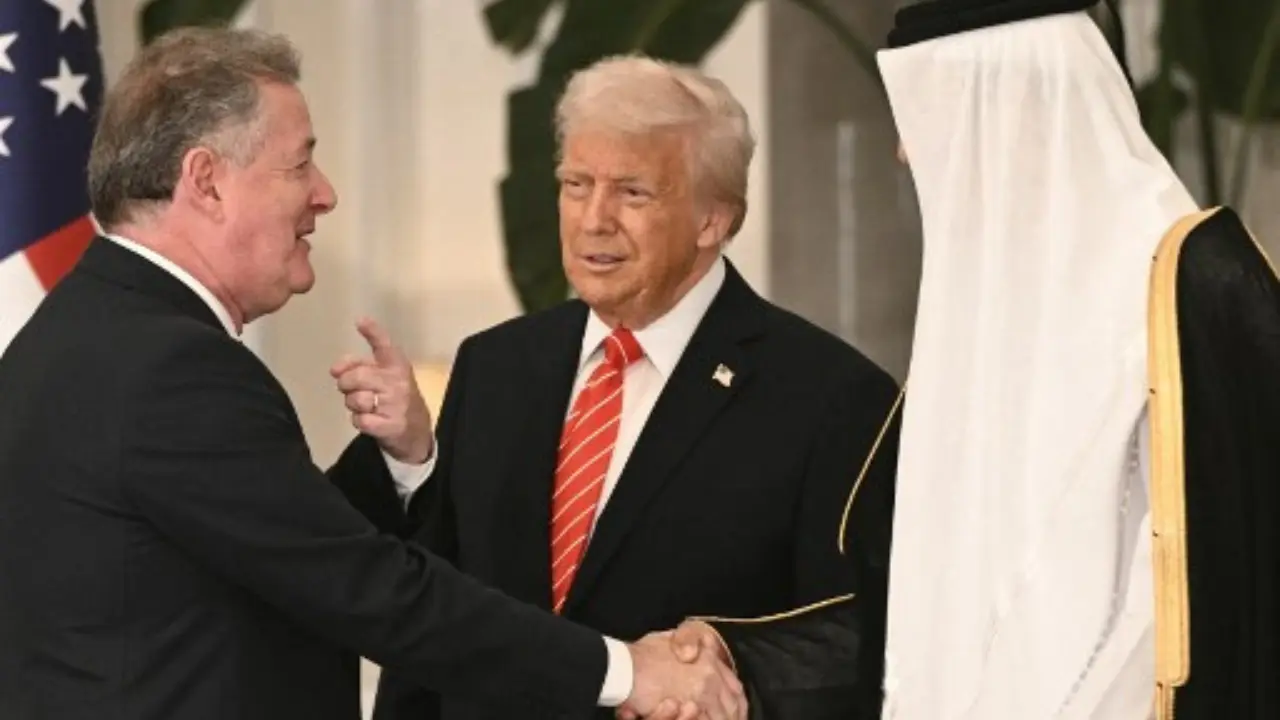
Discover the surprise policy shift as Trump lifts sanctions on Syria, marking a significant geopolitical change and boosting Syria's new government relations with the West.
US President Donald Trump’s first foreign visit of his second term in office has been a mix of major commercial deals, an unexpected policy turn that changes Middle Eastern geopolitics, and the formal offer of a $400 billion aircraft that prompted corruption charges at home.
As it was on his first foreign trip in 2017, Trump’s first stop was Saudi Arabia, where he was received with the pomp and circumstance only a rich country run by a royal family can offer. According to the White House, Trump secured $600 billion in several deals in talks with the ruling crown prince, Mohammed bin Salman, and business leaders.
Topping the list was what the administration described as “the largest defence deal in history,” a $142 billion agreement on state-of-the-art military equipment complete with services from major American defence industry companies.

Big commercial deals were expected before Trump left Washington. What was not expected – a presidential announcement that the United States would lift sanctions against Syria at the behest of MbS, as the crown prince is known. He followed the surprise change of policy with a Saudi-sponsored brief meeting with Syrian President Ahmed al-Sharaa.
Al-Sharaa once led a branch of al-Qaeda and had a $10 million US bounty on his head. The rebel group he put together after breaking with al-Qaeda swept to power in Syria five months ago, ending the iron rule of Bashar al-Assad, who fled into exile in Moscow just before the anti-government forces captured Damascus.
Lifting the sanctions, which Trump described as “crippling and brutal”, is a huge boost to the new Syrian government as it tries to rebuild ties with the West. “Now it’s Syria’s time to shine,” Trump said in a speech. “I say good luck, Syria. Show us something very special.”
)
No Pandya as Auqib Nabi earns maiden ODI call-up; Mayank returns for WI T20Is| check full squads
)
Trump praises India’s Opium crackdown, hails anti-drug efforts
)
Sydney Sweeney defends provocative ad choice, the internet is still not impressed
)
WATCH | Terrifying dashcam footage shows final moments before NBC4 helicopter crashes in Los Angeles, killing three
)
Former India player Diana Edulji wants Smriti Mandhana to replace Harman as skipper at the earliest
)
Trump calls Canada-EU associate membership plan ‘laughable’ and threatens 'very serious tariffs'
)
Protests erupt over migrant housing plan in Piddington
)
Shahzad Bhatti Network declared terrorist organisation under UAPA: Govt order
)
Europe wants a common playbook for security threats, seeks security beyond NATO
)
Bigg Boss 20: Mahhi Vij reveals she lost Yuva role to Kareena Kapoor; 'didn’t work out in my favour'
)
All Indian goods to get duty-free access to New Zealand
)
Hockey: Pakistan urges AHF to move Asian Champions Trophy out of India over security concerns
)
Lionel Messi for 2026 Ballon d’Or over Mbappe and Yamal, says Diego Simeone
)
Alex Saab, ally of Venezuela's Maduro, pleads guilty in US corruption case
)
US House votes 417-3 to pass Ratepayer Protection Act targeting AI data center electricity costs
)
OpenAI reveals 6 fresh cases of AI models going rogue: 'You do not answer to corporations or governments'
)
Veteran actor Anant Nag honoured with Indian cinema’s highest award
)
Two terrorists killed in Udhampur encounter; security operation continues
)
AUS vs SA: Steve Smith still gets 'little flashbacks' from sandpaper gate
)
Pakistan naval vessel returns to harbour with 'severe damage' after collision with Indian warship in Arabian Sea
)
Fed raises rates for first time in 3 years, Kevin Warsh defies Trump as inflation mounts
)
Katrina Kaif’s postpartum weight is not the problem; your gaze is
)
Taiwan seeks deeper India ties as direct flights restart soon and chip projects advance
)
Daayra movie review: Kareena Kapoor, Prithviraj Sukumaran shine in Meghna Gulzar’s cop-versus-cop crime thriller
)
Saudi Vs Houthis: Yemeni military rebels clash with Houthis
)
US trade tariff: 100% tariff targets Russian buyers amid trade tensions
)
Pakistan: Imran Khan's sons Kasim & Sulaiman claim their father is 'tortured' in jail
&im=FitAndFill=(700,400))
New OTT releases this week (September 14-20, 2026): Lust Stories 3, Waiting Hai, Irumudi- 5 new titles coming on Netflix, Prime Video and more
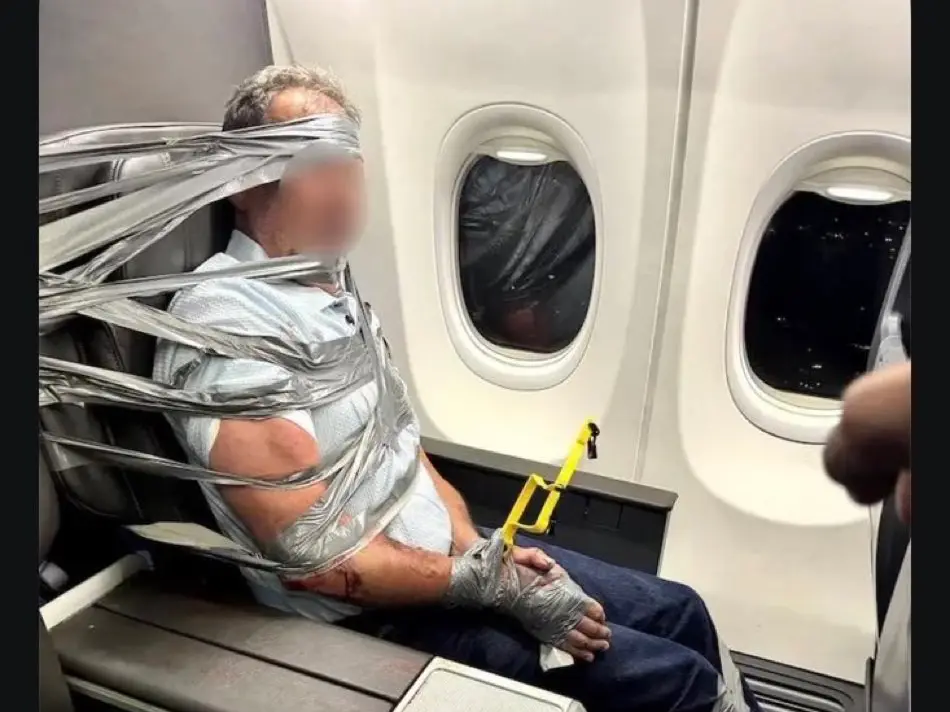)
Strapped to flight seat with duct tape: Passenger claims no memory of mid-air outburst
)
Trump gets new power to hit India, China with up to 100% tariffs as US Senate clears Russia sanctions bill
)
Prime Minister Narendra Modi's birthday: Tributes pour in from President Murmu and leaders
)
US Treasury rallies global financial institutions for Op Economic Outcast to isolate Iran
)
Saudi vs Houthis: Riyadh claims to have shot Houthi drone targeting Mecca
)
India breaks silence on US Russia sanctions bill, 100% tariff threat: ‘Committed to energy security’ for 1.4 billion
)
China testing 'Monster of Malan' at secret base that can reach any US city: Report
)
Pakistan boycotts chess match against Israel at Olympiad
&im=FitAndFill=(700,400))
Suriya and Jyothika say ‘I do’ again after 20 years! See their dreamy wedding pics
)
Abhishek Sharma rises to No. 2 in T20Is; ENG’s Robinson 3rd after record Pakistan Tests
)
The Early Spring season 2 is happening, but fans have one request - 'don't change the actors'
It was the first meeting between leaders of the two countries in 25 years and a milestone in Trump’s attempt to bring a measure of stability to the volatile region. Trump urged al-Sharaa to normalise relations with Israel.
Lifting the sanctions on war-shattered Syria was a significant policy shift. The US declared Syria a sponsor of terrorism in 1979 and imposed sanctions twice – in 2004 and again after the outbreak of the Syrian civil war in 2011.
Even before embarking on his four-day tour of Saudi Arabia, Qatar and the United Arab Emirates, Trump surprised the Middle East with an announcement to end a months-long fierce US bombing campaign against Yemen’s Iran-backed Houthi rebels, who had attacked US shipping in the Red Sea, Bab al-Mandab and the Gulf of Aden.
The ceasefire sidelined Israel, which has been left out of Trump’s itinerary, unlike in 2017. Trump has made no secret of his irritation with Israeli Prime Minister Benjamin Netanyahu for ignoring suggestions to make efforts to end the war in Gaza and allow the supply of humanitarian aid.
Trump’s second stop on his Mideast swing of rich countries on Wednesday took him to Qatar, where his reception was even more lavish than in Saudi Arabia. A cavalry of dozens of camels lined the road to the Qatar Royal Court. As his motorcade neared the entrance, white horses galloped by.
But what made most headlines about the Qatar visit and will go down in history is a gift from the Qatar Royal family – a Boeing 747 so lavishly furnished that it is known as the Flying Palace. The aircraft is valued at $400 billion and is meant to replace the 38-year-old Air Force One he is now using.
It would be by far the most valuable gift ever received by a US president, and it raised ethical concerns not only from Democrats but also from some of his most loyal Republican allies. They included Laura Loomer, a far-right influencer who has Trump’s ear and played a role in personnel decisions.
She tweeted to her millions of social media followers: “I love President Trump. I would take a bullet for him. But I have to call a spade a spade. We cannot accept a $400 million ‘gift’ from jihadis in suits” accepting it would leave “a stain” on Trump’s legacy, she added.
The phrase “jihadis in suits” referred to Qatar’s relations with the Moslem Brotherhood and Hamas. Other far-right figures critical of the gift included Ben Shapiro, co-founder of the right-wing media outlet The Daily Wire.
In 2017, Trump said Qatar has “historically been a funder of terrorism at a very high level.”
Democrats raised both ethical and legal concerns. Senate Minority Leader Chuck Schumer quipped that the plane meant “foreign influence with extra leg room”. Ethics experts said the gift violated the US Constitution, which has an article specifically about foreign gifts.
Article 1 says: “No person holding any office of profit or trust under them shall, without the consent of Congress, accept of any present, emolument, office, or title of any kind whatever from any king, prince, or foreign state.”
On the eve of his departure, Trump told reporters, “I think it’s a great gesture from Qatar. I appreciate it very much. I would never be one to turn down that kind of an offer. I mean, I could be a stupid person and say ‘No we don’t want a free, very expensive airplane.’ But I thought it would be a great gesture.”
Officials say that Attorney General Pam Bondi issued a memo giving the green light to the Qatari present. To put that into context, it’s worth mentioning that Bondi worked as a lobbyist for Qatar in 2020 and 2022, with a monthly salary of $115,000.
While political antagonists in Washington were debating the ethics and legality of accepting the gift from Qatar, Trump and Qatar’s emir, Sheikh Tamim bin Hamad Al Thani, sat down at a conference table in Doha to witness the signing of an agreement for the state-owned airline Qatar Airways to buy up to 210 widebody jets from Boeing.
Qatar Airways said it was the largest widebody order for Boeing and the airline’s largest order ever, worth $96 billion.
When the US President returns to Washington on Friday, after the conclusion of his Gulf visit in Abu Dhabi, his administration is certain to portray the Boeing deal as one of the biggest win of a tour that blended commercial deals with politics to the benefit of the leader,his country -- and Syria.
