The scourge of dowry in India — How 'log kya kahenge?' (What will people say) ensures the practice never truly ends

&imwidth=600&imheight=450&format=webp&quality=medium "The scourge of dowry in India — How 'log kya kahenge?' (What will people say) ensures the practice never truly ends")
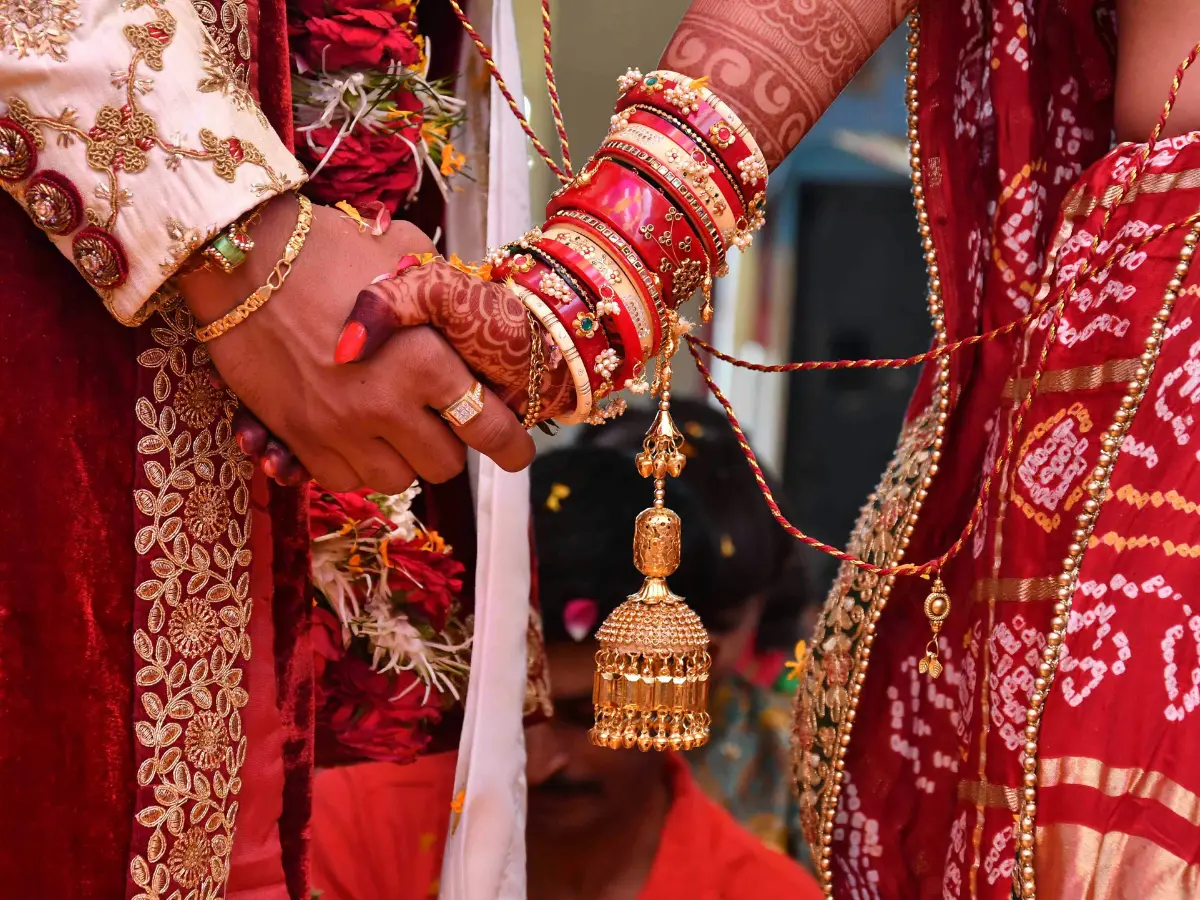
Dowry continues to remain a part of marriages in India
Dowry in India is an age-old tradition. Hundreds of years ago, girls were married, and they were given things that would make them comfortable in their new home. Slowly, it became an evil practice, one that started taking innocent lives. Who is to blame?
"What will people say?" This one infamous line in Hindi - Log kya kahenge - has ruined more lives than you can imagine. Of course, it goes without saying that in India, it is the females who are almost always at its receiving end, either directly or indirectly. From impacting the choice of a life partner, to girls making unconventional career choices (or simply choosing to work or stay at home), the clothes one wears, the things one speaks and even the food someone picks to eat (Yes, even non-vegetarian food can get one labelled not sanskari (cultured) enough). This one line is enough to make people do things they don't want to do, even the most uncomfortable acts they might not agree to personally, but do them anyway because, well, if not, then "log kya kahenge?" You would think that the educated urban families don't give two hoots about what people say, but you could not be more wrong. And it is not just the older generation, but even young boys and girls. Dowry is one such tradition that, despite being illegal, plays an important role in marriages even today.
The Nikki Bhati case in India has led people to ask - Why do people marry their daughters off in families that ask for dowry? The 28-year-old got married to Vipin Bhati nine years ago. Her sister, Kanchan, married Vipin's brother, Rohit. The family gave a Scorpio SUV, cash and gold to their sons-in-law. She recently died after allegedly being burned following an argument over an additional demand of Rs 3.6 million (Rs 36 lakh). When Nikki's father, Bhikari Singh Payla, was asked by a journalist why did he marry his daughter into a family that asked for dowry, he said, "In our clan, marriages happen through (dowry) mediators." The idea is so well-ingrained that perhaps this is why Payla himself is being accused of harassment by his daughter-in-law. Minakshi married Nikki's brother in 2016, and brought with her a sedan car. She claims the Paylas sent her back to her home, demanding a new model of Scorpio and cash. The family has refuted her allegations, saying she is welcome to return and that no one has ever hit Minakshi.
Young professionals are perfectly OK with taking and giving dowry
But, who are these people asking why agree to a match with dowry? Aren't they guilty of being complicit in something similar? The truth is, those demanding dowry and giving dowry walk amongst us. We encounter them in our everyday lives, oblivious about how they think. As Payla said, dowry is how marriages happen. I have come across girls whose parents were unable to secure a match because the boy's family asked for "too much" dowry. Well, they were prepared to give "some", but not "too much." They are boys and girls working in reputable companies in good positions. Yet, the boys were completely OK with their parents asking for lakhs in cash and a good car. A girl's parents found a match after years of effort. Weeks later, when preparations were on, the demand for dowry increased. The girl's family did not agree to it, so the boy's family called it off. The same thing happened to a friend, except in her case, her family ended things before it was too late.
Trending Stories
)
)
)
)
)
&im=FitAndFill=(700,400))
)
)
)
&im=FitAndFill=(700,400))
&im=FitAndFill=(700,400))
)
)
)
)
)
)
)
)
)
)
)
)
)
)
)
)
)
)
)
)
&im=FitAndFill=(700,400))
)
)
&im=FitAndFill=(700,400))
Dowry - a matter of pride, honour and reputation
If someone marries their daughter without giving dowry, and if the boy's family agrees to a match without taking dowry, the inevitable wonderment arises among people - "Something must be wrong, why did no give and take happen?" The families risk being looked down upon by the society if dowry is not a part of the equation. But, shouldn't it be the other way around? The simple answer is no. In fact, the more a girl's family gives, the more honourable they come across as. The girl's family also sees it as a ticket to ensuring a good and easy-going life filled with love and respect from her in-laws. I even know of girls who forced their parents to give a huge dowry, just to show off.
For the boy's family, being able to secure a huge dowry is a sure-shot way to skyrocket their reputation in society. People going 'ooh' and "aah" at seeing all the cash, jewellery, and the model of the car is music to their ears. Their chest swells with pride when they hear their relatives saying such good things about the things the new bride got. I have seen it happen, and have wondered if this is the main reason they get their sons married.
Can the practice of dowry ever end?
Everyone knows dowry is illegal, yet no one speaks up when it is about their family. Can this practice ever end? I know of families who started saving up for a dowry from the moment they had a daughter. They are providing them with good education, a life full of opportunities and the chance to become whatever they want to. Yet, they know that the day they decide to get them married, they will have to show how much they can give. You'd think that things would change with younger generations, but traditions never do. And, of course, there is the question of "log kya kahenge?"

