&imwidth=800&imheight=600&format=webp&quality=medium "‘White-collar terror ecosystem’ near Indian capital: Faridabad terror module busted by Jammu and Kashmir Police. What could have happened?")
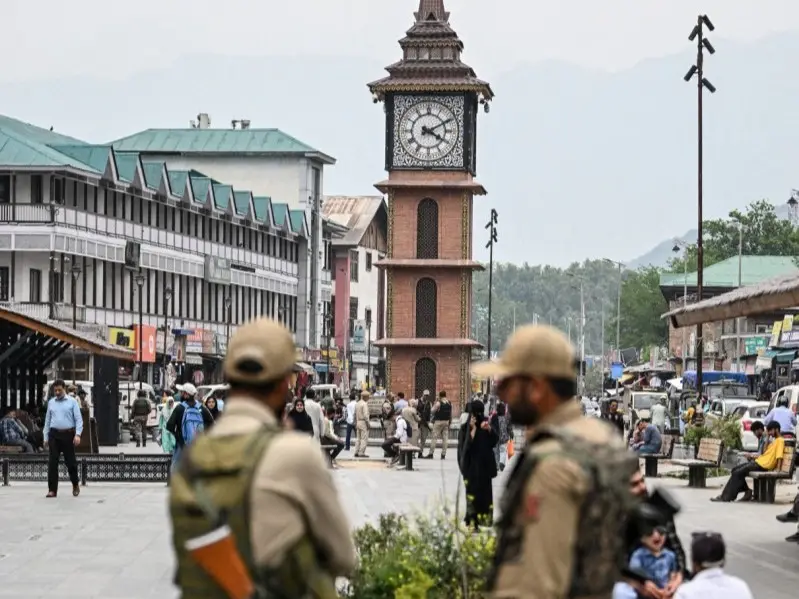
The recovery of hundreds of kilogrammes of explosive precursor material, Kalashnikov assault rifles and propaganda material from near the heart of the Indian capital New Delhi is evoking memories of earlier terror attacks. The bust, which followed weeks of investigation and the interrogation of a Kashmiri doctor working in Faridabad in the National Capital Region (NCR), took place just weeks ahead of the anniversary of the 2008 Mumbai terror attacks and two decades after the 2005 Delhi serial blasts. The recoveries and arrests point to the existence of what police described as a ‘white-collar terror ecosystem’, with links to Pakistan-based Jaish-e-Mohammed (JeM) and the al-Qaeda-linked Ansar Ghazwat-ul-Hind (AGuH). Clearly, a major terror attack—or a series of attacks—was being planned, aimed at creating mayhem in or near India’s capital, even as the wounds of the recent Pahalgam terror attack are yet to heal.
A terror module spanning J&K, Haryana, Uttar Pradesh and beyond
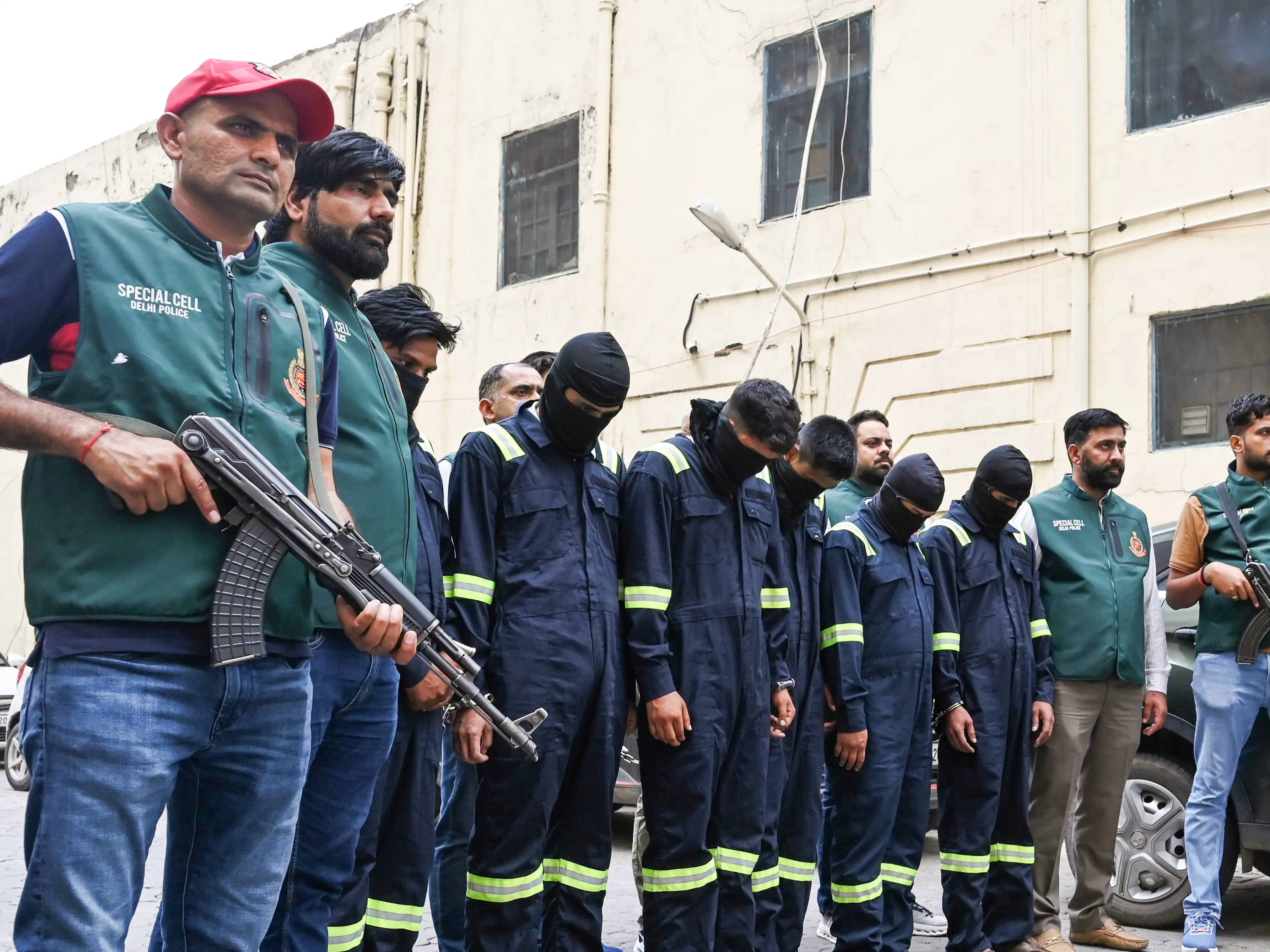
The joint operation, involving Jammu and Kashmir Police, the Intelligence Bureau, Haryana Police and Uttar Pradesh Police, dismantled a network that was allegedly building a sophisticated terror infrastructure in northern India. It marks a chilling evolution in terrorist strategy that combines radical ideology with professional cover to evade detection. The white-collar terror ecosystem involved working professionals and clerics operating far from traditional conflict zones, and dangerously close to India’s capital.

White collar terror ecosystem: How the probe began and evolved
Jaish-e-Mohammed propaganda posters that appeared in Srinagar’s Nowgam area on 19 October were the trigger for the investigation. The posters threatened security forces and promoted extremist ideology. Police registered a case under the Unlawful Activities (Prevention) Act and other laws and began making arrests. Interrogations in Kashmir quickly revealed a much wider network with transnational links stretching across multiple states.
Trending Stories
)
No Pandya as Auqib Nabi earns maiden ODI call-up; Mayank returns for WI T20Is| check full squads
)
FBI Director Kash Patel grilled over change of hiring rules on bestiality
)
Sydney Sweeney defends provocative ad choice, the internet is still not impressed
)
War will be ‘completely different and very short’ if Europe attacks Russia, warns Lavrov
)
Shahzad Bhatti Network declared terrorist organisation under UAPA: Govt order
)
US, China dominate global economy: Where does India rank among the world's biggest economies?
)
Finnish president Stubb calls Trump 'good for NATO' as allies increase defense expenditure
)
Hockey: Pakistan urges AHF to move Asian Champions Trophy out of India over security concerns
)
Bigg Boss 20: Mahhi Vij reveals she lost Yuva role to Kareena Kapoor; 'didn’t work out in my favour'
)
All Indian goods to get duty-free access to New Zealand
)
Alex Saab, ally of Venezuela's Maduro, pleads guilty in US corruption case
)
Lionel Messi for 2026 Ballon d’Or over Mbappe and Yamal, says Diego Simeone
)
Veteran actor Anant Nag honoured with Indian cinema’s highest award
)
800 million years old - Scientists discover 'fingerprints' of supercontinent Gondwana in ancient rocks
)
Who was Eliana Moreno? NBC LA aerial reporter killed in Chatsworth crash
)
Trump backs PM Modi’s anti-opium push even as India remains on US illicit drug-producing list
)
Pakistan naval vessel returns to harbour with 'severe damage' after collision with Indian warship in Arabian Sea
)
Fed raises rates for first time in 3 years, Kevin Warsh defies Trump as inflation mounts
)
What is Article 10 of the 1991 treaty at the centre of Pakistan Navy's 'unprofessional conduct'
)
Ex-CIA officer caught with gold bars worth $40 million seeks plea deal | Gravitas
)
Daayra movie review: Kareena Kapoor, Prithviraj Sukumaran shine in Meghna Gulzar’s cop-versus-cop crime thriller
)
Pakistan: Imran Khan's sons Kasim & Sulaiman claim their father is 'tortured' in jail
&im=FitAndFill=(700,400))
New OTT releases this week (September 14-20, 2026): Lust Stories 3, Waiting Hai, Irumudi- 5 new titles coming on Netflix, Prime Video and more
)
Trump's Iran war faces fresh House rebuke; 7 Republicans join Democrats in push to end conflict ahead of midterms
)
PNS Hunain: All you need to know about Pakistani vessel that hit Indian Navy warship
)
US Treasury rallies global financial institutions for Op Economic Outcast to isolate Iran
)
Saudi vs Houthis: Riyadh claims to have shot Houthi drone targeting Mecca
)
Riyadh warns of ‘red line’ after Mecca targeted; Houthis claim downing Saudi fighter jet – What’s happening?
&im=FitAndFill=(700,400))
Suriya and Jyothika say ‘I do’ again after 20 years! See their dreamy wedding pics
)
Abhishek Sharma rises to No. 2 in T20Is; ENG’s Robinson 3rd after record Pakistan Tests
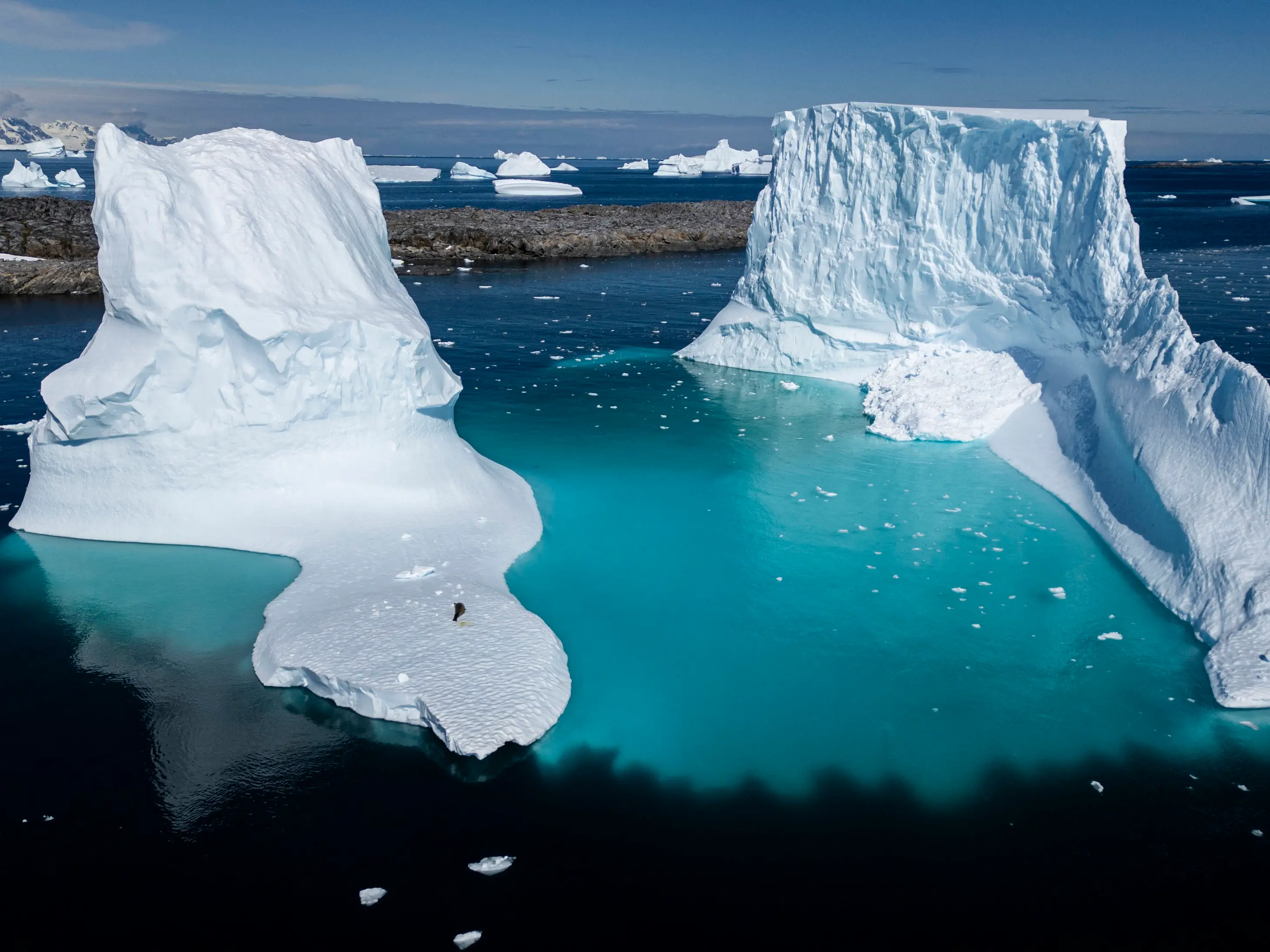)
Extreme warming in Indian Ocean added 695 billion tons of ice to Antarctica ice sheet
)
BRICS success stuns White House, Trump targets India with 100% tariff | Gravitas
)
Meghan Markle's phone number leaked from children's WhatsApp group, couple switches Archie and Lilibet's school
)
The Early Spring season 2 is happening, but fans have one request - 'don't change the actors'
North India terror module is unprecedented in scale and composition
Two doctors from south Kashmir—Dr Adil Ahmad Rather and Dr Muzammil Ahmad Ganaie—were at the centre of the conspiracy, according to the police. Both were highly educated professionals who allegedly used their medical positions to disguise radical activities, including recruitment through encrypted channels. Dr Ganaie was employed at Al-Falah Medical College in Faridabad, while Dr Rather was a former Senior Resident at Government Medical College, Anantnag.
Dr Ganaie had rented a house in Dhauj village in Faridabad roughly three months before the raids. The property was used as a safehouse to store arms, explosives and improvised explosive device (IED) components. It was the interrogation of Dr Rather, arrested from Saharanpur in Uttar Pradesh on 6 November, that led investigators to the Faridabad cache.
What the police found in Faridabad: A stunning cache
The raid on the Dhauj property on Sunday (Nov 9), led to the recovery of about 360 kilogrammes of ammonium nitrate—an industrial chemical often used in bomb-making.
Police also found an AK-47 rifle, pistols, ammunition, timers, batteries, electronic circuits and inflammable liquids. One rifle was reportedly recovered from the vehicle of a woman doctor associated with the suspects. Another raid in the same area the following day led to the seizure of additional materials. Communication devices and incriminating documents indicating contact with handlers based in Pakistan were also recovered.
Seven people, all hailing from Jammu and Kashmir, have been arrested so far in connection with the case. A cleric from Shopian and several Srinagar-based operatives were detained for assisting with logistics, propaganda and recruitment.
Hiding in plain sight: How the terror module was operating among us
Investigators believe the terror group had ties to proscribed organisations Jaish-e-Mohammed and possibly other transnational jihadist networks. The suspects were hiding in plain sight behind their professional backgrounds, operating covertly, raising funds and procuring chemicals, weapons and equipment without drawing suspicion.
What could have happened: Massive scale of a possible terror attack
The recovery, described by security officials as one of the largest hauls in recent years, likely prevented a catastrophic attack in or near Delhi—potentially on the scale of the 2005 Delhi serial bombings or even the 26 November 2008 Mumbai attacks.
But it is not just the quantity of explosive material recovered but its location that makes this case so serious. Faridabad, in northern Haryana, sits on the outskirts of Delhi and was possibly being used as a staging ground for terror mayhem. Delhi and nearby urban centres could have been potential targets.
This is another sign of terrorist activity shifting from border regions and rural Kashmir to urban infiltration. Educated terror operatives are embedding themselves in civilian life, using their positions to build covert networks.