Indian Govt's CMARS lab at NIOT to develop Marine Autonomous Robots

&imwidth=600&imheight=450&format=webp&quality=medium "Indian Govt's CMARS lab at NIOT to develop Marine Autonomous Robots")
India launches underwater robotics centre as deep-sea ambitions grow Photograph: (National Institute of Ocean Technology (NIOT))
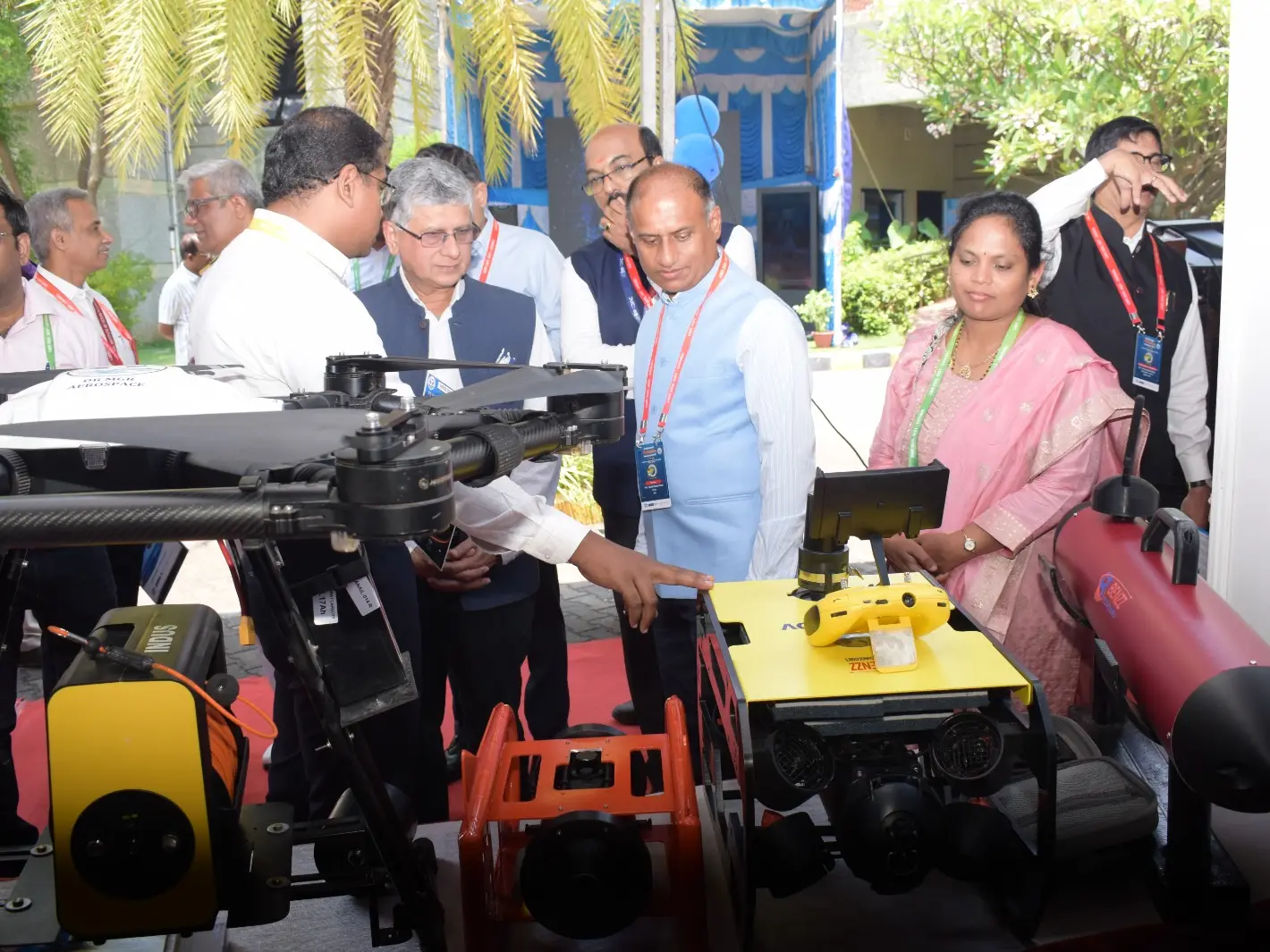
India has launched a new centre dedicated to underwater robotics as it pushes deeper into ocean exploration, maritime security and next-generation autonomous systems. The move is also closely linked to the ambitious Matsya-6000 deep-sea mission.
To augment the country's efforts in underwater robotics development, India's National Maritime Security Coordinator, Vice Admiral Biswajit Dasgupta, inaugurated the Centre for Marine Autonomous Robotics Systems(CMARS) at the government-run National Institute of Ocean Technology(NIOT), Chennai. Underwater robotics plays a vital role in search and rescue, mapping, scientific discovery, national security, and resource exploration, among others. Operating under India's Ministry of Earth Sciences (MoES), NIOT has been developing underwater systems and technologies for over three decades. NIOT is in the process of developing and testing India's crewed submersible 'Matsya-6000', which is meant to carry out exploration missions 6000 meters below the ocean surface.
Explaining the core purpose of the CMARS facility, NIOT Director Dr Balaji Ramakrishnan said it helps create an ecosystem for different stakeholders to participate in our technology development efforts and work with us. This can be done through internships or industry partnerships, in which we provide support and resources. Our Institute has a hyperbaric pressure chamber capable of reaching 1,500 bar, which simulates conditions found in the deepest parts of the ocean. Testing of hardware and systems meant to be deployed in underwater environments can be undertaken here. We aim to offer a conducive ecosystem for those who wish to work with us.
Highlighting the strategic importance of the maritime domain, Vice Admiral Dasgupta said that Blue Economy refers to a country's economy enhanced by the oceans. Over the last 20 years, from shipping to tourism, every endeavour connected to the maritime domain has evolved and increased exponentially. On the strategic front, he touched upon the importance of deep-sea exploration, undersea internet cables, and naval submarine operations. Meanwhile, he cautioned that maritime threats are increasing rapidly and there are significant challenges in the undersea domain.
While NIOT develops its fleet of autonomous underwater vehicles and related technologies such as homing & docking, swarm drones, and high-endurance drones, the Institute is also conducting Underwater Robotics Workshops to create synergy between researchers, academicians, industry experts, students, policymakers, and stakeholders working in the maritime and undersea domain.
Trending Stories
&im=FitAndFill=(700,400)&imwidth=280&imheight=210&format=webp&quality=medium)
&imwidth=280&imheight=210&format=webp&quality=medium)
&imwidth=280&imheight=210&format=webp&quality=medium)
&imwidth=280&imheight=210&format=webp&quality=medium)
&imwidth=280&imheight=210&format=webp&quality=medium)
&imwidth=280&imheight=210&format=webp&quality=medium)
&imwidth=280&imheight=210&format=webp&quality=medium)
&imwidth=280&imheight=210&format=webp&quality=medium)
&imwidth=280&imheight=210&format=webp&quality=medium)
&imwidth=280&imheight=210&format=webp&quality=medium)
&imwidth=280&imheight=210&format=webp&quality=medium)
&imwidth=280&imheight=210&format=webp&quality=medium)
&imwidth=280&imheight=210&format=webp&quality=medium)
&imwidth=280&imheight=210&format=webp&quality=medium)
&imwidth=280&imheight=210&format=webp&quality=medium)
&imwidth=280&imheight=210&format=webp&quality=medium)
&im=FitAndFill=(700,400)&imwidth=280&imheight=210&format=webp&quality=medium)
&imwidth=280&imheight=210&format=webp&quality=medium)
&imwidth=280&imheight=210&format=webp&quality=medium)
&imwidth=280&imheight=210&format=webp&quality=medium)
&imwidth=280&imheight=210&format=webp&quality=medium)
&imwidth=280&imheight=210&format=webp&quality=medium)
&imwidth=280&imheight=210&format=webp&quality=medium)
&im=FitAndFill=(700,400)&imwidth=280&imheight=210&format=webp&quality=medium)
&imwidth=280&imheight=210&format=webp&quality=medium)
&imwidth=280&imheight=210&format=webp&quality=medium)
&imwidth=280&imheight=210&format=webp&quality=medium)
&imwidth=280&imheight=210&format=webp&quality=medium)
&imwidth=280&imheight=210&format=webp&quality=medium)
&imwidth=280&imheight=210&format=webp&quality=medium)
&imwidth=280&imheight=210&format=webp&quality=medium)
&imwidth=280&imheight=210&format=webp&quality=medium)
&imwidth=280&imheight=210&format=webp&quality=medium)
&imwidth=280&imheight=210&format=webp&quality=medium)
&imwidth=280&imheight=210&format=webp&quality=medium)
Elaborating on the rationale behind such collaborative efforts, Dr Balaji said that collating the national expertise in a single place helps establish the strengths and areas for improvement, understand the supply chain perspective, take stock of the overall national capability and set a roadmap for the future of undersea exploration.
