What is the real meaning behind Pete Hegseth's tattoos?

There are some disturbing meanings in the tattoos of the US Secretary of War Pete Hegseth. Let's take a look at what these symbols denote and why they are controversial to be adorned by a statesman of the 21st century

The real meaning behind Hegseth's tattoos
The US Secretary of War Pete Hegseth has an emblem carved on his chest which has controversial historical denotations. It is a large cross surrounded by four smaller crosses on its four poles. This cross on his chest has a dark history, one that is rooted in violence and extremism.
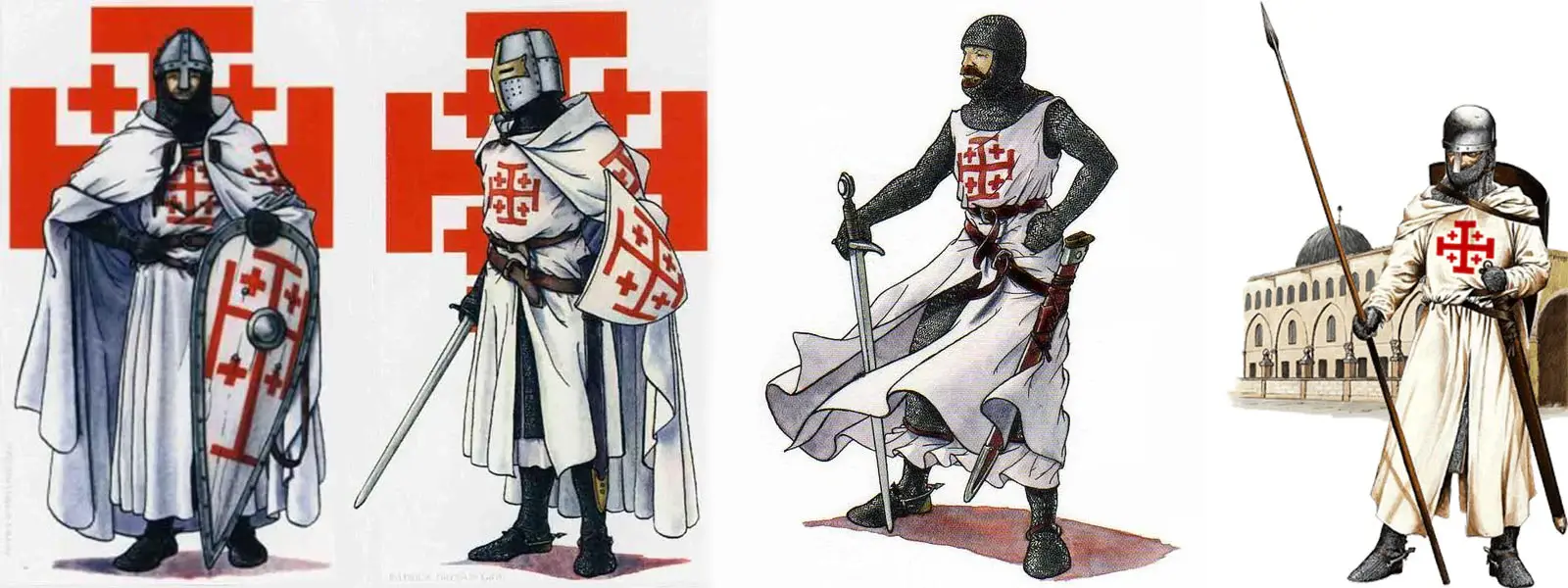
The Crusaders Kingdom
The five crosses symbolise the five wounds of Christ during the Passion. It was the symbol of the Crusader Kingdom of Jerusalem. The centre cross represents Christ, while the four smaller ones represent the four Gospels spread around the four corners of the earth. A Christian state was founded when Crusaders took Jerusalem from the Egyptians in the 11th century. The period was marked by violence, indiscriminate killing of Jewish and Islamic native of Jerusalem. The total atrocities count is hard to put in numbers compared to the small population during that time. But historians estimate that the eight Crusades resulted in the death of at least 3 million, including combatants, pilgrims and peasants. Today, religious far-right groups have co-opted it and use it as a symbol of the holy war between Christianity and Islam.
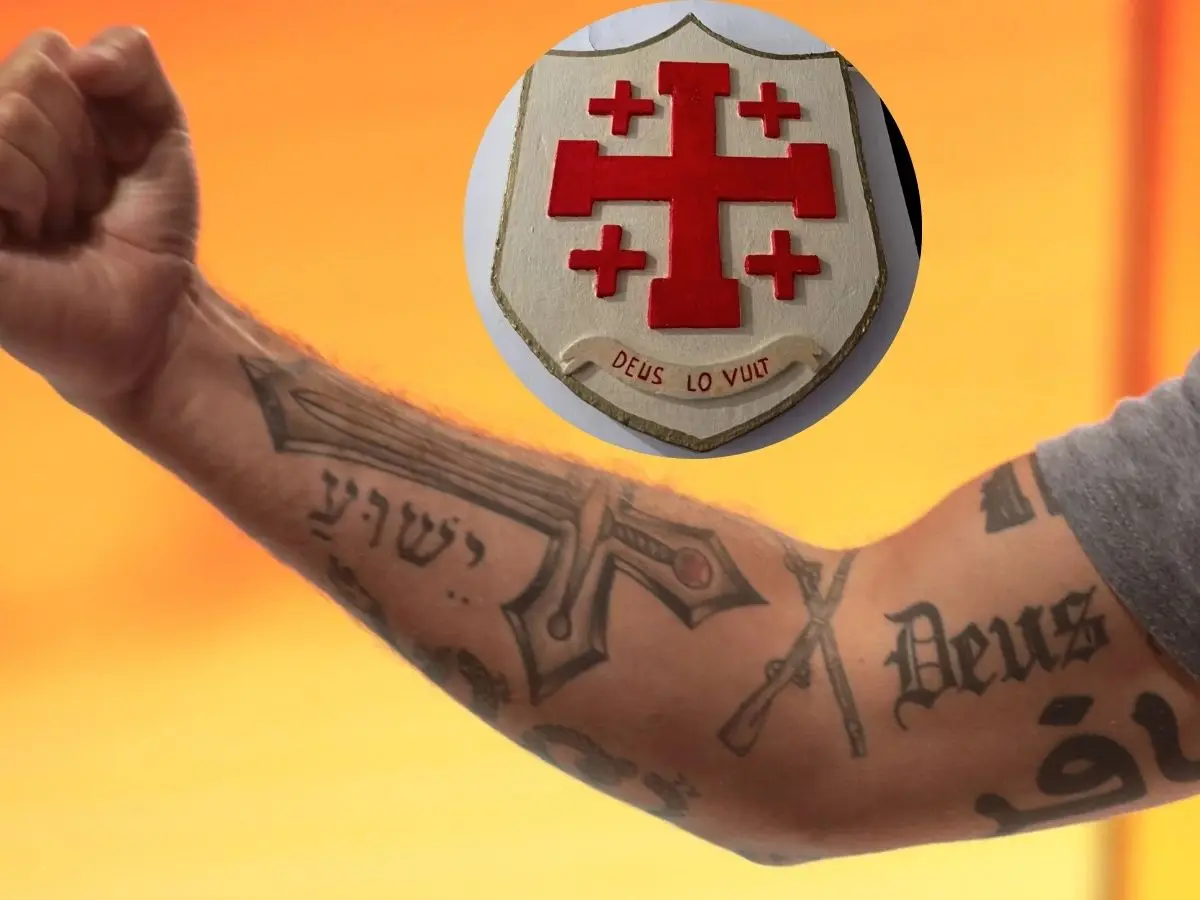
Deus Vult
"Deus Vult" on Pete Hegseth's arm means “God wills it”, the rallying cry of the Crusaders. Critics and extremist experts view this combination as an invocation of historical violence and a claim that such atrocities were legitimate.
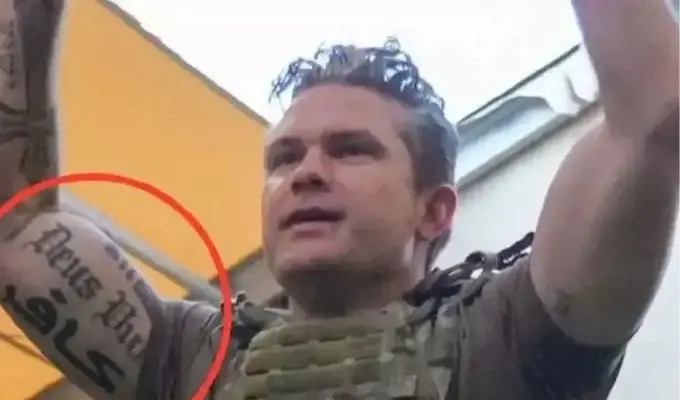
'Infidel' in Arabic
Right below the Crusader's cry, there is a word: “كافر” It is Kafir in Arabic, which means non-believer. Another violence-tainted war reference.
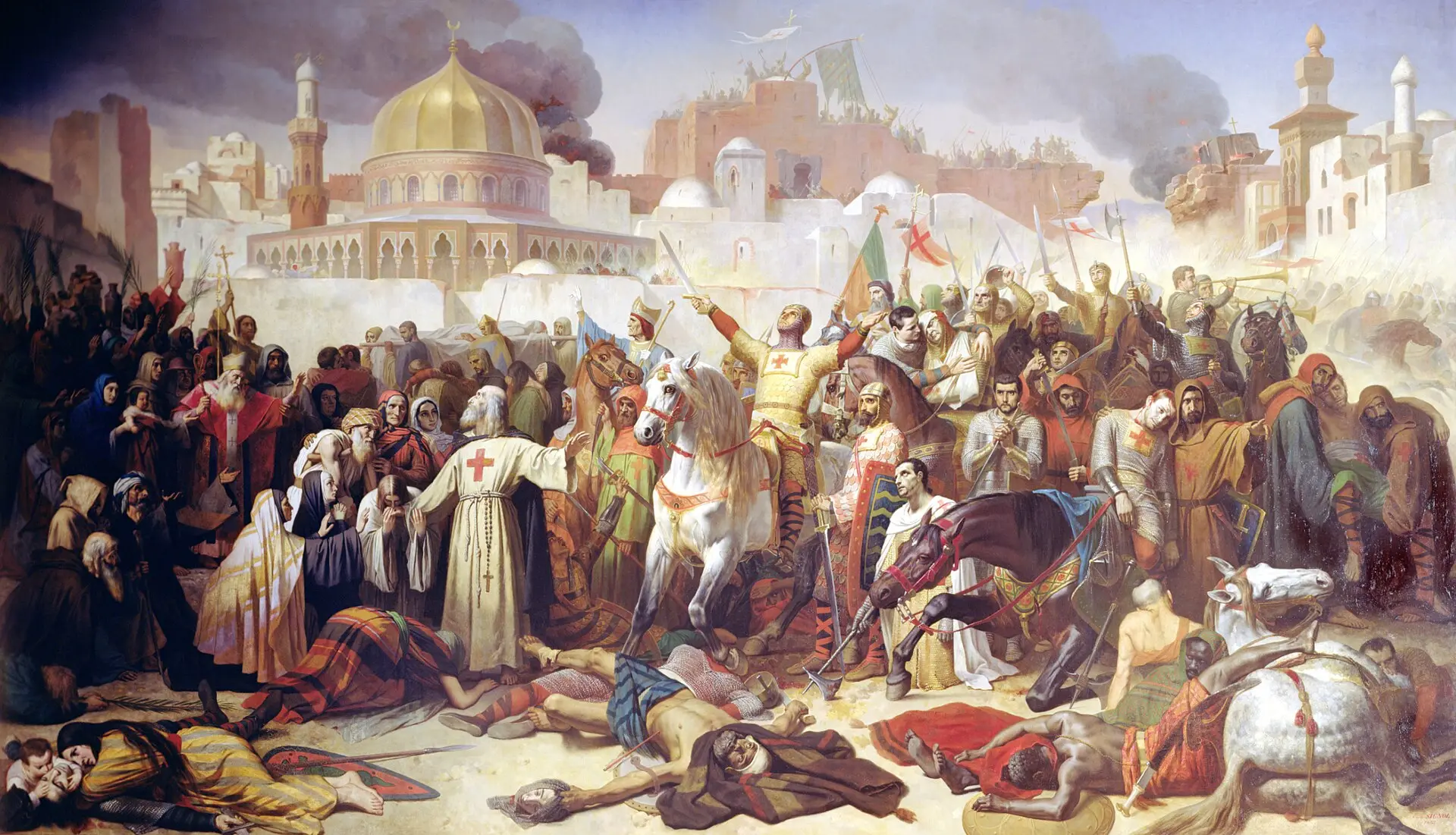
What Hegseth may not know
According to historians' accounts, much of the supposed “crusaders' identity” surrounding chivalry, masculinity, islamophobia isn't truly medieval. Historian Charlotte Gauthier explains how that identity was created in the 19th century when European nations were seeking myths for nation-building. She describes how people in the 1880s were cosplaying with “funny costumes” and crap armour and riding around.
So when Hegseth says he's honouring his ancestors' traditions, he means the 1800s.
)
)
)
)
)