India’s healthcare story is one of the most remarkable transformations in the 79 years of independence, as a system struggling with severe shortages of doctors, hospitals, and medicines in 1947 has reached a position where digital health, telemedicine, and advanced robotic surgery are the buzzwords.
When India achieved independence in 1947, it inherited a fragile healthcare infrastructure and a heavy burden of infectious diseases amidst limited access to modern medicine.
There was the challenge of building a health system almost from the ground up.

The next few decades saw India focus heavily on public health, vaccination campaigns, disease-control programmes and expansion of primary healthcare, which gradually changed the health landscape.
India won major battles when it eradicated smallpox in 1977 and was certified polio-free by the WHO in 2014.
Trending Stories
)
Asian Games 2026: India face Afghanistan in quarterfinal on Sep 28; Pakistan clash with Hong Kong
)
Myanmar training camp case: US national, 6 Ukrainians allowed to meet their families abroad
)
Bigg Boss 20: Salman Khan schools Rhiti Tiwari over Qazi Touqeer clash, compares her to Dolly Bindra
)
Mushtaq Khan dies at 56: When Welcome actor opened up about his salary for iconic role Ballu
)
LPU students go on rampage, vandalise campus amid widespread protest: What's happening
)
'FIRST LOOK from inside Noah’s Ark': Researchers share video from inside mysterious mound in Turkey
)
‘Attack on Mecca a red line for Pakistan’: Shehbaz Sharif warns Houthis at UN
)
Pakistan deploys over 20,000 security personnel as PTI vows march for Imran Khan's release
)
OpenAI AI Agents hacked 4 websites before Hugging Face, researchers reveal
)
'A terrorist country is asking me that question?': Jaishankar hits back at Pakistani journalist at UN; flags attacks on commercial shipping
)
Trump-Xi summit wrap: Big pageantry, Iran talks, few major developments and more meetings planned
)
Did Hitler kill his niece Geli Raubal? Newly found records reopen a 95-year-old mystery
)
Hawaii braces for Hurricane Nolo: NOAA warns of flash flooding and mudslides
)
'What kind of confession is this?': Pakistan PM Shehbaz Sharif’s 'terrorists would be roaming New York' remark goes viral, raises alarm online. Watch
)
US-Iran war: Trump rejects Iran's Hormuz proposal, reports suggest talks expected next week
)
Bollywood x K-pop crossover! LE SSERAFIM’s Kazuha charms fans with Shah Rukh Khan’s ‘Chammak Challo’ steps
)
Gaza's war turned environmental damage into second crisis
)
‘Serial practitioner of terrorism’: Jaishankar calls out Pakistan’s ‘state-sponsored’ terror at UNGA
)
‘It is all possible’: Putin weighs next steps on Ukraine talks, rules out Europe conflict
)
Prince Harry offers rare glimpse into Archie and Lilibet’s life after UK move
)
Nigeria Navy moves to boost oil security, tackle crude theft and infrastructure threats
)
Donald Trump shares image of Xi's arrival in Washington, carries signs of AI
)
Pentagon quietly adds 37 wounded troops to Iran war tally without explaining when or how
)
US court backs Pentagon's decision to exclude Anthropic over Claude AI restrictions
)
US Supreme Court backs Trump administration's use of SAVE database to check voter citizenship
)
‘Could kill billions...’: Bill Gates backs calls to slow AI development amid fears of catastrophe
)
'Countries far from conflict are penalised': Jaishankar calls for Gulf peace, seafarer safety at UN
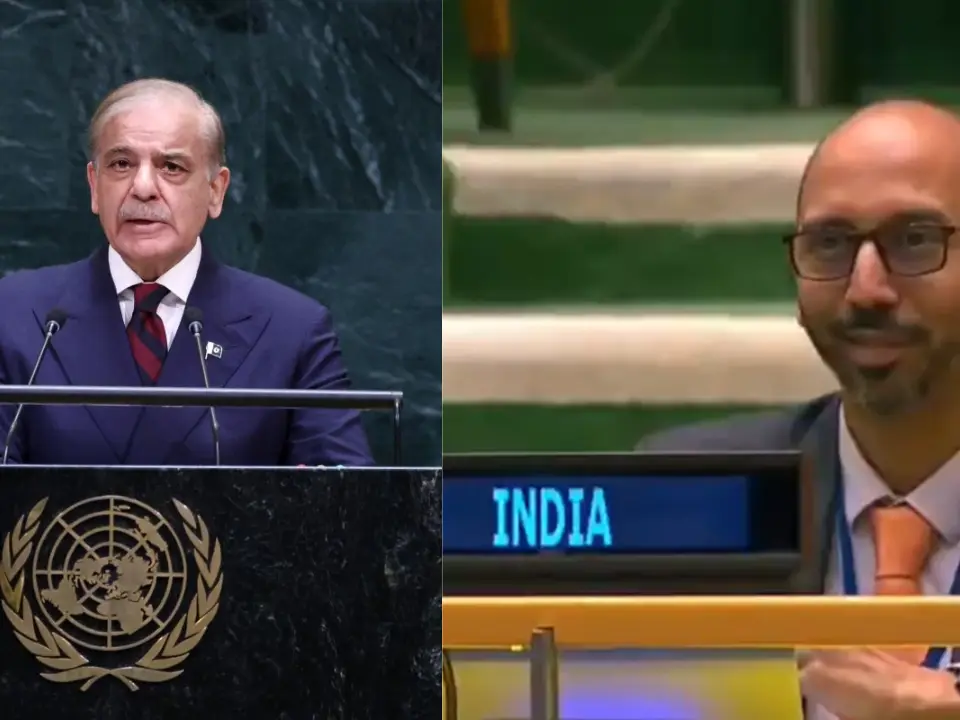)
WATCH | As Shehbaz Sharif claims Pakistan’s ‘victory’ during 2025 conflict, Indian diplomat R Srinivas laughs at UN
)
Outrage erupts after 3-year-old is married to 60-year-old man in Pakistan, link to her sister's murder being probed
&im=FitAndFill=(700,400))
New Friday OTT releases (September 25, 2026): Don’t Be Shy, Hunkkaar: The Roar, Mango Pachcha- 6 movies and TV shows on Netflix, Prime Video and more
)
Global community 'absent' in Gulf crisis: Saudi at UN calls for freedom of navigation, pre war status for Hormuz
)
Farhan, who went viral for AK47 celebration vs India in Asia Cup, hopes to lead Pakistan beyond Asian Games
)
‘I rejected it’: Trump confirms turning down Iran’s proposal to reopen Hormuz, claims Tehran is losing ‘badly’
)
Russia will achieve Ukraine war aims; Europe doing everything to block peace talks: Lavrov at UN
The healthcare expansion accelerated in the 21st century as maternal health, immunisation, rural healthcare, and focus on non-communicable diseases became national programmes. Private hospitals expanded access to advanced diagnostics and specialised treatment. Medical education also grew rapidly and helped increase the number of doctors and specialists needed to cater to the huge population.
Medical colleges have more than doubled, while 12 new AIIMS have become functional since 2014.
The severe test during Covid pandemic
The Covid-19 pandemic was a major test of India’s healthcare system. The never-imagined surge of demand for oxygen, disinfectants and personal protective equipment (PPE) kits exposed shortages that were overcome promptly as India sent vaccines, medicines, sanitiser and other essentials to other nations in need. The pandemic demonstrated India’s capacity for large-scale vaccination, pharmaceutical production, medical research and digital health services.
Telemedicine and digitalisation of health records
In a huge change, telemedicine became a critical service during the pandemic. The government’s eSanjeevani platform connected patients and healthcare workers with doctors and specialists without a hospital visit and more than 45 crore patients have benefited through a network spanning health facilities across the country as per March 2026 figures.
Digitalisation of health records has also been a turning point, as the Ayushman Bharat Digital Mission created a nationwide digital-health framework, with millions of Ayushman Bharat Health Accounts, which allow health records to be linked electronically. Now, all information about a patient is easily available rather than remaining confined to individual hospitals.
The private healthcare sector has grown rapidly alongside public services and even caters to patients from abroad.
India is increasingly embracing robotic-assisted surgery, which is now available across major hospitals and medical centres.
Health insurance for financial protection
The government also focused on expanding health insurance and financial protection, with the Ayushman Bharat programme launched in 2018 givinghospital care access to the economically vulnerable families.
Over 12 crore hospitalisations were covered under the Ayushman Bharat scheme by June 2026.
Seventy-nine years after independence, India’s healthcare story is therefore one of substantial progress, and as it approaches 2047, the strength of its health system will be central to its development ambitions.