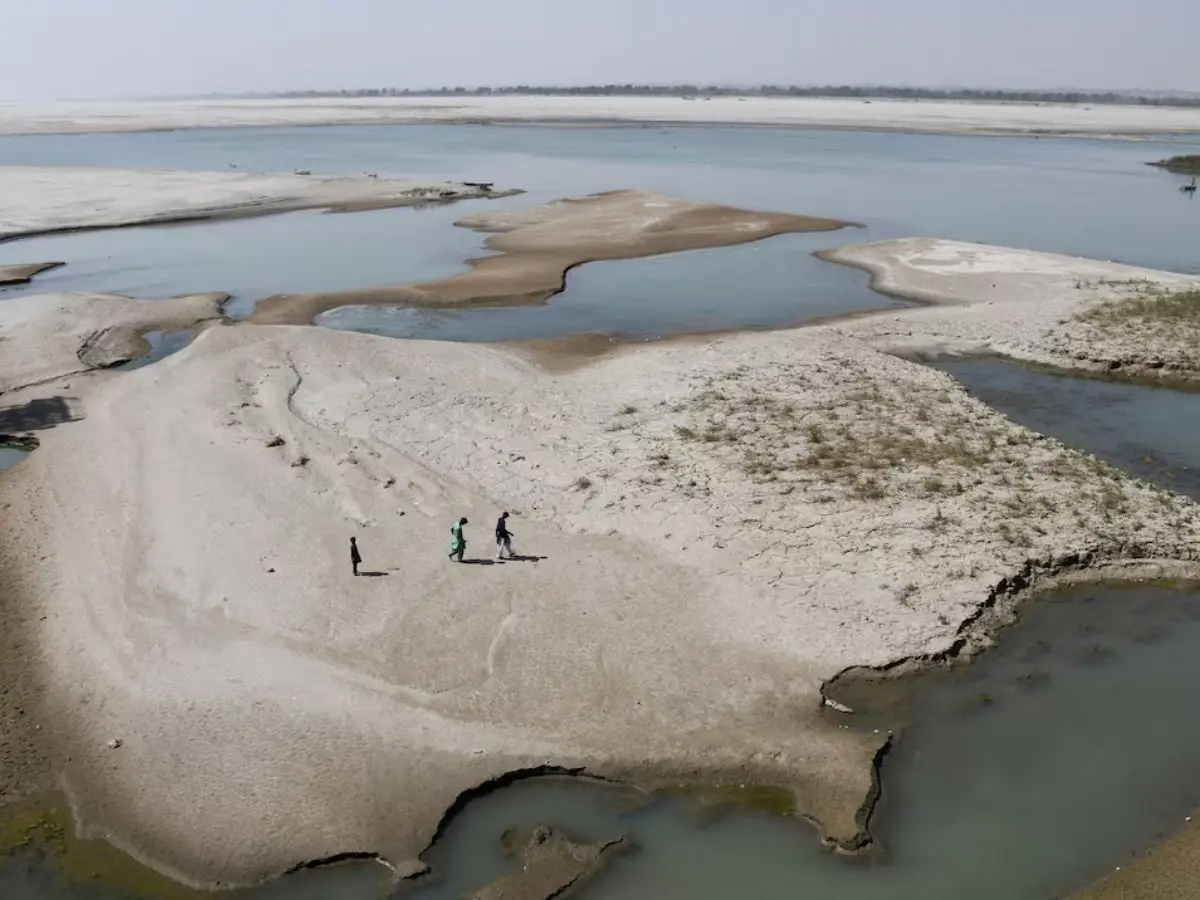
Dry river, fields go thirsty: Pakistan faces agricultural crisis after Indus Waters Treaty suspension

&imwidth=600&imheight=450&format=webp&quality=medium "Dry river, fields go thirsty: Pakistan faces agricultural crisis after Indus Waters Treaty suspension")
Pakistan faces agricultural crisis after Indus Waters Treaty suspension Photograph: (Reuters)
Water flows from the Indus River System into Pakistan have dropped drastically across key regions including Sindh, Punjab, and Khyber Pakhtunkhwa, according to daily reports by Pakistan’s Indus River System Authority (IRSA).
The suspension of the Indus Waters Treaty (IWT) by India following the April 22 terror attack in Pahalgam, in which 26 people lost their lives, has begun to show sharp consequences in Pakistan, particularly as the country struggles to sow its critical Kharif (monsoonal) crops. Water flows from the Indus River System into Pakistan have dropped drastically across key regions including Sindh, Punjab, and Khyber Pakhtunkhwa, according to daily reports by Pakistan’s Indus River System Authority (IRSA).
As per the IRSA report dated June 16, the flow of water to Sindh dropped to 1.33 lakh cusecs compared to 1.6 lakh cusecs on the same day last year—marking a fall of nearly 17 per cent. Similarly, the Punjab region received 1.26 lakh cusecs, down slightly from 1.29 lakh in 2023. By June 20, however, the already serious crisis had deepened, with overall water flows into Pakistan down nearly 20 per cent year-on-year, reported CNN-News18.
Crisis in the Fields
The timing of this decline is critical. Kharif crops, which depend heavily on early monsoon irrigation, are already showing a decline of over 20 per cent in sowing due to insufficient water. In Punjab, the water flow on June 20 stood at 1,10,500 cusecs, compared to 1,30,800 cusecs the previous year. In Sindh, the drop was even sharper, from 1,70,000 to 1,33,000 cusecs. Khyber Pakhtunkhwa recorded a minor fall, from 2,900 to 2,600 cusecs, according to News18.
With the monsoon still about two weeks away and reservoirs reportedly reaching dead levels, farmers face a looming crisis. Pakistan had earlier warned of a 21 per cent shortage in the Kharif season following the treaty’s suspension, and current figures suggest the deficit is dangerously close.
Strategic Shift and Communication Breakdown
Trending Stories
&im=FitAndFill=(700,400)&imwidth=280&imheight=210&format=webp&quality=medium)
&imwidth=280&imheight=210&format=webp&quality=medium)
&imwidth=280&imheight=210&format=webp&quality=medium)
&imwidth=280&imheight=210&format=webp&quality=medium)
&imwidth=280&imheight=210&format=webp&quality=medium)
&imwidth=280&imheight=210&format=webp&quality=medium)
&imwidth=280&imheight=210&format=webp&quality=medium)
&imwidth=280&imheight=210&format=webp&quality=medium)
&imwidth=280&imheight=210&format=webp&quality=medium)
&imwidth=280&imheight=210&format=webp&quality=medium)
&imwidth=280&imheight=210&format=webp&quality=medium)
&imwidth=280&imheight=210&format=webp&quality=medium)
&imwidth=280&imheight=210&format=webp&quality=medium)
&imwidth=280&imheight=210&format=webp&quality=medium)
&imwidth=280&imheight=210&format=webp&quality=medium)
&im=FitAndFill=(700,400)&imwidth=280&imheight=210&format=webp&quality=medium)
&imwidth=280&imheight=210&format=webp&quality=medium)
&imwidth=280&imheight=210&format=webp&quality=medium)
&imwidth=280&imheight=210&format=webp&quality=medium)
&imwidth=280&imheight=210&format=webp&quality=medium)
&imwidth=280&imheight=210&format=webp&quality=medium)
&imwidth=280&imheight=210&format=webp&quality=medium)
&im=FitAndFill=(700,400)&imwidth=280&imheight=210&format=webp&quality=medium)
&imwidth=280&imheight=210&format=webp&quality=medium)
&imwidth=280&imheight=210&format=webp&quality=medium)
&imwidth=280&imheight=210&format=webp&quality=medium)
&imwidth=280&imheight=210&format=webp&quality=medium)
&imwidth=280&imheight=210&format=webp&quality=medium)
&imwidth=280&imheight=210&format=webp&quality=medium)
&imwidth=280&imheight=210&format=webp&quality=medium)
&imwidth=280&imheight=210&format=webp&quality=medium)
&imwidth=280&imheight=210&format=webp&quality=medium)
&imwidth=280&imheight=210&format=webp&quality=medium)
&imwidth=280&imheight=210&format=webp&quality=medium)
&imwidth=280&imheight=210&format=webp&quality=medium)
India’s move to suspend the IWT marks a significant policy shift, albeit not without reason. The treaty, signed in 1960 with World Bank mediation, gave Islamabad rights to the western rivers, Indus, Jhelum, and Chenab, while India retained control over the eastern ones: Ravi, Beas, and Sutlej.
Approximately 70 per cent of the Indus system’s water was allocated to Pakistan.
In addition to curtailing water flow, and following heightened India-Pakistan tensions after India’s retaliatory ‘Operation Sindoor’ post the Pahalgam attack, the situation has become increasingly grim for Pakistan. India has ceased sharing river data, raising fears in Pakistan about flood preparedness. Islamabad has sent at least four formal communications urging India to reconsider the suspension, but New Delhi has maintained its position, stating that “blood and water cannot flow together." India’s long-term plan, which was recently made public, to divert water from the Indus and Chenab to its heartland via a 160-km tunnel only adds to Pakistan’s mounting concerns.