&imwidth=800&imheight=600&format=webp&quality=medium "‘Will not let anyone defame institution’s integrity’: SC takes suo motu cognisance of ‘corruption in judiciary’ mention in NCERT book")
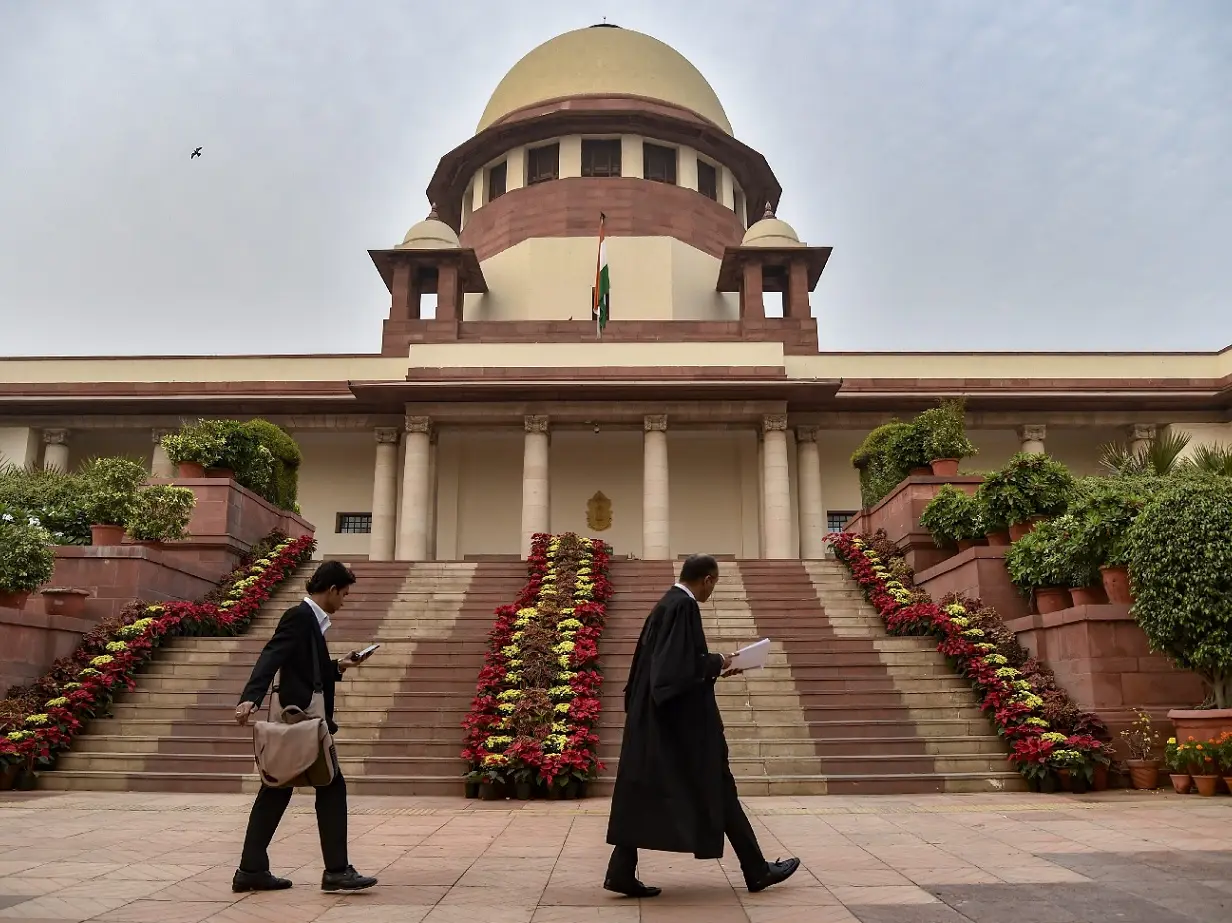
Chief Justice of India (CJI) Surya Kant took note of the mention of ‘corruption in the judiciary’ in a revised NCERT textbook chapter and informed members of the Bar on Wednesday that the Supreme Court has taken suo motu cognisance of it and asserted that he would not let anyone defame the institution. “I will not allow anyone on earth to defame the institution. Howsoever high they be, nobody is above the law. Do not worry… I know how to deal with it,” the CJI said in open court after some senior advocates urged the court to intervene.
Senior advocate Kapil Sibal mentioned the issue before a bench also comprising Justice Joymalya Bagchi, saying the Bar was “deeply disturbed”.
‘Have already passed the order, taking matter suo motu’

“We are compelled to urgently mention this matter since we, at the Bar, are deeply disturbed. Children in Class 8 are being taught about ‘corruption in judiciary’. It is a part of the NCERT curriculum and their textbook,” Sibal submitted.
The CJI responded that he was already aware of the development. “I am fully aware of it. I can assure you…it definitely concerns the entire institution. All stakeholders, judges in high courts are equally perturbed and have brought it to my notice. I am receiving lot of calls and messages,” he said.
Trending Stories
)
Why asking questions could be more important than memorising answers
)
BRICS Summit 2026: Iran's Pezeshkian praises PM Modi at BRICS
)
Osama Bin Laden ‘planned’ to target India, CIA reveals dozens of declassified documents
)
PM Modi and China's Xi offered to help resolve Russia-Ukraine war: Kremlin
)
BRICS Summit 2026: Global leaders of BRICS nations attend main open session
)
BRICS rejects EU carbon tax as ‘punitive’, ‘discriminatory’; warns of burden on Global South
)
Why dehydration is the hidden cause of travel fatigue on long flights
)
Top 5 places to visit in Goa beyond its famous beaches
)
'He is popular...': Malaysian PM Anwar Ibrahim's praise for PM Modi during bilateral meeting | WATCH
)
BRICS Summit 2026: 30+ countries seek BRICS membership
)
Frustrated man demolishes his kitchen after thousands flock to see Mother Mary his wife spotted on the wall
)
BRICS Summit 2026: PM Modi, Xi reach key consensus on ties, China to assume BRICS chairmanship in 2027
)
Trump says Canada eager to reach a deal, it could come ‘fairly soon’ if Ottawa treats US farmers better
)
From drones to KAAN fighters: Turkey outlines 229% surge in defence spending amid regional shifts
)
‘Partners, not rivals’: Xi outlines four point plan for stronger India-China ties
&im=FitAndFill=(700,400))
Why Chinese PL-15 air-to-air missiles use dual-pulse motors compared to European interceptors
)
Could staying indoors all day affect your health?
)
Who is the smiling man beside Modi, Putin and Xi at BRICS Summit 2026?
)
Why going digital does not always mean becoming more efficient
)
800 million years old - Scientists discover 'fingerprints' of supercontinent Gondwana in ancient rocks
&im=FitAndFill=(700,400))
Why do air defence missiles explode near their target instead of hitting it?
)
From severe mobility problems to recovery: Madhuri the elephant’s journey of wildlife care
)
BRICS Summit day 1: New Delhi declaration adopted with full consensus, big diplomatic win for India
)
From India, Putin warns Europe against sending troops to Ukraine, Zelensky expresses willingness to meet him at G20 Summit
)
Did Iran President Pezeshkian touch feet of Hindu spiritual leader at Delhi event as shown in viral video?
)
9-year-old Chennai prodigy clears Cambridge IGCSE grade 10 exams
)
Why does your body need time to adjust after a long journey?
)
Baba Vanga's first prophecy for 2027 is out, and straight out of science fiction
)
BRICS Summit 2026: PM Modi to hold bilateral with leaders of seven countries
)
Ramanathaswamy temple takes centre stage as PM Modi welcomes world leaders at BRICS
)
Why does your skin need protection from UV rays?
)
How does the loss of forests affect the way wildlife lives and moves?
)
IND vs AFG, 1st T20I: When and where to watch live streaming in India?
)
Why do wild animals need quiet places to survive?
)
Humans may lose control of AI: Anthropic CEO calls for slowdown, Altman, Musk back him
“I have already passed the order on the administrative side. We are taking the matter suo motu,” he added, indicating that the top court would initiate proceedings on its own motion.
The CJI described the development as “deep-rooted,” adding that it appeared to be “a calculated and conscious step”.
‘Not a word about corruption in bureaucracy or politics’
Senior counsel Abhishek Manu Singhvi pointed out that while the chapter mentioned corruption in the judiciary, there was “not a word” about corruption in other sectors like the bureaucracy or politics.
Responding, Justice Bagchi observed that “constitutional morality, as envisaged in the basic structure, is missing”.
“I can assure you we will take appropriate steps,” the CJI reiterated.
Supreme Court Bar Association President Senior Advocate Vikas Singh later said in a remark to the media that the instance is completely shocking and merits action. "This is completely shocking... Do they have a sub-chapter with regard to the 40 % MLAs and MPs who have a serious criminal background? ... This kind of a message, if they want to give, they should give it about these MLAs and MPs... Corruption in the judiciary is far less than what it is in the executive and in politics,” he said.
Chapter raises corruption at various levels and massive backlog of cases as challenges
The controversy is about the newly released social science textbook for Class 8 by NCERT, which includes a section on “corruption in the judiciary” as part of a chapter titled “The role of the judiciary in our society."
The chapter lists “corruption at various levels of the judiciary” and a “massive backlog” of cases as among the challenges faced by the judicial system. It provides approximate figures of pending cases—around 81,000 in the Supreme Court, over 6.2 million in high courts, and nearly 47 million in district courts.
The section states that judges are bound by a code of conduct governing their behaviour both inside and outside court, refers to internal accountability mechanisms, and mentions complaints received through the Centralised Public Grievance Redress and Monitoring System (CPGRAMS). It notes that over 1,600 such complaints were received between 2017 and 2021.
It also explains the constitutional mechanism for the removal of judges through impeachment by Parliament after due inquiry and states that instances of corruption and misconduct can negatively affect public confidence. The textbook also emphasises the need for transparency and accountability and quotes former CJI B R Gavai on the importance of swift and decisive action to preserve faith in the institution.
‘Shortage of judges, complex legal procedures, and inadequate infrastructure reasons for backlog’
The previous edition of the textbook, based on the 2005 National Curriculum Framework, covered the structure and role of the judiciary and issues like delay in disposal of cases but did not mention corruption in the judiciary.
NCERT keeps revising textbooks, and the new books for Classes 1 to 8 have already been rolled out.
The revised Class 8 textbook, with a chapter titled ‘The Role of the Judiciary in Our Society’, also cites shortage of judges, complex legal procedures, and inadequate infrastructure as reasons for the heavy backlog.