‘Do not blame volcanic ash from Ethiopia for Mumbai’s poor AQI’: Bombay HC raps govt

&imwidth=600&imheight=450&format=webp&quality=medium "‘Do not blame volcanic ash from Ethiopia for Mumbai’s poor AQI’: Bombay HC raps govt")
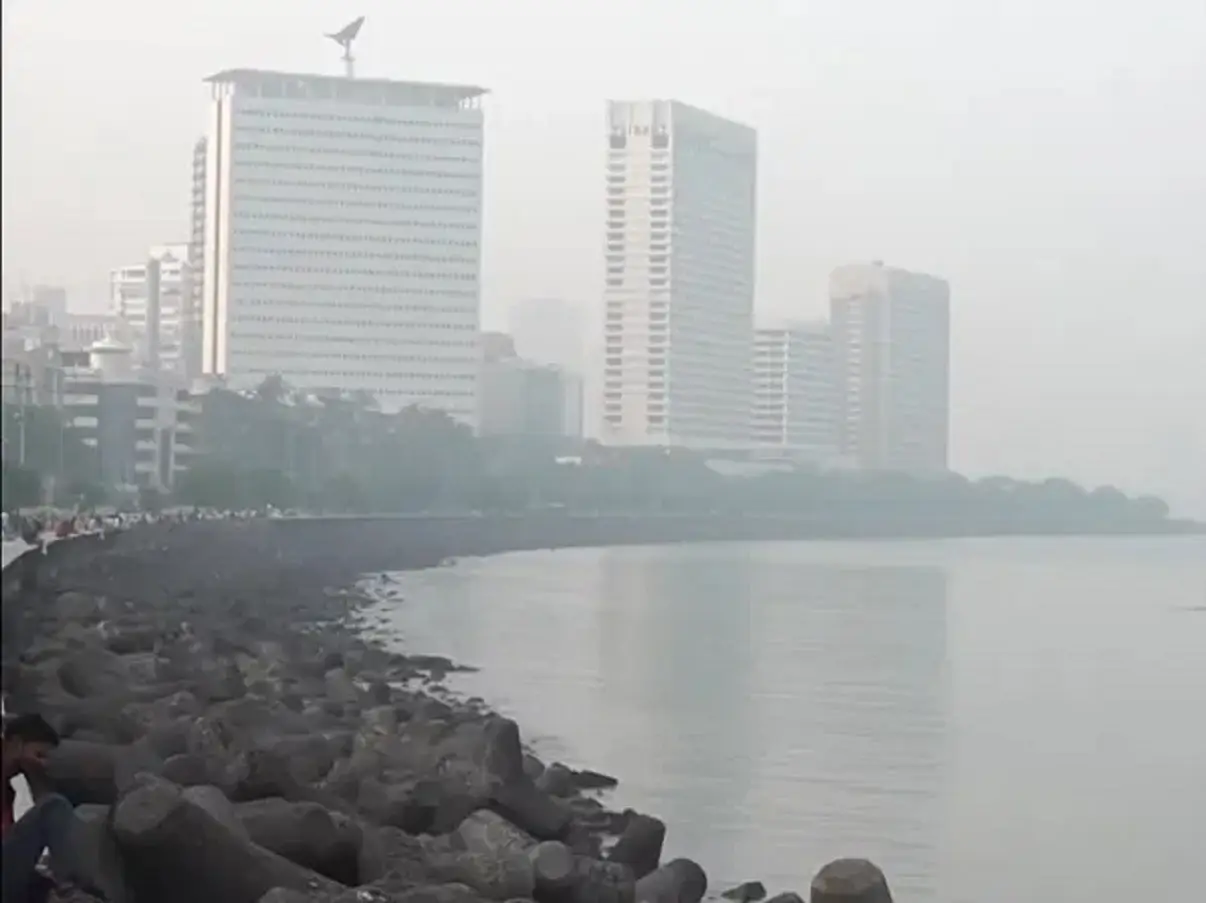
File photo of air pollution in Mumbai Photograph: (PTI)
Additional government pleader Jyoti Chavan said air pollution has worsened due to the volcanic eruption in Ethiopia two days back, but the court discarded this claim and said air pollution has been bad much before the eruption of the volcano.
The Bombay High Court said on Thursday that authorities cannot blame ash clouds from the Hayli Gubbi volcanic eruption in Ethiopia for air pollution in Mumbai and noted that the problem has been persisting from before. The high court was hearing pleas on the issue of air quality in Mumbai. A bench of Chief Justice Shree Chandrashekhar and Justice Gautam Ankhad said the air quality index in Mumbai has been poor much before the Ethiopian volcanic ash development. Ethiopia’s Hayli Gubbi volcano erupted on Sunday for the first time in recorded history, sending an ash column as high as 14 km that drifted as far as the Indian subcontinent.
The ash cloud entered Delhi on Monday evening and drifted towards China the next day. There was no major impact of the ash cloud on Delhi’s already ‘very poor’ Air Quality Index (AQI), said weather experts.
Appearing for the petitioners, senior counsels Darius Khambata and Janak Dwarkadas said the AQI in Mumbai has been consistently poor and above 300 this month. Additional government pleader Jyoti Chavan said air pollution has worsened due to the volcanic eruption in Ethiopia two days back, but the court discarded this claim and said air pollution has been bad much before the eruption of the volcano. “Even before this eruption, if one stepped out visibility was poor beyond 500 metres,” the court said.
Referring to the situation in Delhi, where the AQI levels are at alarming levels, the bench asked what effective measures can be taken to address the problem. “What can be the most effective measures? We are all seeing what is happening in Delhi? What is the effect of that,” the bench asked and posted the matter for hearing on Friday.
Trending Stories
&im=FitAndFill=(700,400))
&im=FitAndFill=(700,400))
)
&im=FitAndFill=(700,400))
)
)
&im=FitAndFill=(700,400))
)
)
)
)
)
)
)
)
&im=FitAndFill=(700,400))
)
)
)
)
)
)
)
)
)
)
)
)
)
)
)
)
)
)
The Hayli Gubbi volcano in Ethiopia erupted on Sunday, releasing a large ash plume that rose to around 14 kilometres (45,000 feet) in the sky. The ash plume moved eastward across the Red Sea, and towards the Arabian Peninsula and the Indian subcontinent.
On Wednesday, Mumbai AQI almost slipped into the “poor” category but slightly improved and was at a moderate level on Thursday.
At 2 pm on Thursday, Mumbai's overall AQI stood at 172, according to the Central Pollution Control Board’s (CPCB) Sameer app.