&imwidth=800&imheight=600&format=webp&quality=medium "Green Tea vs Matcha: Which one would you prefer to brew?; Unpacking benefits, flavour difference and more")
For centuries, tea has been a beloved beverage across Asia and beyond. Among the most popular varieties are green tea and matcha, both celebrated for their refreshing taste and health benefits. While they come from the same plant, Camellia sinensis, their cultivation, preparation, and nutritional values are different. Let’s explore what sets these two teas apart.
What is green tea?
Green tea is one of the oldest and most widely consumed teas. With origins in China, it dates to thousands of years. Today, it is cultivated across Asia, including Japan, Vietnam, and Korea. The leaves are either pan-fired, as is common in China, or steamed, as in Japan, to stop oxidation and preserve their bright green colour.

Preparation and benefits
Also Read: Not fancy yet simple! Sanya Malhotra shares the secret dish that fuels her workout routine
Once processed, the leaves are infused in hot water to create a refreshing beverage with a flavour profile that can range from grassy and vegetal to nutty or floral, depending on the variety. Green tea contains moderate amounts of caffeine, typically between 30 to 40 milligrams per cup and is well known for its antioxidants, which support metabolism, immunity, and overall well-being.
Trending Stories
)
‘Shame on you’: Netanyahu vows to ‘tell the truth’ about Mamdani at UN ahead of New York visit
)
Four decades after leaving Kolkata, the Birlas may be coming back for more
)
WION Iconic Tourism Summit and Iconic Awards 2026: India's travel economy leaders gather in Delhi
)
Oil slips to $98 as Saudi Arabia restarts East-West oil pipeline
)
Explainer: Why rare-earth export licences and Board of Trade are US priorities ahead of Trump-Xi summit
)
'Our team opened the gate of gold medals': Harmanpreet Kaur on India’s Asian Games final win
)
American manufacturing is reshoring faster than its factory floors can absorb
)
WION Iconic Tourism Summit and Awards 2026: Key voices to discuss India’s tourism future
)
Glitch in the matrix caught on camera: Woman vanishes after talking to reporter
)
Cyclone Arnab: Landfall expected before midnight tomorrow as IMD issues orange alerts across six states
)
Yemen clashes kill 154 people in two days as cornered Saudi battles Houthi offensive | Gravitas
)
Justice eludes Air India 1985 bombing victims as Canada probe goes 'inactive' | Gravitas
)
US and China vie for AI dominance as calls grow for regulation | Gravitas
)
Erdogan again raises Kashmir issue at UNGA, calls for dialogue under UN Charter
)
72nd National Film Awards: Kartik Aaryan receives Best Actor honour for Chandu Champion in Gujarat
)
The Verdict | Moral policing isn’t culture or discipline, it’s crime
'Mumma’s boy from Gwalior who dared to dream': Kartik Aaryan pens long note after first National Award win
)
Key accused in Bihar's Jamui molestation case, arrested after police shoot him in leg
)
‘Strike a deal or drive Iran into hell’: Trump issues fresh warning to Tehran at UNGA
)
Trump’s China visa crackdown puts US universities, Chinese students in focus ahead of Trump- Xi summit
)
Who is Clavicular? The 20-year-old controversial 'Looksmaxxing' influencer charged with rape allegations
)
ICC plans T20I expansion and fewer ODIs in 2027–2031 FTP cycle: Report
&im=FitAndFill=(700,400))
New OTT releases this week (September 21-27, 2026): Shaque: Trust No One, Hunkkaar, Don’t Be Shy- 5 new titles coming to Netflix, Prime Video and more
)
Asian Games 2026: India women's cricket team beats Sri Lanka by 147 runs for first gold
)
Raaka creates history! Allu Arjun’s film secures Guinness World Record ahead of release
)
Mumbai: Gallops restaurant at Mahalaxmi Racecourse licence suspended over food safety violations
)
Saudi Arabia exits China-led mBridge digital currency platform amid Saudi-Houthi conflict
)
Gravitas | Boosting NHS productivity could save 20,600 lives in UK annually: Report
)
IND vs JPN, one-off T20I: Japan captain Kendel on pushing India to the brink - ‘It was special’
)
'This is normally what toddlers do': Why a psychiatrist is raising fresh questions about Trump’s recent behaviour
)
Rani Mukerji's mother Krishna Mukerji passes away; Karan Johar, Jaideep Ahlawat visit actress
)
Trump calls Cuba a ‘failed state’ at UN, Cuban delegation walks out
&im=FitAndFill=(700,400))
National Film Awards 2026: Kartik Aaryan, Mammootty, Yami Gautam, Randeep Hooda and other key winners
)
Over 4,200 books withdrawn from circulation in J&K colleges, 94% from Kashmir
)
World leaders repeatedly call Gaza crisis ‘genocide’ as Israel’s war dominates opening sessions of UNGA
)
'Needs time away from the international scene': England white-ball captain Brook on pacer Brydon Carse's future
)
National Film Awards 2026: Yami Gautam wins Best Actress for Article 370
)
Trump calls on nations to quit ‘rogue’ and ‘out-of-control’ International Criminal Court, rips UN
Also Read: R Madhavan's guide to No-Gym weight loss
What is matcha?
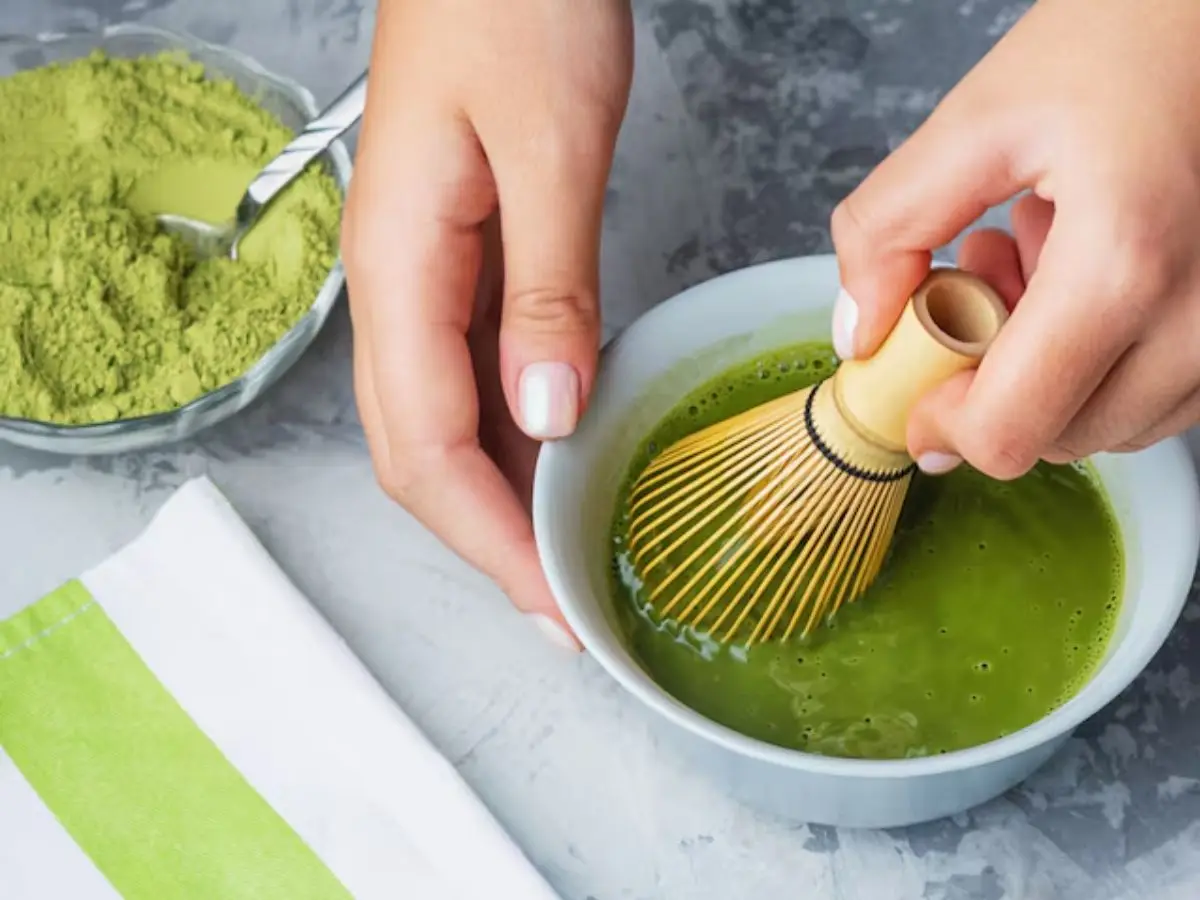
Matcha, on the other hand, is a more concentrated form of green tea that originated in Japan. The tea plants are shade-grown for several weeks before harvest, which increases chlorophyll levels, giving the leaves a vivid green hue, while also boosting the amino acid L-theanine. After harvesting, only the finest leaves are selected, de-veined, and stone-ground into a silky powder.
Preparation and benefits
Unlike regular green tea, which is steeped and then discarded, matcha is whisked directly into hot water, meaning you consume the entire leaf. This makes it richer in antioxidants and significantly higher in caffeine, often reaching 60 to 70 milligrams per serving, nearly double that of green tea. Its flavour is distinct, earthy, creamy, and umami-forward with a touch of sweetness and mild bitterness.
Green tea vs matcha: Which is better for you?
While both teas share health benefits, there are some key differences. Green tea is usually sun-grown and enjoyed for its light, soothing taste, while matcha’s shade-growing method and powdered form create a more intense and nutrient-dense beverage.
Green tea offers a gentler energy boost, making it ideal for daily hydration and relaxation, whereas matcha provides sustained alertness, thanks to its combination of caffeine and L-theanine. The cultural significance also differs, with green tea deeply rooted in Chinese tradition and matcha being an integral part of Japanese tea ceremonies.
If you prefer a mild, calming cup of tea that can be enjoyed multiple times a day, green tea is the perfect option. But if you are looking for a drink that delivers a stronger boost of energy, higher antioxidants, and a bold flavour, matcha is the way to go. Both are superfoods in their own way, offering unique experiences that make them valuable additions to any tea lover’s collection.