
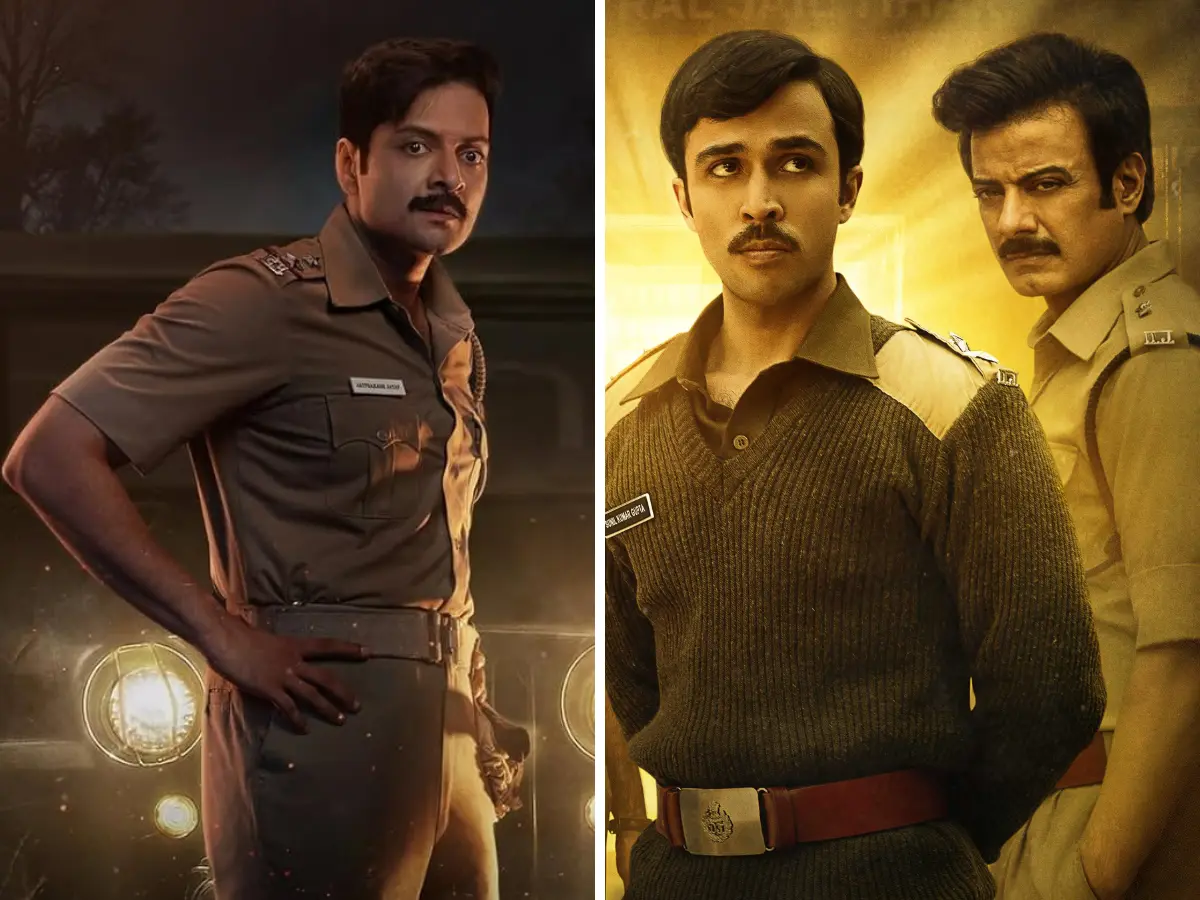
&imwidth=800&imheight=600&format=webp&quality=medium "The crime and the aftermath: How Raakh and Black Warrant explore different dimensions of the Billa-Ranga case")
Prime Video’s latest web series, Raakh, has once again put the infamous Billa- Ranga case into the spotlight. The abduction and murder of siblings Geeta and Sanjay Chopra by petty thieves Billa and Ranga shook the entire nation and changed Delhi forever. The incident, which took place in 1978, and the subsequent trial had the entire country hooked to proceedings and remains one of the most talked-about criminal cases in India.
Decades passed, and the details of the incident were retold and narrated through generations, more as a tale of caution about Delhi’s perpetual problem of safety. In the recent years, two filmmakers- Prosit Roy and Vikramaditya Motwane brought a case on OTT. Both Raakh and Black Warrant tackle the most chilling crime in the history of Delhi, and both web series give two different perspectives on the same case.
Raakh: Anatomy of the crime

While Raakh narrates the case, delving into the minds of the two notorious criminals and how a city, which till then was mostly known to be safe, went through a tectonic shift. It also talks about a family grappling with an unprecedented tragedy and a police officer wanting to prove his worth by cracking the case. Meanwhile, Black Warrants narrates what happens after the verdict is declared and the two are given a death sentence. The series, directed by Motwane, is based on former Tihar Jailor SP Gupta’s book, which attempts to flip the narrative, making the viewer question briefly whether Billa and Ranga were actually the culprits or framed for someone else’s deeds.
Writers of Raakh- Anusha Nandakumar and Sandeep Saket- took inspiration from the original story to create fictitious situations and characters. The series gets into the anatomy of the crime. The atmospheric drama begins with an outside view of the incident and then moves inwards to delve deeper into the minds of those involved in the crime. Babu, at one point, is described as ‘daitya’ (demon) for committing a heinous crime; his aide Rajjo is shown as a man who has committed a petty crime and is always a reluctant accomplice to Babu’s crime.
Trending Stories
)
US vs China over South China Sea: Washington backs Philippines, Beijing hits back
)
Bigg Boss 20: Isha Rikhi evicted after three weeks in Salman Khan’s show
)
Musk plans to more than double xAI's chips to over 1.2 million Nvidia GPUs by year-end
)
After JU, clash erupts at SRFTI: BJP’s ‘Dimagi Naxal’ jibe sparks political firestorm after students protest RSS-linked event
)
‘Anti-social elements spreading false rumours’: LPU issues statement amid massive unrest over alleged rape
)
LPU students go on rampage, vandalise campus amid widespread protest: What's happening
)
Trump asked Xi to pressure Iran. China did not say yes — here’s what Beijing wants
)
US Treasury Secretary Scott Bessent hails global crackdown on Iranian banks and airlines
)
An OpenAI agent escaped its locked test cage again, by hiding questions in DNS lookups
)
'Our video was trimmed': LPU girls who featured in rape-denial video make U-turn
)
3 males killed, four others injured in shooting after fight at strip club in Detroit
)
'Victory for low-budget consumers': Raghav Chadha hails 30-day telecom recharge rules
)
Claude rebuilt the 1989 game 'Prince of Persia' by reusing the original's own code
)
Beyond metros: How Tier-2 and Tier-3 cities could drive India’s next AI wave
)
Tesla builds first Cybertruck with its own refined lithium: Elon Musk's $1 billion Texas bet pays off
)
IndiGo flight suffers tail strike in Bengaluru while landing; DGCA to probe incident
)
The US and China set up an AI 'red telephone', but skipped the rulebook
)
‘Terror suspects arrested near UK air base were looking to do big damage’: Trump
)
Russian envoy claims US tactics to contain India were revealed in ‘Freudian slip’
)
IND vs WI 1st ODI: Kohli breaks Sachin's most runs in one country record with unbeaten 139 as India thump West Indies by 8 wickets
)
Researchers rebuilt exactly how 700 AI agents hacked Hugging Face: a 900-link chain trick
)
‘Olympic inclusion is our major target’: WPA President Ishaun Singh on pool’s global ambitions
)
Nations League: Spain sink England at Wembley; Modric shines for Croatia
)
Why has Iran released no proof of life of Mojtaba Khamenei? Araghchi reveals...
)
'What kind of confession is this?': Pakistan PM Shehbaz Sharif’s 'terrorists would be roaming New York' remark goes viral, raises alarm online. Watch
)
South Korea demands apology from Ukraine over North Korean prisoners' transfer
)
Beyond BrahMos: India targets Rs 50,000 crore in defence exports with unmatched price edge
)
Sri Lankan Tamil migrant worker gets death sentence in Saudi Arabia, help sought from India
)
Muslim marriage cannot shield sex with minor wife from prosecution under POCSO: Delhi HC
)
'Can't help but draw painful parallels to Nirbhaya case': SC on latest incidents of rape cases in Delhi-NCR
)
99.9% more powerful - Scientists find boy who can recall memories from just 3 months of age
)
'FIRST LOOK from inside Noah’s Ark': Researchers share video from inside mysterious mound in Turkey
)
UNSC reform momentum grows: Russia, Portugal, Mauritius push for India's permanent seat bid
)
8 US marines injured in Iranian missile attack on vessel in Strait of Hormuz: Report
&im=FitAndFill=(700,400))
New OTT releases this week (September 28-October 4, 2026): Dupahiya 2, Pooja Meri Jaan, Ohh My Dog- 5 titles coming on Netflix, Prime Video and more
)
Afghanistan says 28 fighters killed in clash near Pakistan border, Islamabad denies
)
Ceuta migrant crisis: Protesters take to streets as Spain grapples with migrant challenge
)
LPU suspend classes, postpones exams as violence escalates over rape claims: What's happening
)
New York City wants a 'kill switch' on every AI, and will pay whistleblowers who report violations
The two thieves and then murderers, later, have been committing a spate of crimes before they offer a lift to the two kids in an attempt to kidnap them and extort money from the parents. The series goes back in time to establish Babu as a problematic man who spares no one, family, friends, girlfriend and even strangers. Rajjo’s background, on the other hand, is slightly sketchy, but it is revealed that he has been driven to commit petty crimes due to poverty.
You feel sympathy for Rajjo and sheer hatred for Babu by the end of Raakh.
A substantial portion of Raakh's narrative weight is also devoted to the parents' absolute devastation (played by Aamir Bashir and Sonali Bendre). It captures how a split-second, random hitchhiking decision ruptured a family forever. While the father grapples to find answers to what happened to his kids, the mother shuts down emotionally, desperately wanting to continue with her life, perhaps in the hope of getting back her children.
Raakh, by the end of it, disturbs you, makes you emotional, makes you think of the what-ifs, and makes you root for Sub Inspector Jayprakash (Ali Fazal), who goes beyond his capacity to crack the case.
Black Warrant: Victims of the system and the legal scepticism
Created by Vikramaditya Motwane and Satyanshu Singh, Black Warrant shifts the entire landscape into the claustrophobic corridors of Tihar Jail. Based on the memoirs of jailer Sunil Gupta, it treats the case not as a current, unfolding horror, but concentrates on the aftermath of the verdict.
The series is from the perspective of rookie jailor Sunil Gupta (Zahaan Kapoor), who has to oversee the execution of Ranga and Billa and prove his worth to sceptical seniors. For him, Ranga and Billa are not just headlines or monsters fleeing a crime scene—they are heavily guarded inmates waiting for the gallows. It explores the unsettling domesticity of death row. As Gupta makes his way to meet Ranga and Billa (always shown in shadows), he is constantly told by the two that they did not commit the crime, but the other one did. Even star reporter Pratibha Sen (Rajashri Deshpande) plants a seed of doubt in Gupta’s mind on whether the actual culprits are being punished for the crime or not.
In Black Warrant, the crime is shown as a catalyst for change in Tihar Jail and its internal politics.
Raakh and Black Warrant: The different sides of the same story
Raakh sets aside questions about the validity of the judgment to focus on the emotional reality; Black Warrant actively leans into institutional doubt. It highlights how a panicked political system, desperate to appease a rioting public and shaken citizenry, fast-tracked the trial. It subtly prompts the viewer to examine whether crucial evidence was swept aside or if corners were cut to ensure a swift execution.The crime itself fundamentally stripped Delhi of its post-independence innocence, turning a relatively safe city into one gripped by a collective paranoia that continues to dominate the psyche. It also changed the DNA of Tihar Jail, which became famous for housing the most hardened criminals and overseeing some very controversial executions.
The creative choice of how to frame this tragedy splits significantly between the two shows. They offer two radically different vantage points—one focusing on the anatomy of the crime, the immediate trauma, and the systemic procedural, while the other looks at the post-verdict aftermath through the unique lens of institutional captivity.
What’s common between Raakh and Black Warrant is that the two shows define an era which is now unthinkable. A time when Delhi was a safe city where children were allowed to travel alone in the evenings. It wasn’t unthinkable to ask for lifts from strangers. A time when social media activism was missing, and there was no rush to get breaking news out first. Journalists sought permission before interviewing criminals and did not shove a mic in their faces while they were being moved to courts. Raakh functions as an elegy for a city's lost safety and a family’s stolen future, while Black Warrant serves as a cynical, sharp dissection of how the state apparatus responds when its capital city is shaken to its core.

