Japan's wholesale inflation slows, but food prices keep rising

&imwidth=600&imheight=450&format=webp&quality=medium "Japan's wholesale inflation slows, but food prices keep rising")
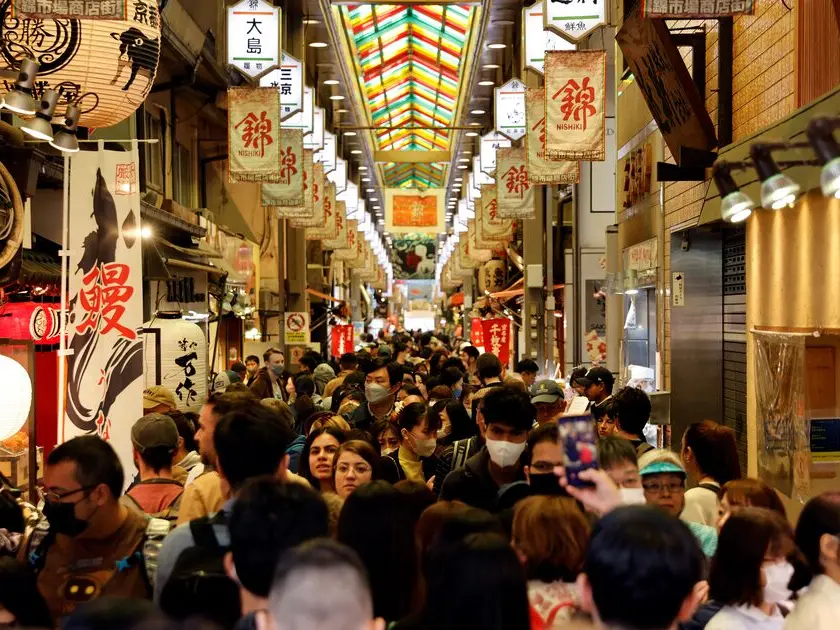
A crowd of tourists walk at Nishiki Market in Kyoto, western Japan March 29, 2023. Photograph: (Reuters)
Despite the overall slowdown in Japan's inflation, food and agricultural goods prices continued to climb, pointing to a broader trend of price increases beyond just raw materials. Food and beverage prices jumped 4.2 per cent in the year to July.
Japan's wholesale inflation continued to cool in July, marking the fourth consecutive month of slowing price growth, according to government data released on August 13. The Corporate Goods Price Index (CGPI), which tracks the prices that businesses charge one another for goods and services, rose by 2.6 per cent year-on-year, down from June’s 2.9 per cent increase. While this was above market expectations of 2.5 per cent, it signals that inflationary pressures from raw material costs are gradually dissipating.
Despite the overall slowdown, food and agricultural goods prices continued to climb, pointing to a broader trend of price increases beyond just raw materials. Food and beverage prices jumped 4.2 per cent in the year to July, indicating persistent price pressures in the consumer goods sector. This has raised market speculation that the Bank of Japan (BOJ) may be forced to adjust its monetary policy, potentially hiking interest rates sooner than anticipated.
Cooling PPI amid tariff pressures
The Producer Price Index (PPI), a key measure of domestic inflation, rose by 2.6 per cent in July, a slightly higher-than-expected figure, but remained at its slowest pace in 11 months. This marks a significant deceleration from the 2.9 per cent increase recorded in June. The month-on-month growth stood at 0.2 per cent, in line with forecasts. Analysts attribute the moderation in PPI to a combination of factors, including lower demand, a slowdown in consumer spending, and the impact of higher US trade tariffs on Japanese manufacturers.
Japan’s manufacturing sector has faced increased costs from overseas tariffs, particularly the 25 per cent duty on automobile imports imposed by the US. However, a recent trade deal between Japan and the US saw a reduction in tariffs on automobiles from 25 per cent to 15 per cent, providing some relief to local producers.
Bank of Japan’s rate hike dilemma
Trending Stories
)
)
)
)
)
)
)
)
)
)
)
)
)
)
)
&im=FitAndFill=(700,400))
)
)
)
)
)
)
)
)
)
&im=FitAndFill=(700,400))
)
)
)
)
)
)
)
&im=FitAndFill=(700,400))
)
)
)
)
)
While Japan's central bank has expressed confidence that inflation will stabilise and hit its 2 per cent target, some economists warn that persistent price increases in food and agriculture may force the BOJ to take more decisive action. The BOJ raised interest rates to 0.5 per cent in January, marking the first hike in over a decade, as part of a broader effort to normalise its monetary policy. Governor Kazuo Ueda has indicated that further rate hikes will depend on sustained inflationary pressure, though he has also urged caution, pointing to one-off factors like raw material costs as the primary drivers of recent inflation. The central bank’s next moves will likely be dictated by the ongoing balance between inflation trends and the economic growth outlook. With both inflation and economic growth showing signs of slowing, the BOJ faces difficult decisions in the months ahead.
(With inputs from agencies)