GST Reforms 2025: What are the types of GST in India? SGST, CGST, IGST, UTGST explained

&imwidth=600&imheight=450&format=webp&quality=medium "GST Reforms 2025: What are the types of GST in India? SGST, CGST, IGST, UTGST explained")
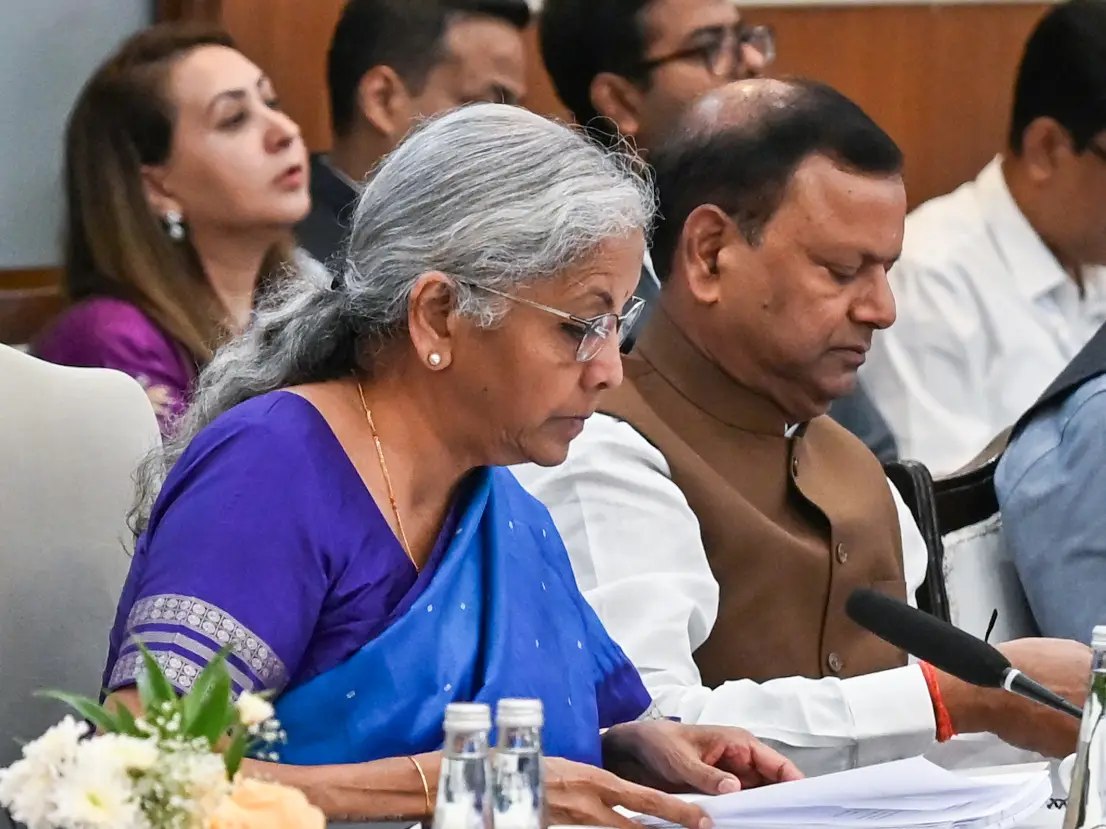
Union Finance Minister Nirmala Sitharaman and Union Minister of State for Finance Pankaj Chaudhary, during the 56th meeting of the GST Council. Photograph: (ANI file)
Goods and Services Tax (GST) 2025: Finance Minister Nirmala Sitharaman on Wednesday announced the reforms, wherein the 12 per cent and 28 per cent GST slabs were eliminated.
The Central government on Wednesday announced a mega reform in the Goods and Services Tax (GST) structure as it eliminated two tax slabs. Finance Minister Nirmala Sitharaman announced the decision of the GST Council to eliminate the 12 per cent and 28 per cent GST slabs and move most of the items in these slabs to the 5 per cent and 18 per cent categories. Consequently, the prices of several items, including cars and daily-use items, are slated to decrease from September 22.
How many types of GST are there in India?
As of now, there are four types of GST in India. They are: Integrated Goods and Services Tax (IGST), State Goods and Services Tax (SGST), Central Goods and Services Tax (CGST), and Union Territory Goods and Services Tax (UTGST). Whatare they?
Integrated Goods and Services Tax or IGST
It is a tax under the GST structure. It is defined as the interstate tax for the supply of goods and services between two states. It is also applied to imports and exports. It is governed by the IGST Act. The Central government collects the tax and divides it among the states. For instance, a trader sells goods from UP to West Bengal. The value of the item is Rs 1000, and IGST is 18 per cent, then the trader would be charged Rs 1180. The Centre would get Rs 180 as tax.
State Goods and Services Tax or SGST
Trending Stories
)
)
)
)
)
)
)
)
)
)
)
)
&im=FitAndFill=(700,400))
)
)
)
)
)
)
)
&im=FitAndFill=(700,400))
)
)
)
)
)
)
)
)
)
)
)
)
)
)
)
&im=FitAndFill=(700,400))
)
)
)
)
)
The State Goods and Services Tax, or SGST, is a tax levied on intrastate transactions, which means transactions within the state. Both the Centre and the state where the transaction had taken place exact GST. The state's direct taxation is called SGST. Under SGST, the tax goes solely to the state. It is normally half of the total GST charged. For instance, if the total tax is 18 per cent, the state would get 9 per cent. If we go by the example given above, under SGST, a state might get Rs 90 out of Rs 180.
Central Goods and Services Tax or CGST
The Centre charges CGST on all intrastate goods and services. It is normally equal to the SGST. In the above example, the other 9 per cent, which amounts to Rs 90, will go to the central government.
Union Territory Goods and Services Tax or UTGST
The Union Territory Goods and Services Tax or UTGST is similar to the SGST. It is levied on the supply of goods and services in the Union Territories (UTs) -- which are Andaman and Nicobar Islands, Chandigarh, Daman Diu, Dadra, and Nagar Haveli, and Lakshadweep.