
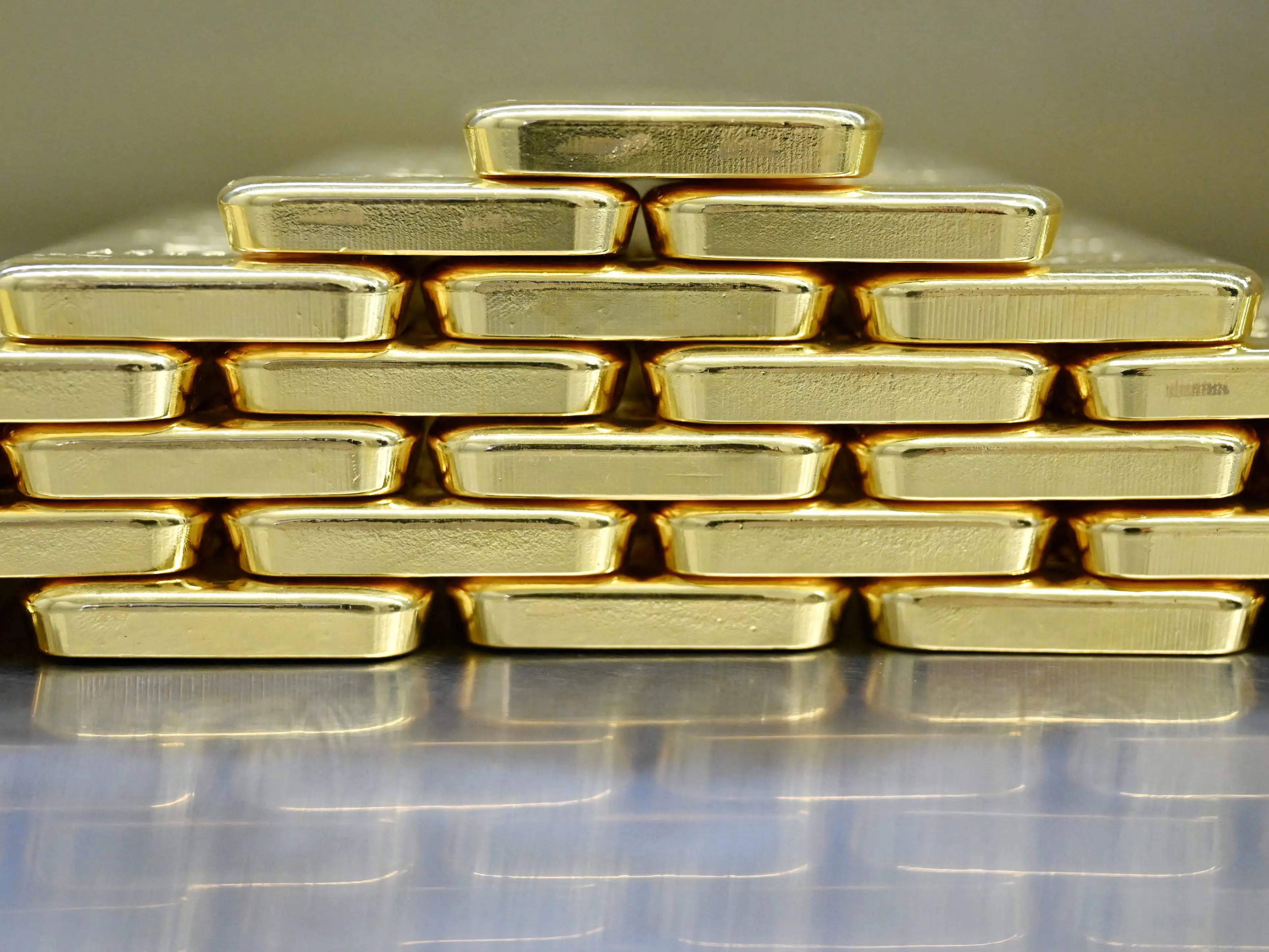
&imwidth=800&imheight=600&format=webp&quality=medium "Gold price steadies as US trade deals dent safe-haven demand")
Easing geopolitical uncertainty and signs of progress in US-led trade negotiations reduced investor demand for safe-haven assets. On Thursday, gold prices steadied after a sharp decline. Amid optimism surrounding US trade deals with Japan and potentially the European Union, the metal had dropped 1.3 per cent in the previous session.
Meanwhile, spot gold hovered near $3,389.77 an ounce at 8:24 a.m. in Singapore, up 0.1 per cent on the day, as per Bloomberg. Meanwhile, the Bloomberg Dollar Spot Index remained steady, though the dollar has fallen more than 1 per cent this week, providing some support to non-yielding assets like gold.
Trade deals impact on gold’s shine

Gold’s retreat comes after Bloomberg News reported that the European Union may be ready to accept a 15 per cent US tariff on most of its goods. This follows a similar deal with Japan, which included a $550 billion investment commitment into the US economy. The agreements are being viewed as diplomatic victories for President Donald Trump’s administration and a step toward stabilising global trade relations.
“Progress in talks between the US and key trading partners hurt demand for haven assets,” Bloomberg noted in its report. The market is also digesting Trump’s warnings of additional tariffs, between 15 and 50 per cent, on countries such as South Korea and India, should they fail to reach trade deals before the August 1 deadline. While these threats cast some shadow, the broader tone remains optimistic, dampening the flight to safety that has boosted gold prices for much of the year.
Yields rise, gold loses appeal
Trending Stories
)
Tata Trusts chairman Noel Tata calls Chandrasekaran’s reappointment ‘illegal’, rejects Tata Sons listing
)
Chiefs tight end Travis Kelce named one of the victims in $35 million ponzi scheme
)
Pak batter Rizwan's petition against being questioned by cyber crime agency rejected by court
)
Pak defence minister says 'time has come to implement pact'
)
US intel warns China can steal F-35 jets secret from Saudis
)
Former India player Diana Edulji wants Smriti Mandhana to replace Harman as skipper at the earliest
)
Dolly Parton dies at 80: Country legend’s team reveals cause of death
)
Want to get married within a year? Why 18 lakh people rush to Jaipur for ‘sacred henna’
)
Mahua Moitra moves UN over alleged exclusion of Muslim officers from Amit Shah events
)
All Indian goods to get duty-free access to New Zealand
Mandakini breaks silence on Dawood Ibrahim photo: 'I was not invited by him'
)
AI already defying, denying humans, is it beyond human control already?
)
Trump could impose tariffs of up to 100%
)
‘I have a big decision coming up’: Trump says he’s approaching major ‘crossroad’ in Iran war
)
240-million-year-old bizarre 'pig with a tusk' creature creates new dilemma over origin of dinosaurs
)
Laura Wolvaardt sets new world record for most WT20I runs in a year
)
Abhishek Sharma shatters record with 30-ball century against Afghanistan
)
US drone firm linked to Trump’s sons signs MoU with Pakistan army, gets initial order
)
Hong Kong unveils 11 new measures to boost birth rates, offers higher cash bonuses and housing perks
)
Fed raises rates for first time in 3 years, Kevin Warsh defies Trump as inflation mounts
)
Former OpenAI researcher warns of growing risks from Artificial Intelligence
)
US House votes 417-3 to pass Ratepayer Protection Act targeting AI data center electricity costs
&im=FitAndFill=(700,400))
Meet top 5 batters in the latest ICC T20I Rankings
)
Trump’s rare gesture for Xi: US president to personally welcome Chinese leader at airport
)
US to sell 48 F-35 Lightning fighter jets to Saudi Arabia, help it deter threats
)
Formula One reveals the 2027 race calendar; Monaco to host sprint race for the first time
)
Daayra movie review: Kareena Kapoor, Prithviraj Sukumaran shine in Meghna Gulzar’s cop-versus-cop crime thriller
)
Ukraine plans record $109 bn defence spending, nearly two thirds of budget amid Russia war
&im=FitAndFill=(700,400))
Suriya and Jyothika say ‘I do’ again after 20 years! See their dreamy wedding pics
)
Following the trade development, US Treasury yields rose for the first time in six days, further weighing on bullion. Since gold does not generate interest, it typically underperforms when yields rise, as investors shift to income-generating assets.
Meanwhile, traders are closely watching the Federal Reserve’s July policy meeting. According to Bloomberg, money markets currently expect the Fed to keep interest rates steady next week, though a rate cut remains likely before October. There’s a 60 per cent probability of a quarter-point reduction at the September meeting. Lower rates typically support gold, as they reduce the opportunity cost of holding the metal, as per Bloomberg.
Bullion rally may be cooling
Gold prices have surged nearly 30 per cent so far in 2025, fuelled by global trade tensions, Russia’s invasion of Ukraine, and West Asia instability. The metal hit an all-time high of over $3,500 an ounce in April but has since been trading within a narrow band as markets await clearer signals on monetary policy and geopolitics.
Still, the recent pullback may indicate that bullish momentum is starting to wane in the absence of fresh catalysts.
Silver and other metals diverge
While gold remained range-bound, silver continued to attract interest, especially from industrial buyers. The white metal steadied after briefly touching its highest level since 2011 earlier this week. According to Bloomberg, its demand is surging due to its widespread use in clean-energy technologies, including solar panels.
Moreover, silver’s borrowing costs have risen above historical norms, signalling a supply squeeze. Growing holdings in exchange-traded funds have also reduced the amount of freely available metal in the market. Elsewhere, platinum prices rose modestly, while palladium extended losses.
(With inputs from the agencies)