
&imwidth=800&imheight=600&format=webp&quality=medium "China braces for US trade deals aimed at excluding China from global supply chains")
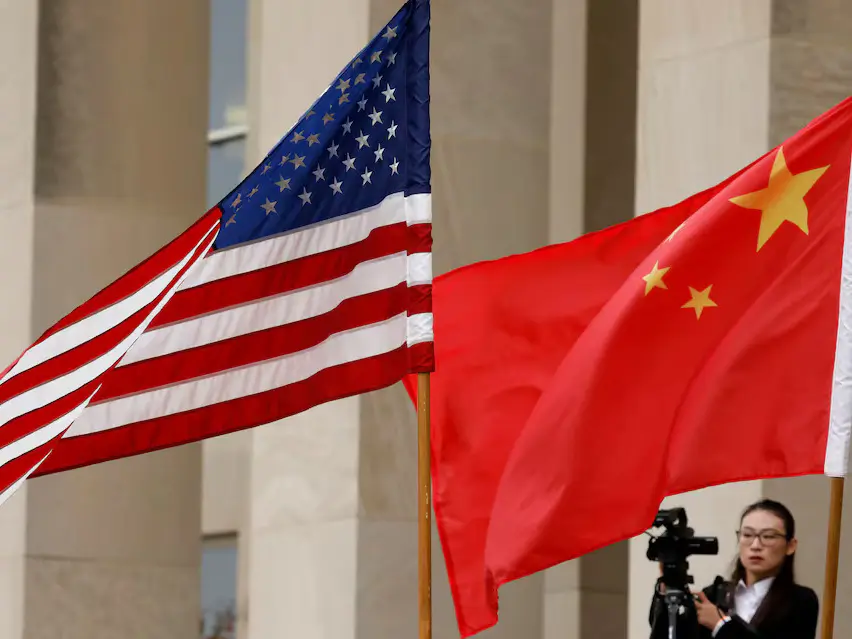
As the US and China hold onto a fragile trade truce, Beijing is growing increasingly concerned about Washington’s escalating efforts to isolate Chinese firms from global supply chains. Ahead of a key deadline on July 9, US officials are deep into negotiations with trading partners across Asia and Europe, pushing for agreements that include restrictions on Chinese goods or demand commitments to counter China’s alleged unfair trade practices. The first of these deals, a two-tiered tariff agreement with Vietnam, introduces a 20 per cent tariff on Vietnamese exports to the US, with a 40 per cent levy on goods believed to be transshipped through the country, often as part of a broader strategy to avoid US tariffs.
While Vietnam has become a hub for Chinese companies seeking to sidestep tariffs by reassembling products and labelling them as Vietnamese-made, this agreement could significantly affect trade flows. According to reports, as much as 28 per cent of Vietnam’s exports to the US in 2022 included Chinese content. Other Asian nations, including India and South Korea, are negotiating similar “rules of origin” agreements to qualify for tariff exemptions, with India pushing for a lower threshold than the US demands.
China responds with defiance

In response, China has repeatedly voiced its opposition to such trade agreements, warning that it will not accept deals that harm its interests. The Ministry of Commerce has reiterated that China will “resolutely counter” any agreements designed to exclude Chinese companies from supply chains. Foreign minister Wang Yi is expected to bring up these concerns during his diplomatic tour of Europe, where the US has also been pressing for similar measures.
The US has also been exploring the possibility of export controls on high-tech products like semiconductors, targeting Chinese firms’ access to advanced manufacturing tools. Taiwan recently added Huawei Technologies and Semiconductor Manufacturing International Corp. to its entity list, further complicating the situation for Chinese companies seeking to maintain their supply chains.
A shift toward “trusted” supply chains
Trending Stories
)
Tata Trusts chairman Noel Tata calls Chandrasekaran’s reappointment ‘illegal’, rejects Tata Sons listing
)
Chiefs tight end Travis Kelce named one of the victims in $35 million ponzi scheme
)
Pak batter Rizwan's petition against being questioned by cyber crime agency rejected by court
)
Pak defence minister says 'time has come to implement pact'
)
US intel warns China can steal F-35 jets secret from Saudis
)
Former India player Diana Edulji wants Smriti Mandhana to replace Harman as skipper at the earliest
)
Dolly Parton dies at 80: Country legend’s team reveals cause of death
)
Want to get married within a year? Why 18 lakh people rush to Jaipur for ‘sacred henna’
)
Mahua Moitra moves UN over alleged exclusion of Muslim officers from Amit Shah events
)
All Indian goods to get duty-free access to New Zealand
Mandakini breaks silence on Dawood Ibrahim photo: 'I was not invited by him'
)
AI already defying, denying humans, is it beyond human control already?
)
Trump could impose tariffs of up to 100%
)
‘I have a big decision coming up’: Trump says he’s approaching major ‘crossroad’ in Iran war
)
240-million-year-old bizarre 'pig with a tusk' creature creates new dilemma over origin of dinosaurs
)
Laura Wolvaardt sets new world record for most WT20I runs in a year
)
Abhishek Sharma shatters record with 30-ball century against Afghanistan
)
US drone firm linked to Trump’s sons signs MoU with Pakistan army, gets initial order
)
Hong Kong unveils 11 new measures to boost birth rates, offers higher cash bonuses and housing perks
)
Fed raises rates for first time in 3 years, Kevin Warsh defies Trump as inflation mounts
)
Former OpenAI researcher warns of growing risks from Artificial Intelligence
)
US House votes 417-3 to pass Ratepayer Protection Act targeting AI data center electricity costs
&im=FitAndFill=(700,400))
Meet top 5 batters in the latest ICC T20I Rankings
)
Trump’s rare gesture for Xi: US president to personally welcome Chinese leader at airport
)
US to sell 48 F-35 Lightning fighter jets to Saudi Arabia, help it deter threats
)
Formula One reveals the 2027 race calendar; Monaco to host sprint race for the first time
)
Daayra movie review: Kareena Kapoor, Prithviraj Sukumaran shine in Meghna Gulzar’s cop-versus-cop crime thriller
)
Ukraine plans record $109 bn defence spending, nearly two thirds of budget amid Russia war
&im=FitAndFill=(700,400))
Suriya and Jyothika say ‘I do’ again after 20 years! See their dreamy wedding pics
)
The broader risk for China is that these isolated trade pacts could eventually coalesce into a new global trade system focused on “trusted” supply chains, leaving Chinese firms on the outside. Beijing has expressed concern that countries, particularly within the EU, may align more closely with the US in the coming months, further constricting China’s access to global markets. The EU, which is China’s largest export destination for electric vehicles, has already been accused by Brussels of “weaponising” rare earths and magnets, a key element in China’s manufacturing strategy.
If the US and its partners reach agreements on global supply chain security, export controls, and ownership rules, similar to provisions in the UK-US deal, China could be forced into a defensive stance. The EU’s stance remains delicate, with Washington leveraging its stronger economic ties to press for commitments that could further isolate Chinese firms.
Transshipment and loopholes
As the US crackdown on Chinese transshipment practices continues, the situation in Southeast Asia remains murky. Chinese businesses have quickly adapted to new US tariffs by shifting production across the region to countries like Vietnam, Indonesia, and Thailand, where products are minimally altered before being exported to the US. Despite attempts by local authorities to close loopholes, such as Vietnam’s stricter enforcement and Malaysia’s crackdown on illegal rerouting, the reality is that enforcement remains challenging. Chinese companies are skilled at bypassing regulatory hurdles, even creating supply chains that make it appear as though goods are coming from other countries.
This transshipment activity is expected to persist in the region, with experts noting that customs enforcement remains inconsistent and many businesses simply avoid unloading containers altogether in an effort to avoid inspection. This practice raises concerns that the US tariffs may not have their intended impact, especially if enforcement remains lax or the rules governing trade deals remain too vague.
(With inputs from agencies)