GM Defense introduces battery electric technology for future military platforms

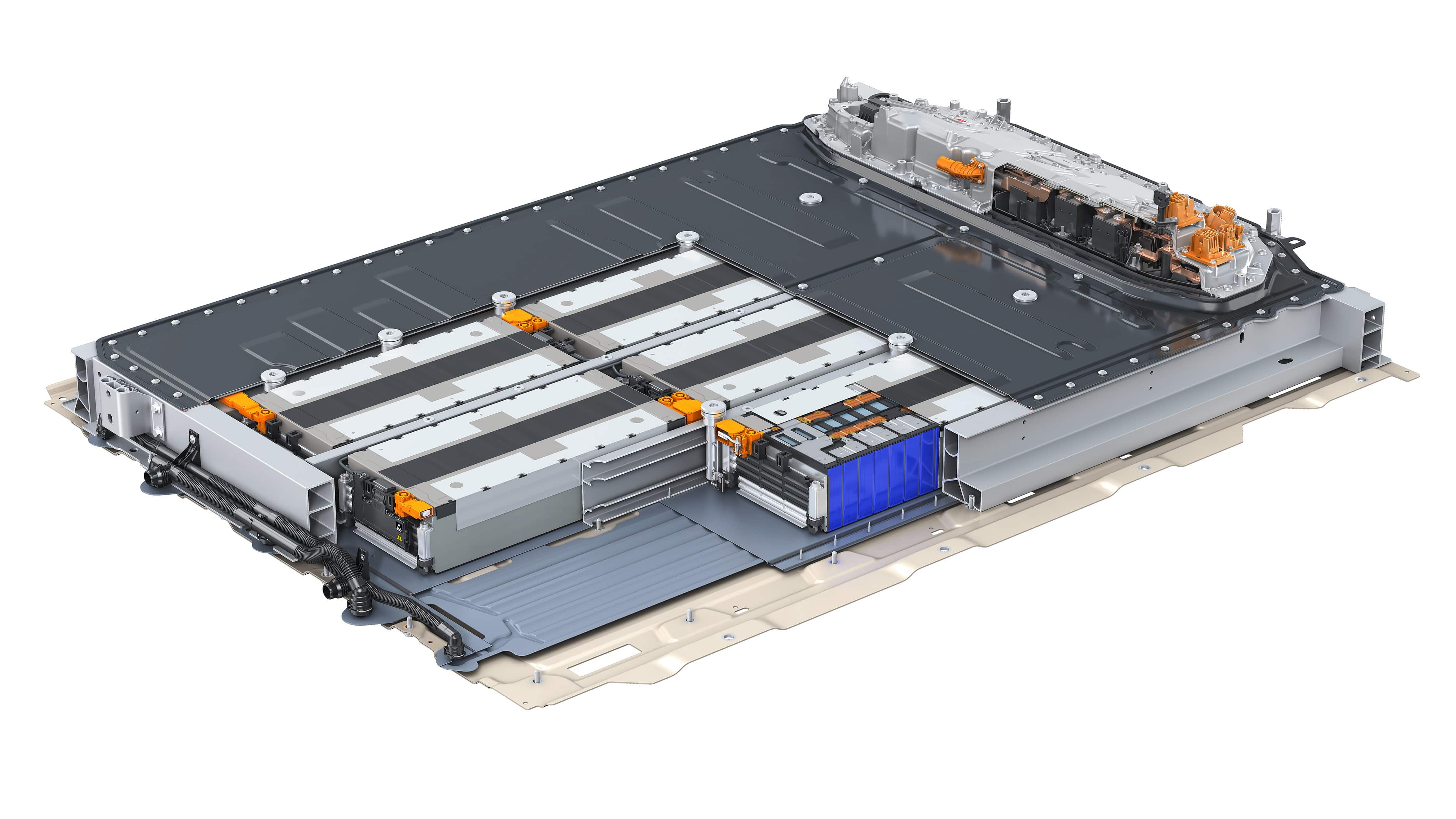
Electric Vehicle Battery Design
General Motors' defense subsidiary, GM Defense, is making significant strides in advancing military technology by harnessing the potential of GM's innovative Ultium Platform propulsion architecture. This cutting-edge system is currently undergoing rigorous evaluation and testing, with the aim of revolutionizing power, range, and scalability beyond any of GM's previous hybrid or extended-range electric vehicle technologies.
The Ultium Platform's key strength lies in its adaptability and scalability. It can accommodate various battery chemistries and cell form factors, making it highly versatile and future-proof. This flexibility allows for seamless integration of new technologies as they become available, ensuring that the platform remains at the forefront of innovation.
By leveraging its parent company's battery expertise, GM Defense is well-positioned to address the Department of Defense's (DoD) complex energy and energy storage challenges. The ongoing research and development in this new initiative will provide crucial insights into the performance and design considerations necessary when batteries are subjected to more dynamic and high-power operations than typical civilian applications.

The Office of the Under Secretary of Defense for Research and Engineering's Operational Energy Capability Improvement Fund (OECIF) plays a pivotal role in supporting the development of these advanced power and energy technologies. This support is instrumental in providing the DoD with cutting-edge capabilities and ensuring that power and energy constraints do not hinder military operations.
Steve duMont, president of GM Defense, emphasizes the potential benefits for the Department of Defense, stating, "The Department of Defense can benefit from billions of dollars in GM investments to develop and manufacture transformative battery technologies." He further explains that these technologies offer significant potential to enhance operational capabilities, both in tactical situations and at installations worldwide. duMont expresses GM Defense's enthusiasm for supporting this crucial project and assisting in the transition of these technologies to global defense and government customers.
The University of Texas at Arlington (UTA) is collaborating with GM Defense on this project through its Pulsed Power and Energy Lab (PPEL). David Wetz, a professor of electrical engineering at UTA and director of the PPEL, expresses excitement about working with GM Defense to test the Ultium Platform and determine its potential for future warfighting applications. He highlights PPEL's long-standing relationship with the DoD and the Office of Naval Research in testing the limits of batteries used in high-power applications, positioning them uniquely to evaluate this technology and make recommendations for future use cases.
)
No Pandya as Auqib Nabi earns maiden ODI call-up; Mayank returns for WI T20Is| check full squads
)
Chiefs tight end Travis Kelce named one of the victims in $35 million ponzi scheme
)
Trump praises India’s Opium crackdown, hails anti-drug efforts
)
Sydney Sweeney defends provocative ad choice, the internet is still not impressed
)
Former India player Diana Edulji wants Smriti Mandhana to replace Harman as skipper at the earliest
)
Trump calls Canada-EU associate membership plan ‘laughable’ and threatens 'very serious tariffs'
)
Protests erupt over migrant housing plan in Piddington
)
Shahzad Bhatti Network declared terrorist organisation under UAPA: Govt order
)
Europe wants a common playbook for security threats, seeks security beyond NATO
)
Formula One reveals the 2027 race calendar; Monaco to host sprint race for the first time
)
All Indian goods to get duty-free access to New Zealand
)
Bigg Boss 20: Mahhi Vij reveals she lost Yuva role to Kareena Kapoor; 'didn’t work out in my favour'
)
Lionel Messi for 2026 Ballon d’Or over Mbappe and Yamal, says Diego Simeone
)
US House votes 417-3 to pass Ratepayer Protection Act targeting AI data center electricity costs
)
Hong Kong unveils 11 new measures to boost birth rates, offers higher cash bonuses and housing perks
)
Former OpenAI researcher warns of growing risks from Artificial Intelligence
)
Veteran actor Anant Nag honoured with Indian cinema’s highest award
)
AUS vs SA: Steve Smith still gets 'little flashbacks' from sandpaper gate
)
Pakistan naval vessel returns to harbour with 'severe damage' after collision with Indian warship in Arabian Sea
)
Fed raises rates for first time in 3 years, Kevin Warsh defies Trump as inflation mounts
)
Katrina Kaif’s postpartum weight is not the problem; your gaze is
)
Taiwan seeks deeper India ties as direct flights restart soon and chip projects advance
)
Daayra movie review: Kareena Kapoor, Prithviraj Sukumaran shine in Meghna Gulzar’s cop-versus-cop crime thriller
)
Saudi Vs Houthis: Yemeni military rebels clash with Houthis
)
Pak batter Rizwan's petition against being questioned by cyber crime agency rejected by court
)
US trade tariff: 100% tariff targets Russian buyers amid trade tensions
)
Pakistan: Imran Khan's sons Kasim & Sulaiman claim their father is 'tortured' in jail
&im=FitAndFill=(700,400))
New OTT releases this week (September 14-20, 2026): Lust Stories 3, Waiting Hai, Irumudi- 5 new titles coming on Netflix, Prime Video and more
)
Trump gets new power to hit India, China with up to 100% tariffs as US Senate clears Russia sanctions bill
)
Prime Minister Narendra Modi's birthday: Italian PM Meloni sends birthday wishes
)
‘Imagine 50 AI fighters cornering one manned jet’: India’s mobbing doctrine eyes a new era of air warm
)
Saudi vs Houthis: Riyadh claims to have shot Houthi drone targeting Mecca
)
US Treasury rallies global financial institutions for Op Economic Outcast to isolate Iran
)
India breaks silence on US Russia sanctions bill, 100% tariff threat: ‘Committed to energy security’ for 1.4 billion
)
Pakistan boycotts chess match against Israel at Olympiad
)
Want to get married within a year? Why 18 lakh people rush to Jaipur for ‘sacred henna’
&im=FitAndFill=(700,400))
Suriya and Jyothika say ‘I do’ again after 20 years! See their dreamy wedding pics
)
Abhishek Sharma rises to No. 2 in T20Is; ENG’s Robinson 3rd after record Pakistan Tests
)
The Early Spring season 2 is happening, but fans have one request - 'don't change the actors'
Peter Crouch, dean of UTA's College of Engineering, underscores the importance of this collaboration, stating that it not only improves the nation's military capabilities but also contributes to workforce development efforts. This partnership helps produce the next generation of engineers capable of solving complex national problems.
GM Defense's involvement in advancing battery technology extends beyond this project. The company has previously announced its participation in the Defense Innovation Unit's Jumpstart for Advanced Battery Standardization (JABS) project. Similar to the EEVBEDE initiative, JABS aims to evaluate and test high-voltage battery systems to optimize commercial technologies for military applications. As part of this project, GM Defense provided a prototype battery system based on GM's Ultium Platform and demonstrated mission power capabilities by integrating a high-voltage battery pack into a light tactical utility vehicle.
The insights gained from the JABS project will inform the integration requirements for future battery-electric defense solutions, further solidifying GM Defense's position at the forefront of military technology innovation.
GM Defense LLC, as a subsidiary of General Motors, brings to the table decades of proven performance and billions of dollars invested in independent research and development. The company leverages GM's world-leading capabilities in global design, engineering, and manufacturing to deliver integrated vehicles, power and propulsion systems, and autonomy and connectivity solutions to global defense, security, and government markets. This unique position allows GM Defense to offer exceptional reliability in its technologies, backed by the extensive resources and expertise of its parent company.