Why Giorgia Meloni has halted Italy’s defence pact with Israel? This is what we know

&imwidth=600&imheight=450&format=webp&quality=medium "Why Giorgia Meloni has halted Italy’s defence pact with Israel? This is what we know")
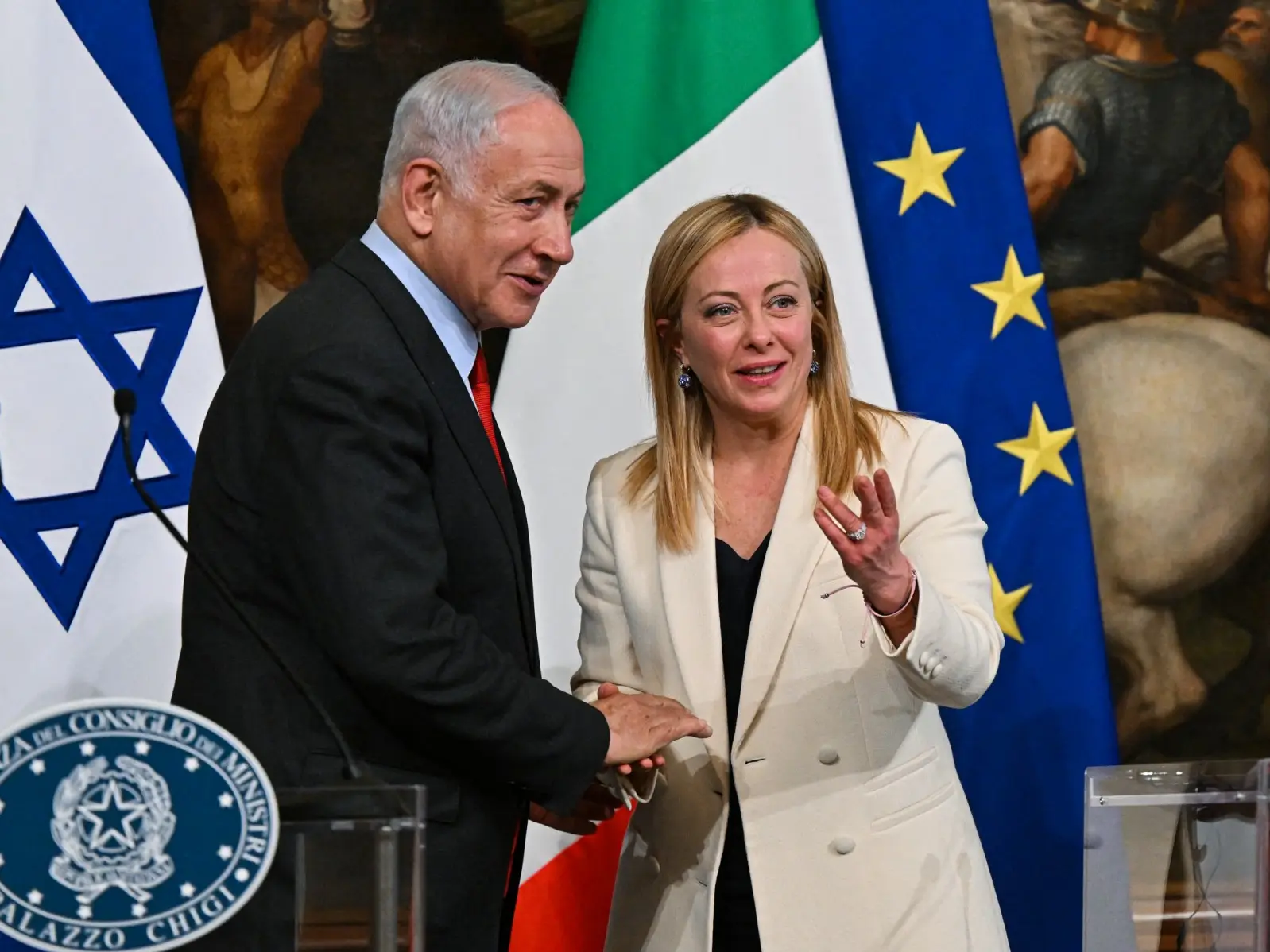
Italy's Prime Minister, Giorgia Meloni and Israel's prime minister Benjamin Netanyahu shake hands during a joint press conference following their meeting on March 10, 2023 at Palazzo Chigi in Rome. Photograph: (AFP)
Prime Minister Giorgia Meloni suspended Italy’s 2006 defence pact with Israel, citing civilian casualties in Lebanon and Israeli attacks on Italian UN peacekeepers as primary reasons for the diplomatic freeze.
Italian Prime Minister Giorgia Meloni on Tuesday (April 14) announced the suspension of Italy’s defence cooperation agreement with Israel, citing the deteriorating political climate following recent developments in West Asia.
“In view of the current situation, the government has decided to suspend the automatic renewal of the defence agreement with Israel,” Meloni was quoted as saying by Italian news agency Ansa.
An Italian diplomatic source confirmed the development to AFP, stating that continuing the agreement would have been “politically difficult” under the present circumstances.
What the agreement entails
The bilateral defence agreement, approved in 2006, is subject to review every five years. It facilitates cooperation between Italy and Israel across a wide range of areas, including defence industries, training and education of military personnel, research and development, and information technology.
Trending Stories
)
)
)
)
)
)
)
)
)
)
)
)
)
)
)
)
)
)
)
)
)
)
&im=FitAndFill=(700,400))
)
)
)
)
)
&im=FitAndFill=(700,400))
Rising tensions over Lebanon
Ties between the two countries have come under strain in recent days after Italy accused Israeli forces of firing warning shots at a convoy of Italian UN peacekeepers in Lebanon.
Italy has also voiced strong criticism of Israeli military actions in Lebanon. Foreign Minister Antonio Tajani described the strikes as “unacceptable attacks” on Lebanese civilians.
Following these remarks, Israel summoned Italy’s ambassador on Monday, signalling a sharp escalation in diplomatic tensions. Tajani travelled to Beirut for meetings with the Lebanese President, Joseph Aoun, and the Foreign Minister, Youssef Raggi. In a post on X, he said his visit aimed to convey Italy’s solidarity in light of what he called Israel’s attacks on civilians.
Call for de-escalation
Speaking on the sidelines of a wine industry fair in Verona, Meloni emphasised the need to push forward peace negotiations involving Israel, the United States and Iran. She also highlighted the strategic importance of reopening the Strait of Hormuz, a key global transit route.
“It is necessary to continue working in order to advance peace negotiations, making every possible effort to stabilise the situation and reopen the Strait, which is fundamental for us, not only for fuel supplies but also for fertilisers,” Meloni said.

