
&imwidth=800&imheight=600&format=webp&quality=medium "When climate meets conflict: How two crises are reshaping global hunger | WION Decodes")
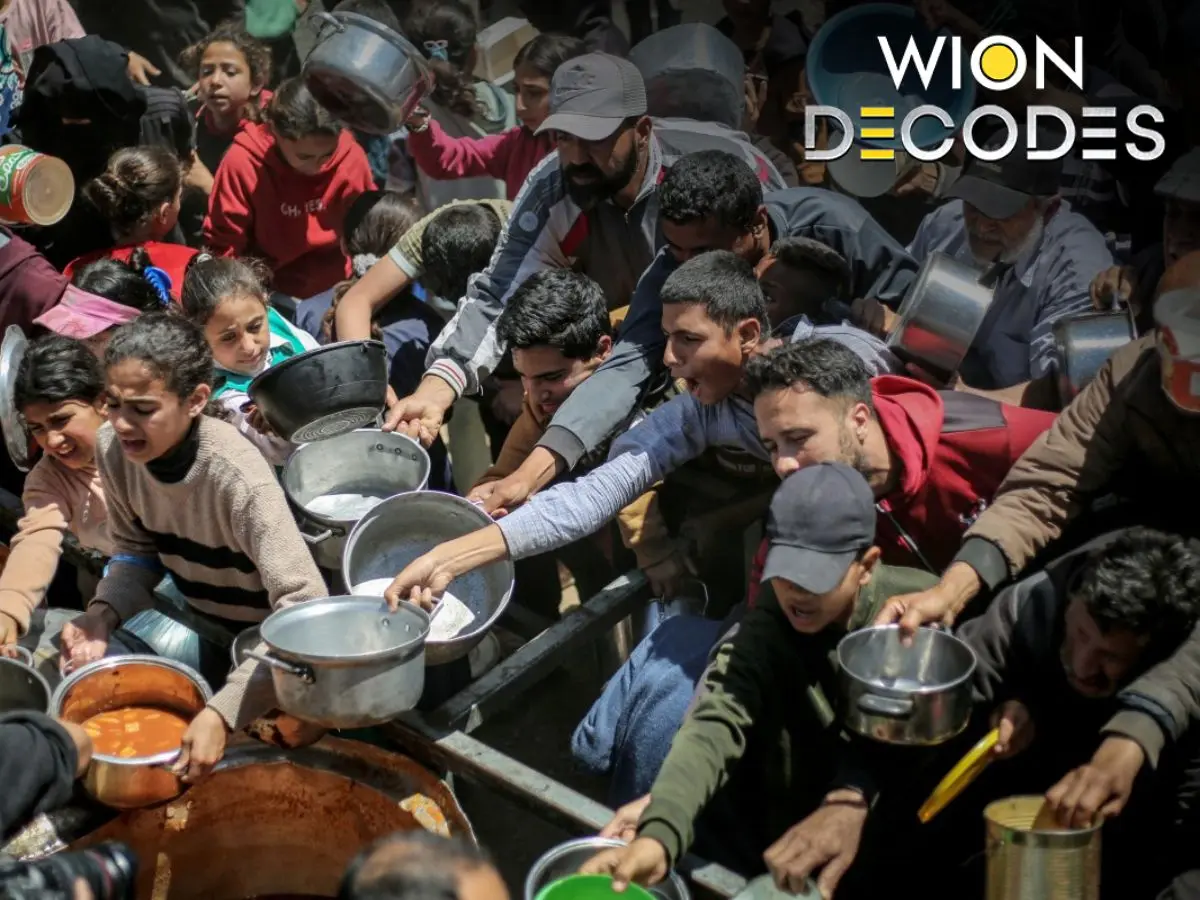
While the impact of war and climate change is evident in the economy and loss of lives, there’s another major consequence of them that is not talked about enough – hunger. Multiple wars across the world and climate disasters have taken a toll on food supplies in several parts of the world, leaving a significant portion of the population in hunger. According to the World Food Programme (WFP) estimates, 363 million people are at risk of acute hunger in 2026. Just the conflict in the Middle East has put 45 million people at risk of acute hunger.
Conflict: Driving force behind hunger
The major driver of the global food crisis across continents is conflict. According to recent UN analyses, two-thirds of the world’s most food-insecure people lived in fragile or conflict-affected countries, including Sudan, Gaza, South Sudan, Haiti, and Mali. The increased hostilities in the Middle East have further posed a major threat to the food security of millions of people. Conflict in East, Central and West Africa, as well as in the Caribbean, southern Asia and Eastern Europe, is also fuelling hunger.

During a war, millions are displaced, disrupting farming activities and causing land destruction in the region. Further, markets collapse and give rise to food insecurity. The conflict-ridden regions also do not get humanitarian aid or get it late, resulting in the civilians starving. Several parts of Sudan are experiencing famine due to the prolonged conflict.
Climate shocks weaken food supply
Trending Stories
)
Sikh driver attacked in Wyoming in US, suffers 17 stab wounds
)
‘I have a big decision coming up’: Trump says he’s approaching major ‘crossroad’ in Iran war
)
US intel warns China can steal F-35 jets secret from Saudis
)
Former India player Diana Edulji wants Smriti Mandhana to replace Harman as skipper at the earliest
)
Pak defence minister says 'time has come to implement pact'
&im=FitAndFill=(700,400))
Meet top 5 batters in the latest ICC T20I Rankings
)
Formula One reveals the 2027 race calendar; Monaco to host sprint race for the first time
)
UNGA 2026 theme explained: What does ‘Restoring trust, managing transformation: A United Nations that delivers for all’ mean?
)
Godfather of AI Geoffrey Hinton gives US lawmakers a one-year warning on AI
)
AI already defying, denying humans, is it beyond human control already?
)
US F-16 fighter jet crashes in Michigan during training mission, pilot ejects safely
)
240-million-year-old bizarre 'pig with a tusk' creature creates new dilemma over origin of dinosaurs
)
All Indian goods to get duty-free access to New Zealand
)
Xi-Trump summit may boost military links
)
US to sell 48 F-35 Lightning fighter jets to Saudi Arabia, help it deter threats
)
Hong Kong unveils 11 new measures to boost birth rates, offers higher cash bonuses and housing perks
)
Australian athlete, who soiled herself during Hyrox race, apologises for continuing
)
Tata Trusts chairman Noel Tata calls Chandrasekaran’s reappointment ‘illegal’, rejects Tata Sons listing
)
Passport fees hiked, child validity revised: What the new rules introduce
)
How did an Australian river with 500 crocodiles pass the Olympic test? Here's how
)
Fed raises rates for first time in 3 years, Kevin Warsh defies Trump as inflation mounts
)
US drone firm linked to Trump’s sons signs MoU with Pakistan army, gets initial order
)
Pak batter Rizwan's petition against being questioned by cyber crime agency rejected by court
)
Daayra movie review: Kareena Kapoor, Prithviraj Sukumaran shine in Meghna Gulzar’s cop-versus-cop crime thriller
&im=FitAndFill=(700,400))
Which country has the most F-35s outside America?
)
'Gangsta' crab shoves knife blade at man and his dog in Florida - Watch
)
At least 48 dead, 100 hospitalised in Nigeria after drinking suspected methanol-laced alcohol
)
US-Iran War: Trump says ‘big decision’ on Iran ahead, weighs possible fresh military action
)
US new military base in Poland: US President Donald Trump eyes military base in Poland
)
Putin 'is plotting something bad': Russia may launch 'accidental' strikes on NATO countries supporting Ukraine, Poland PM warns
&im=FitAndFill=(700,400))
Suriya and Jyothika say ‘I do’ again after 20 years! See their dreamy wedding pics
)
Laura Wolvaardt sets new world record for most WT20I runs in a year
)
Pezeshkian, Araghchi set to attend UNGA 2026 in New York amid ongoing conflict as US-imposed travel curbs remain
)
'He will always be ahead': India coach Gambhir says Sooryavanshi won't walk into team ahead of Samson
Making the already grave situation even worse, extreme weather events triggered by climate change have considerably increased in frequency, making it another leading cause of hunger across the world. According to the UN, nearly 96 million people were affected by climate-related food shocks in 2024. Extreme weather events, particularly induced by El Nino, have resulted in droughts, floods, and heatwaves.
El Nino occurs when sea surface temperatures in the central and eastern Pacific Ocean become significantly warmer than normal, weakening trade winds and altering global atmospheric circulation. This changes rainfall and temperature patterns worldwide.
These events can directly impact agricultural output and result in a shortage of food, driving up food prices. WFP has warned, “Hunger will spiral out of control if the world fails to take immediate climate action.”
Economic instability fuels hunger
Apart from conflicts and climate, economic conditions are also responsible for pushing millions into hunger. Inflation, currency depreciation, and global supply disruptions have affected affordability even where food is available. According to UN estimates, around 59 million people were pushed into food insecurity due to economic shocks alone. The rising cost of fertilisers and trade disruptions have further affected agricultural production, worsening the situation in countries that particularly rely on imports.
Children pay the heaviest price
Children are the most affected group due to the hunger crisis. According to estimates, 36 million children under the age of five suffer from acute malnutrition across the world. Severe malnutrition increases the risk of death from common diseases and causes irreversible damage to physical and cognitive development.
In conflict-affected regions, malnutrition rates are often higher than the emergency thresholds defined by humanitarian agencies, reflecting systemic breakdowns in healthcare, sanitation, and food access.
Also read | Greenwashing: Are we being fooled into buying eco-friendly products that aren’t? WION Decodes
How can we end global hunger crisis?
As the world spirals into multiple crises, the food crisis has only been getting worse, especially for those who have been living in regions that have been gripped by food shortages for several years. Over 80 per cent of severely food-insecure populations now live in protracted crises, such as in Sudan and Gaza, where instability persists for years.
According to the WFP, a coordinated effort across government, financial institutions, and the private sector is the “only way to end the global food crisis”. It further recommended, “Political and diplomatic solutions are needed to strengthen peacebuilding efforts and ensure safe and unrestricted access across borders and conflict lines – to save lives and prevent the hunger catastrophe spreading even further.”
Watch | US-Iran Peace Deal Fuels Political Divide In Israel, Opposition Claims Netanyahu Can No Longer Lead

