

&imwidth=800&imheight=600&format=webp&quality=medium "War’s new rule: Cheap drones are beating billion-dollar militaries")
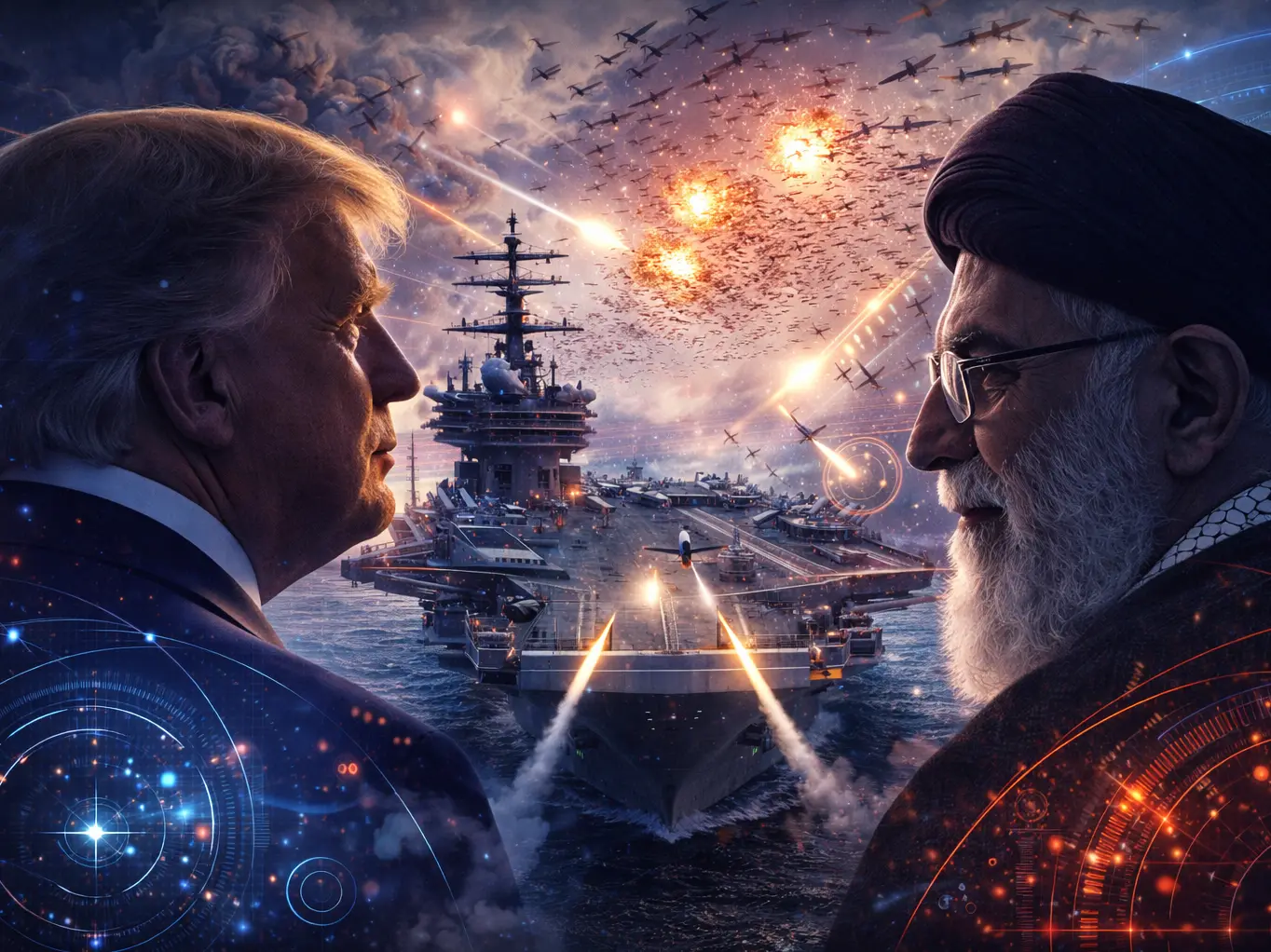
The war in Ukraine served as an early warning for Western defence readiness, but the opening 16 days of the Iran conflict have escalated that warning into an urgent alarm about sustainability. The scale at which advanced munitions have been consumed during Operation Epic Fury highlights a serious weakness: the West is operating with a dangerously unfavourable cost-to-effect ratio that its industrial base cannot maintain over time.
Although US and Israeli forces have achieved tactical gains by targeting thousands of objectives, they are simultaneously expending extremely costly interceptor missiles to neutralize relatively inexpensive drones and incoming threats. Ukrainian advisors observing the conflict have reportedly been surprised at how freely these high-value defensive systems are being used.
Also Read: ‘No negotiations have taken place’: Tehran envoy to Pakistan rejects Trump’s claims of US-Iran talks
This imbalance is quickly eroding stockpiles of advanced weaponry. Data from the Payne Institute’s tracking tool estimates that coalition forces used over 11,000 munitions in just over two weeks, with a total cost nearing $26 billion.
Following an intense initial barrage of more than 5,000 munitions in the first four days, the conflict has transitioned into a prolonged war of attrition. While Iran’s daily attacks have dropped significantly, down 80–90% from peak levels, the ongoing pace remains sufficient to steadily drain coalition resources. Since day five, Iranian forces have averaged roughly 33 missile launches and 94 drone strikes per day.
The most pressing concern is not simply the overall volume of munitions used, but the uneven depletion of specific categories. Some supplies remain abundant and replaceable, while others, particularly long-range interceptors and precision-guided weapons, are being exhausted at an alarming rate.
Trending Stories
&imwidth=180&imheight=135&format=webp&quality=medium)
US sanctions Cuban state-owned bank BICSA over alleged financial links to Iran
&imwidth=180&imheight=135&format=webp&quality=medium)
Majid Majidi's new film Midday Meal takes top prize at Asia's biggest film festival
&imwidth=180&imheight=135&format=webp&quality=medium)
Broke Your iPhone Duo? Here’s how much screen repair could cost
&imwidth=180&imheight=135&format=webp&quality=medium)
Russian woman and Bihar boy's love story goes viral after she reaches India to marry him
&imwidth=180&imheight=135&format=webp&quality=medium)
Arijit Singh 9-city India stadium tour to start from January: Check venue and ticket prices
&imwidth=180&imheight=135&format=webp&quality=medium)
Leave India notice to Imran Khan explained: What are OCI rules and why can't foreigners protest in India?
&imwidth=180&imheight=135&format=webp&quality=medium)
Turkey Floods: Heavy rains flood homes and submerge vehicles in Istanbul
&imwidth=180&imheight=135&format=webp&quality=medium)
Katie Zacharia, White House Press Secretary admits she never passed bar exam amid credentials controversy
&imwidth=180&imheight=135&format=webp&quality=medium)
Ukraine blinded: Musk deflects blame on Trump, Putin sharpens attack | Gravitas
&imwidth=180&imheight=135&format=webp&quality=medium)
Oregon school shooting: 16-year-old identified as suspect after at least four killed, including three children
&imwidth=180&imheight=135&format=webp&quality=medium)
Who is Abu Dhabi royal Mahrah Al Nahyan, found unconscious on London street with toddler after cocaine use
&imwidth=180&imheight=135&format=webp&quality=medium)
US-Iran War: Trump eyes mother of all bombs; Iran in crosshairs
&imwidth=180&imheight=135&format=webp&quality=medium)
Russia-Ukraine War: Putin vows retaliation against Ukraine
&imwidth=180&imheight=135&format=webp&quality=medium)
'Turns out the future does have flying cars': Musk's Tesla unveils 'flying' sports car with SpaceX technology | Watch
&imwidth=180&imheight=135&format=webp&quality=medium)
'Turn approver, resign, we'll forgive you': Rahul Gandhi claims receiving messages from CEC Gyanesh Kumar
&imwidth=180&imheight=135&format=webp&quality=medium)
Australian woman charged for adding snail poison to lover's curry at work
&imwidth=180&imheight=135&format=webp&quality=medium)
Central Park in Delhi shut on October 16, 17 amid CJP's protest call
&im=FitAndFill=(700,400)&imwidth=180&imheight=135&format=webp&quality=medium)
Inside the Peshawar school tragedy: 34 dead, building's condition under scrutiny and owner arrested. Here's what all happened
&im=FitAndFill=(700,400)&imwidth=180&imheight=135&format=webp&quality=medium)
‘No traffic jams for Tesla owners’: How Elon Musk’s new flying car is different from regular cars?
&imwidth=180&imheight=135&format=webp&quality=medium)
‘My president, I mean my husband’: Trump's new press secretary Katie Zacharia's first briefing goes off the rails in 14 minutes
&im=FitAndFill=(700,400)&imwidth=180&imheight=135&format=webp&quality=medium)
World's 7 most innovative countries in 2026 REVEALED: Did India make the list? | In Pics
&imwidth=180&imheight=135&format=webp&quality=medium)
Trump says Zelensky 'not a good guy' amid fresh Russia-Ukraine tensions | Watch video
&imwidth=180&imheight=135&format=webp&quality=medium)
Trump's tariff strategy faces new test: India wants preferential access and tariff stability
&imwidth=180&imheight=135&format=webp&quality=medium)
Earthquake measuring 7 magnitude strikes Russia’s Kamchatka Peninsula
&imwidth=180&imheight=135&format=webp&quality=medium)
Was Trump in danger at Alaska rally? Viral video shows Secret Service agents reacting
&imwidth=180&imheight=135&format=webp&quality=medium)
'Will stand with Pakistan in case of war with US': Rajasthan BJP chief's remark sparks row
&imwidth=180&imheight=135&format=webp&quality=medium)
Girl 'dead' for 8 hours wakes up at her own funeral, dad insists she wasn't breathing
&imwidth=180&imheight=135&format=webp&quality=medium)
US midterms 2026: FBI investigates suspicious mailings containing 'unknown substance' sent to election offices
&imwidth=180&imheight=135&format=webp&quality=medium)
Abhishek Sharma sets all-time record for most T20I sixes in a year
&im=FitAndFill=(700,400)&imwidth=180&imheight=135&format=webp&quality=medium)
Inside Tesla's Roadster: 10 features of Elon Musk's 'flying car' that push the limits of electric vehicles | In Pics
&imwidth=180&imheight=135&format=webp&quality=medium)
India’s naval priorities: Ex-Navy Chief calls for third aircraft carrier, more warships and submarines
&imwidth=180&imheight=135&format=webp&quality=medium)
Netanyahu defies Trump, blocks Gaza military base for Board of Peace | Gravitas
&imwidth=180&imheight=135&format=webp&quality=medium)
Saudi Arabia executes Two Bangladesh nationals over immoral act
&imwidth=180&imheight=135&format=webp&quality=medium)
Nine former FBI employees fired over investigation into Trump's classified records sue Kash Patel, DOJ over alleged unlawful dismissal
&imwidth=180&imheight=135&format=webp&quality=medium)
Mumbai: CJP brings Tricolour protest to Azad Maidan after weeks of demonstrations
&imwidth=180&imheight=135&format=webp&quality=medium)
'White supremacist' terror plot against Illinois Hindu temple foiled by jammed gun: Who is Alexandros Paporakis?
&imwidth=180&imheight=135&format=webp&quality=medium)
'Ukraine must get all it needs to protect civilians and infrastructure': Macron
&imwidth=180&imheight=135&format=webp&quality=medium)
Portland stabbing: Multiple people reportedly stabbed hours after deadly Bend school shooting
This situation reflects longstanding strategic theories. Bertrand Badie’s concept of the “impotence of power” describes how overwhelming military strength does not always translate into political success. Barry Posen’s “Command of the Commons” emphasises US dominance through control of global domains such as air, sea, and space. However, Martin van Creveld warned decades ago that advanced militaries relying on complex, specialized systems are inherently vulnerable when those systems are difficult to replenish.
These realities point toward a new strategic paradigm: “Command of the Reload.” In modern warfare, where outcomes are shaped by sustained exchanges of missiles and munitions, the decisive advantage belongs to the side that can maintain production, manage resources efficiently, and replenish critical supplies. Operation Epic Fury underscores this shift and serves as an early indicator of what future conflicts may demand.
The Anatomy of Endurance: Supply Constraints and Strategic Strain
The first 16 days of the conflict reveal that the definition of “critical” has evolved into something tangible. A munition becomes critical not because of its size or complexity alone, but because its production depends on limited suppliers, long manufacturing timelines, or scarce components such as rocket motors and advanced electronics. Even small shortages—like specific minerals or battery inputs—can halt production lines, rendering larger stockpiles of raw materials irrelevant.
These vulnerabilities are worsened by both policy delays and global disruptions. Despite high-level discussions between government officials and defence contractors, production has not increased due to the absence of firm, funded orders. Companies remain cautious, having previously expanded capacity based on commitments that failed to materialize.
The situation is further strained by limited industrial infrastructure. For example, the US relies on a single facility—the Holston Army Ammunition Plant—for high-explosive production, yet no expansion orders have been issued. Meanwhile, geopolitical developments such as the closure of the Strait of Hormuz threaten the supply of key raw materials, compounding the pressure on already fragile production chains.
Munition count for US, Israel, & allies in 2026 Iran War
Courtesy: Royal United Services Institute
Country
| Purpose
| Munition Type
| Quantity
|
| Israel | Offensive | Rampage supersonic missile | 244 |
| Israel | Offensive | Blue Sparrow air-launched ballistic missile | 56 |
| Israel | Offensive | Delilah cruise/loitering missile | 160 |
| Israel | Offensive | Popeye Turbo / Crystal Maze II | 120 |
| Israel | Offensive | Python/Derby derivatives (SEAD) | 200 |
| Israel | Offensive | Spice-2000/1000 guided bombs | 900 |
| Israel | Offensive | Israeli JDAM / smart bomb kits | 551 |
| US | Offensive | BGM-109 Tomahawk TLAM (Blk IV/V) | 535 |
| US | Offensive | AGM-158 JASSM / JASSM-ER | 912 |
| US | Offensive | LRASM (AGM-158C) - U.S. Navy | 55 |
| US | Offensive | AGM-88 HARM / AARGM-ER | 202 |
| US | Offensive | ATACMS + PrSM | 320 |
| US | Offensive | GMLRS / GMLRS-ER (HIMARS) | 365 |
| US | Offensive | Low-cost OWA drones (LUCAS/Scorpion) | 520 |
| US | Offensive | AGM-114 Hellfire (MQ-9 Reaper) | 378 |
| US | Offensive | GBU-31/32/38 JDAM (various) | 1080 |
| US | Offensive | GBU-39 Small Diameter Bomb | 320 |
| US | Offensive | GBU-57 Massive Ordnance Penetrator | 8 |
| US | Offensive | Mk48 Torpedo (US Submarine) | 1 |
| US | Offensive | AGM-154 JSOW | 183 |
| Allied | Defensive | Patriot PAC-3 (Gulf partners) | 1285 |
| Allied | Defensive | THAAD (Partner-operated) | 120 |
| Allied | Defensive | A2A — Kuwait (AIM-120/AIM-9) | 63 |
| Allied | Defensive | A2A — Jordan (AIM-120/AIM-9) | 77 |
| Allied | Defensive | A2A — Qatar/Bahrain/UAE (AIM-120/AIM-9) | 57 |
| Allied | Defensive | Aster (Qatar Navy) interceptors | 53 |
| Allied | Defensive | A2A — RAF Typhoon/F-35 (AIM-120/AIM-9X) | 32 |
| Allied | Defensive | A2A — MICA (French Rafale – Gulf intercepts) | 87 |
| Allied | Defensive | Saudi Patriot (PAC-3/PAC-2 mix) | 117 |
| Allied | Defensive | Saudi SHORAD / point-defense (Skyguard etc.) | 95 |
| Israel | Defensive | Arrow 2 / Arrow 3 | 122 |
| Israel | Defensive | David's Sling Stunner | 135 |
| Israel | Defensive | Iron Dome Tamir | 563 |
| Israel | Defensive | THAAD (Israel operated) | 22 |
| Israel | Defensive | Air-to-Air (Python-5/Derby) | 121 |
| US | Defensive | SM-2/SM-3/SM-6 (Navy Aegis) | 431 |
| US | Defensive | Patriot PAC-2/PAC-3 (U.S.) | 402 |
| US | Defensive | THAAD (U.S.-operated) | 198 |
| US | Defensive | Air-to-Air (AIM-120/AIM-9X) | 204 |
Disclaimer: WION takes utmost care to accurately and responsibly report ongoing conflicts in West Asia involving Israel, Iran, the US, Gulf nations, and non-state actors like Hezbollah, Hamas, Houthis, Islamic State, and others. Claims and counterclaims, disinformation and misinformation are being made online and offline. Given this context, WION cannot independently verify the authenticity of all statements, social media posts, photos, and videos.

