

&imwidth=800&imheight=600&format=webp&quality=medium "Trump’s Iran deal betrays dissidents, ensures continued repression")
Who gained or lost more from the U.S.-Israeli war on Iran will remain a topic of debate for years, but one thing is already beyond doubt: the biggest losers are the millions of Iranians who oppose the country’s iron-fisted theocratic rulers.
The second paragraph of the 14-point Memorandum of Understanding on a ceasefire in the war makes it clear that Iran’s rulers need not fear American responses to the massive human rights violations that have kept the population in fear and the mullahs in power.
It says: “The United States of America and the Islamic Republic of Iran undertake to respect each other’s sovereignty and territorial integrity, and to refrain from interfering in each other’s internal affairs.”
Also read | US-Iran peace deal: Inside the 14-point MoU that ended over 108 days of war | WION Decodes
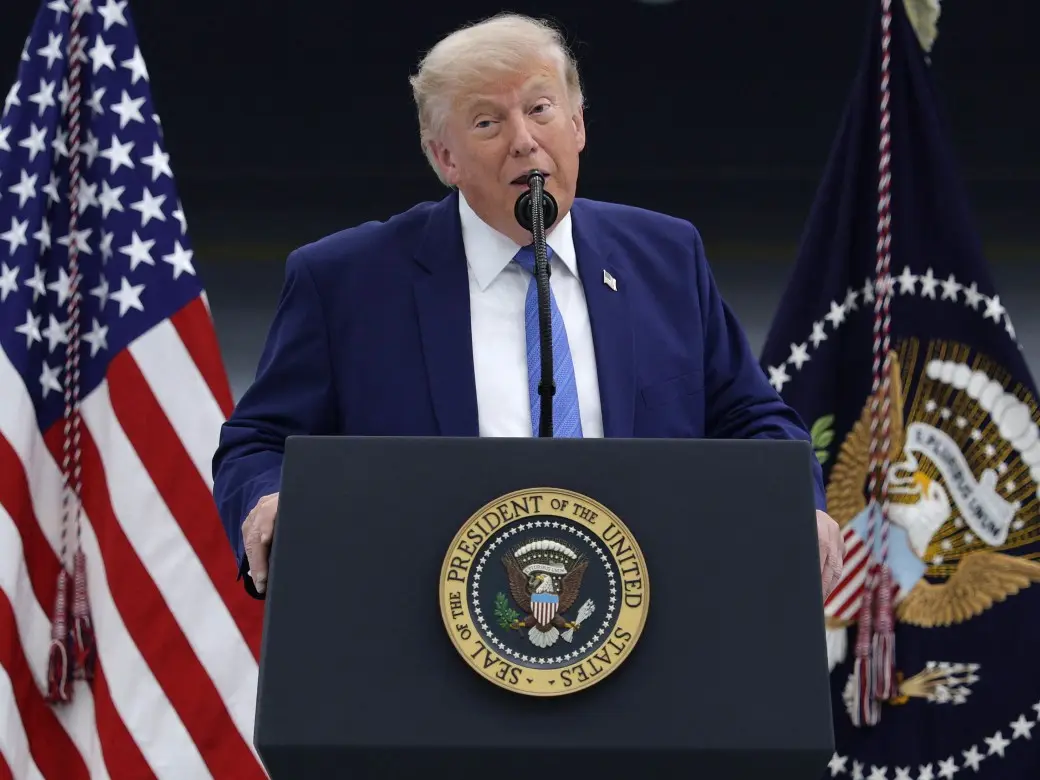
This pledge is a 180-degree reversal of President Donald Trump’s initial stance of urging Iranians to rise up in revolt against their country’s leaders and overthrow them. It is difficult to think of a more radical act of interference in a country’s internal affairs.
Oddly, there has been little attention on the non-interference pact despite reports that thousands of Iranians had been detained after the start of the war on February 28. According to a U.N. group of experts, at least 156 people have been executed since late February, with many others tortured and denied access to lawyers.
Trending Stories
&im=FitAndFill=(700,400)&imwidth=180&imheight=135&format=webp&quality=medium)
Navratri 2026: 9 days, 9 forms of Goddess Durga and 9 colours- Check the complete list
&imwidth=180&imheight=135&format=webp&quality=medium)
Korean peninsula tensions escalate as North Korea launches multiple ballistic missiles, PACOM says 'no threat to US personnel'
&imwidth=180&imheight=135&format=webp&quality=medium)
Trump weighs firing Kimberly Guilfoyle as US ambassador to Greece amid misconduct allegations: Report
&imwidth=180&imheight=135&format=webp&quality=medium)
Anti-SIR protest in Mumbai: Protestors wear black masks & ribbons in Mumbai
&imwidth=180&imheight=135&format=webp&quality=medium)
UK PM Andy Birnham renews claims of Russian meddling in Brexit vote
&imwidth=180&imheight=135&format=webp&quality=medium)
BCCI rejects venue shift reports, India vs Sri Lanka 1st ODI to remain in Delhi
&imwidth=180&imheight=135&format=webp&quality=medium)
1,500 drones illuminate Mumbai sky as Cordelia Cruises unveils second ship, Cordelia Sky
&imwidth=180&imheight=135&format=webp&quality=medium)
India Rejects Pakistan-China Boundary Commission, Tells Islamabad to Drop 'Theatrics' | GRAVITAS
&imwidth=180&imheight=135&format=webp&quality=medium)
Houthis warns US of 'painful response' if Washington joins Saudi war in Yemen as airlines suspend flights to Saudi Arabia
&imwidth=180&imheight=135&format=webp&quality=medium)
Congress demands action against chief election commissioner
&imwidth=180&imheight=135&format=webp&quality=medium)
Apple HomeView smart home hub may launch soon with A18 chip, display and Siri controls: What to expect
&imwidth=180&imheight=135&format=webp&quality=medium)
'Turn approver, resign, we'll forgive you': Rahul Gandhi claims receiving messages from CEC Gyanesh Kumar
&imwidth=180&imheight=135&format=webp&quality=medium)
'I will not be silenced': Ilhan Omar alleges political intimidation after federal officers search her Washington home
&imwidth=180&imheight=135&format=webp&quality=medium)
Use AI as your ‘second brain’: Meta AI chief Alexandr Wang’s message to young people
&imwidth=180&imheight=135&format=webp&quality=medium)
Robotic surgery, advanced treatment: What is coming to this small Gujarat town?
&imwidth=180&imheight=135&format=webp&quality=medium)
US federal agents raid Dem Rep Ilhan Omar’s home ahead of midterms
&imwidth=180&imheight=135&format=webp&quality=medium)
Pakistan's government blames PTI for rise of terrorism in Khyber Pakhtunkhwa
&imwidth=180&imheight=135&format=webp&quality=medium)
‘This is just the start’: Maaya Rajeshwaran on historic ITF title, confidence boost and future goals
&im=FitAndFill=(700,400)&imwidth=180&imheight=135&format=webp&quality=medium)
How does a robot decide what to do next?
&imwidth=180&imheight=135&format=webp&quality=medium)
ICC penalises West Indies duo Powell, Rutherford for Code of Conduct breach
&imwidth=180&imheight=135&format=webp&quality=medium)
Trump says he 'may' meet North Korean leader Kim Jong Un during upcoming Asia trip
&imwidth=180&imheight=135&format=webp&quality=medium)
'Ouch!!! That must hurt': Kangana Ranaut hails Kamal Haasan's sharp reply to Elon Musk over Starlink row
&imwidth=180&imheight=135&format=webp&quality=medium)
Sidhu Moose Wala’s younger brother wins hearts by recreating late singer’s signature move at Toronto Hologram Show
&imwidth=180&imheight=135&format=webp&quality=medium)
UK school ditches technology, shifts from screen to pen and paper for learning
&imwidth=180&imheight=135&format=webp&quality=medium)
Opposition’s 10 demands in Supreme Court petition range from stay on SIR to audit of voter rolls
&imwidth=180&imheight=135&format=webp&quality=medium)
'I am thoroughly unamused': Judge slams Trump administration after 400 trees cut at Washington golf course
&imwidth=180&imheight=135&format=webp&quality=medium)
Portugal Federation confirms Cristiano Ronaldo’s return to national team despite suspension
&im=FitAndFill=(700,400)&imwidth=180&imheight=135&format=webp&quality=medium)
New OTT releases this week (October 12-18, 2026): Sacrifice, Koffee with Karan S9, Roadies Rebirth- 6 titles coming on Netflix, JioHotstar and more
&imwidth=180&imheight=135&format=webp&quality=medium)
Rishabh Pant ruled out of India A squad for New Zealand tour, Kumar Kushagra named replacement
&imwidth=180&imheight=135&format=webp&quality=medium)
India's Ajit Doval, Iran's Mohsen Rezaei hold talks amid escalating West Asia tensions, discuss 'issues of mutual interest'
&imwidth=180&imheight=135&format=webp&quality=medium)
'Almost certainly': UK Prime Minister Andy Burnham says Iran's IRGC behind RAF Fairford threat
&imwidth=180&imheight=135&format=webp&quality=medium)
Elon Musk pumps $276 million into Republican campaigns ahead of US midterm elections
In January, security forces crushed mass demonstrations against the regime in one of the deadliest protest massacres in Middle Eastern history. Estimates of the death toll ranged from 3,117 by the government to 36,500 by human rights activists. Because the government shut down the internet during the crackdown and for weeks after, the precise figure will never be known.
A few days after the massacre, which prompted comparisons with the Chinese Communist Party’s crackdown on anti-government demonstrators at Peking’s Tiananmen Square in 1989, Trump posted on his Truth Social site: “Iranian Patriots. Keep protesting, take over your institutions. HELP IS ON ITS Way.”
Nobody was ever held to account for the Tiananmen Square slaughter, and no one will be held to account for the slaughter in Tehran, less so after the American non-interference pledge.
In its 2024 report on human rights around the world, the U.S. State Department noted that “the government did not take credible steps to identify and punish officials who committed human rights abuses.”
Amnesty International’s comment on the memorandum is worth noting: “A framework agreement that temporarily halts fighting but ignores human rights risks becoming a shield behind which impunity and repression continue indefinitely.”
At the end of the eight-minute video announcing the war, Trump told the “great, proud people of Iran that the hour of your freedom is at hand.“
That was apparently based on the assumption that the assassination of Iran’s Supreme Leader and many of his top aides in the first of thousands of air strikes by American and Israeli aircraft and missiles would lead to the collapse of the state.
That did not happen. What Washington had dubbed Operation Epic Fury turned into Operation Epic Miscalculation of what America’s awesome military could achieve. The war caused thousands of casualties, widespread destruction of civilian and industrial facilities and long-term degradation of Iranian military capabilities.
But enough was left for Iran to strike U.S. bases in allied Gulf States and close the Strait of Hormuz, the narrow waterway which carries around 20 per cent of the world’s global oil supply, and about a quarter of liquefied natural gas.
The International Energy Agency called it the largest disruption of oil supply in history. It affected the economies of countries from one end of the world to the other.
Weeks of intense indirect mediation by Pakistan and Qatar led to agreement on a Memorandum of Understanding (MoU) providing for a 60-day ceasefire to allow for negotiations on a final peace agreement ending 47 years of enmity between the two countries.
A summit meeting in a luxury resort in Lucerne last weekend brought together leaders of the United States, Iran and the two mediating states, Pakistan and Qatar. The American team was headed by Vice President J.D. Vance who sounded pleased about the outcome and the opening of the Strait of Hormuz.
American officials now portray the opening of the Straits as an achievement and tend to omit mentioning that it was an international waterway open to traffic for decades – until the war prompted Iran to use it as an immensely powerful economic weapon.
A formal communique after the summit in Switzerland noted that “the two sides agreed on a road map aimed at reaching final agreement within 60 days. The timeline is so short that the third paragraph of the memorandum added the words “extendable with mutual consent.”
The 2015 Iran nuclear deal, formally known as the Joint Comprehensive Plan of Action, took 20 months to negotiate. It involved the U.S., Britain, France, Russia, China and Germany and focused on nuclear non-proliferation and restrictions on Iran’s nuclear programme in exchange for relief from economic sanctions.
Trump withdrew from the deal in 2018, arguing that the Iranians were cheating and the sanctions were not harsh enough. He re-imposed sanctions so stiff that Iran resumed its nuclear programme.
Whether the Trump-led deal now being worked out in “technical talks” will be an improvement over the JCPOA remains to be seen. Unlike the memorandum now under discussion, the JCPOA had no clause about interference in internal affairs.
