'Towards a safer world': After three years of talks, WHO countries finally agree on how to tackle future pandemics

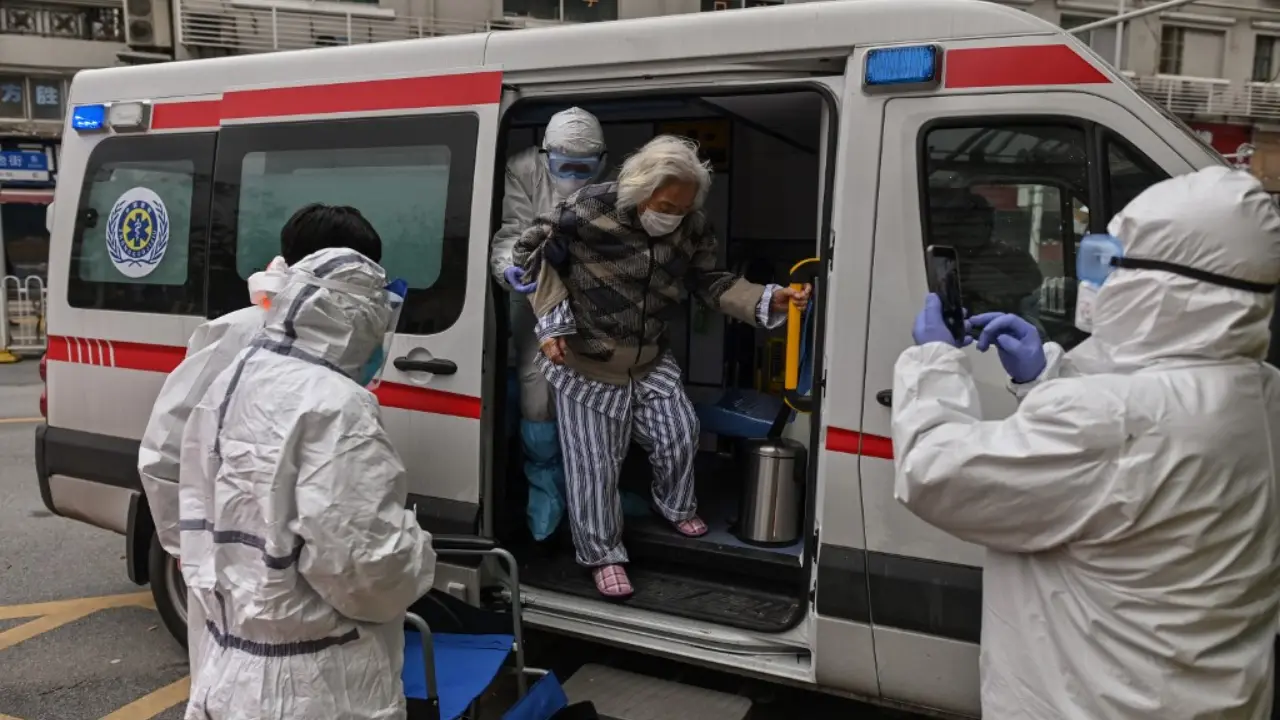
The pandemic accord marks a significant milestone, highlighting the shared commitment of nations to prevent future threats and protect global health on a united front.
After years of negotiations, the world finally has an accord on how to tackle future pandemics, and avoid the mistakes made during the COVID-19 crisis.
After more than three years of talks and one last marathon session, countries around the world agreed on the landmark accord at the World Health Organization's headquarters at around 2:00 am (0000 GMT) Wednesday (Apr 16).
A significant milestone

Lauding the accord, WHO chief Tedros Adhanom Ghebreyesus hailed it as a "significant milestone in our shared journey towards a safer world".
The landmark agreement comes five years after the Covid-19 pandemic killed millions of people, devastated economies and upturned health systems and as new threats -- including H5N1 bird flu, measles, mpox and Ebola lurk.
)
Why asking questions could be more important than memorising answers
)
Osama Bin Laden ‘planned’ to target India, CIA reveals dozens of declassified documents
)
'Iran won't surrender': Pezeshkian sends blunt message to US while attending BRICS Summit in India
)
BRICS Summit 2026: Global leaders of BRICS nations attend main open session
)
Celine Dion makes emotional stage comeback after six years: 'I'm so delighted to see you'
)
PM Modi and China's Xi offered to help resolve Russia-Ukraine war: Kremlin
)
Why dehydration is the hidden cause of travel fatigue on long flights
&im=FitAndFill=(700,400))
Meet top 5 batters fastest to 3000 runs in T20Is
)
Top 5 places to visit in Goa beyond its famous beaches
)
'He is popular...': Malaysian PM Anwar Ibrahim's praise for PM Modi during bilateral meeting | WATCH
)
BRICS Summit 2026: PM Modi, Xi reach key consensus on ties, China to assume BRICS chairmanship in 2027
)
BRICS Summit 2026: Consensus on joint declaration, diplomatic win for India
)
Trump says Canada eager to reach a deal, it could come ‘fairly soon’ if Ottawa treats US farmers better
)
‘Partners, not rivals’: Xi outlines four point plan for stronger India-China ties
&im=FitAndFill=(700,400))
Why Chinese PL-15 air-to-air missiles use dual-pulse motors compared to European interceptors
)
Could staying indoors all day affect your health?
)
BRICS Summit 2026: PM Modi addresses Day 2 of 18th BRICS summit
)
Who is the smiling man beside Modi, Putin and Xi at BRICS Summit 2026?
)
800 million years old - Scientists discover 'fingerprints' of supercontinent Gondwana in ancient rocks
)
Why going digital does not always mean becoming more efficient
&im=FitAndFill=(700,400))
Why do air defence missiles explode near their target instead of hitting it?
)
War is making Russia stronger? How Ukraine is shaping Moscow’s next generation of weapons
)
Migration protests return to Portsmouth as rival demonstrations face off
)
From severe mobility problems to recovery: Madhuri the elephant’s journey of wildlife care
)
BRICS Summit day 1: New Delhi declaration adopted with full consensus, big diplomatic win for India
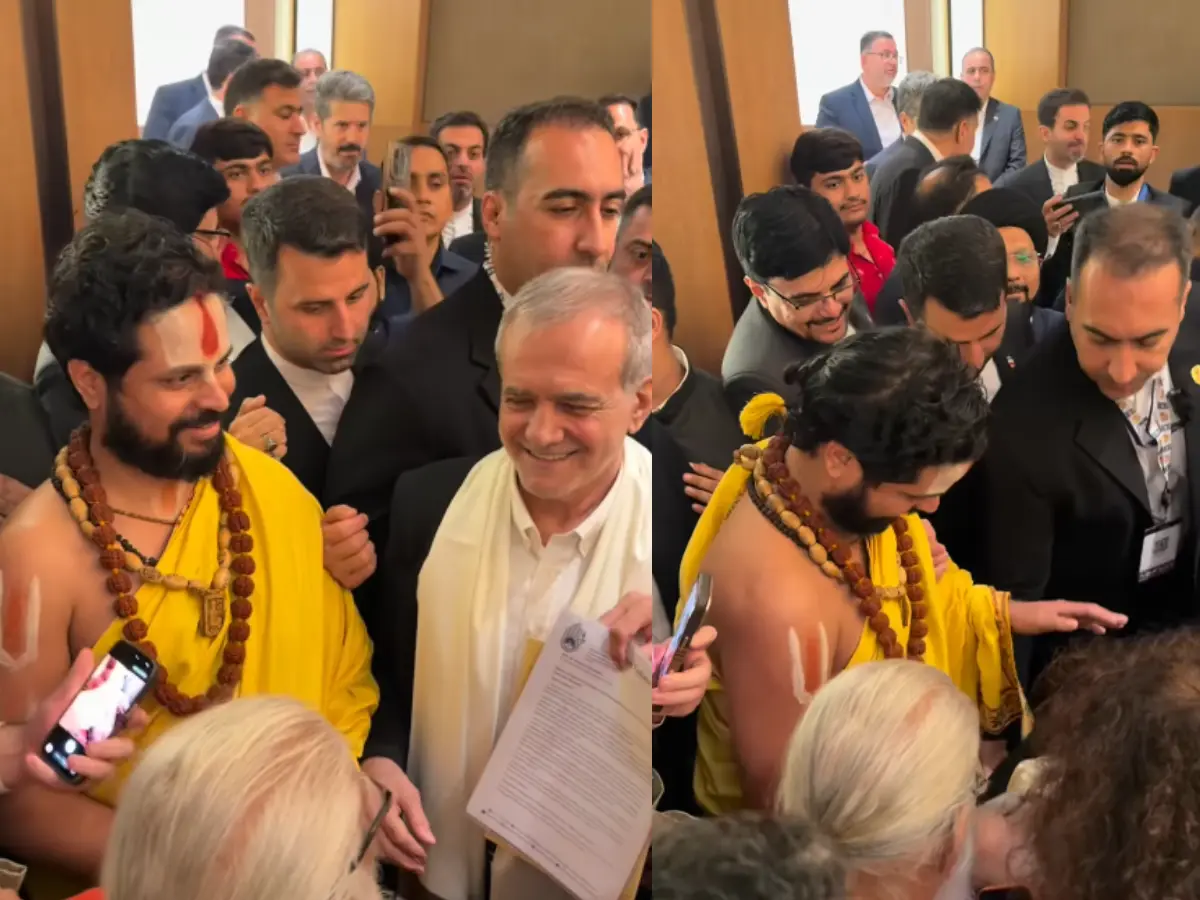)
Did Iran President Pezeshkian touch feet of Hindu spiritual leader at Delhi event as shown in viral video?
)
9-year-old Chennai prodigy clears Cambridge IGCSE grade 10 exams
)
Why does your body need time to adjust after a long journey?
)
BRICS Summit 2026: PM Modi to hold bilateral with leaders of seven countries
)
Ramanathaswamy temple takes centre stage as PM Modi welcomes world leaders at BRICS
)
Houthis launch cross-border strike on Saudi Arabia as Yemen war escalates
)
BRICS Summit 2026: Chinese president Xi Jinping departs from New Delhi after attending BRICS summit
)
Why does your skin need protection from UV rays?
)
How does the loss of forests affect the way wildlife lives and moves?
)
IND vs AFG, 1st T20I: When and where to watch live streaming in India?
)
Why do wild animals need quiet places to survive?
)
Bigg Boss 20: Qazi Touqeer gets a special ‘rockstar’ moment from Salman Khan
)
Humans may lose control of AI: Anthropic CEO calls for slowdown, Altman, Musk back him
Key features of the agreement
At the heart of the accord is the proposed Pathogen Access and Benefit-Sharing System (PABS), a mechanism to enable rapid sharing of pathogen samples and genetic data with pharmaceutical companies. The aim is to accelerate the development of tests, vaccines, and treatments in the early stages of future outbreaks.
One of the most contentious points of the accord was Article 11, which addresses the transfer of pandemic health technology to developing countries. During the COVID-19 pandemic, poorer nations had accused the rich ones of hoarding vaccines.
Also read | Is Covid back? Should you even be worried about Kolkata's case of human coronavirus HKU1? Experts answer
Now, after prolonged debates, a compromise has been reached that allows for such transfers on a "mutually agreed" basis.
All 32 pages of the document were approved unanimously. "It's adopted," announced negotiations co-chair Anne-Claire Amprou, prompting a standing ovation from diplomats and observers.
"In drafting this historic agreement, the countries of the world have demonstrated their shared commitment to preventing and protecting everyone, everywhere, from future pandemic threats."
The accord will now be formally presented for adoption at the WHO's annual assembly next month.
Reactions pour in
European Commission President Ursula von der Leyen welcomed the news, posting on X: "Excellent news from Geneva. We have learnt the lessons of COVID. To beat a pandemic, you need tests, treatments, and vaccines. And you equally need solidarity and global cooperation."
Also read | Delhi sees sharp rise in flu cases with Covid-like symptoms; experts reveal what's happening
Pharmaceutical companies, represented by the International Federation of Pharmaceutical Manufacturers and Associations (IFPMA), emphasised the importance of maintaining strong intellectual property protections and legal certainty to encourage R&D investment during future crises.
"The pandemic agreement is a starting point," insisted IFPMA chief David Reddy.
On the other side, developing nations and NGOs acknowledged the deal as a step forward, though not a perfect one. Tanzania's representative, speaking for dozens of African nations, said: "While the process may not have yielded all the outcomes we aspired for, it has opened an important avenue for future collaboration".
(With inputs from agencies)

