
&imwidth=800&imheight=600&format=webp&quality=medium "The 'poor man's cruise missile': Iran’s $20,000 drone strategy against US and Israel")
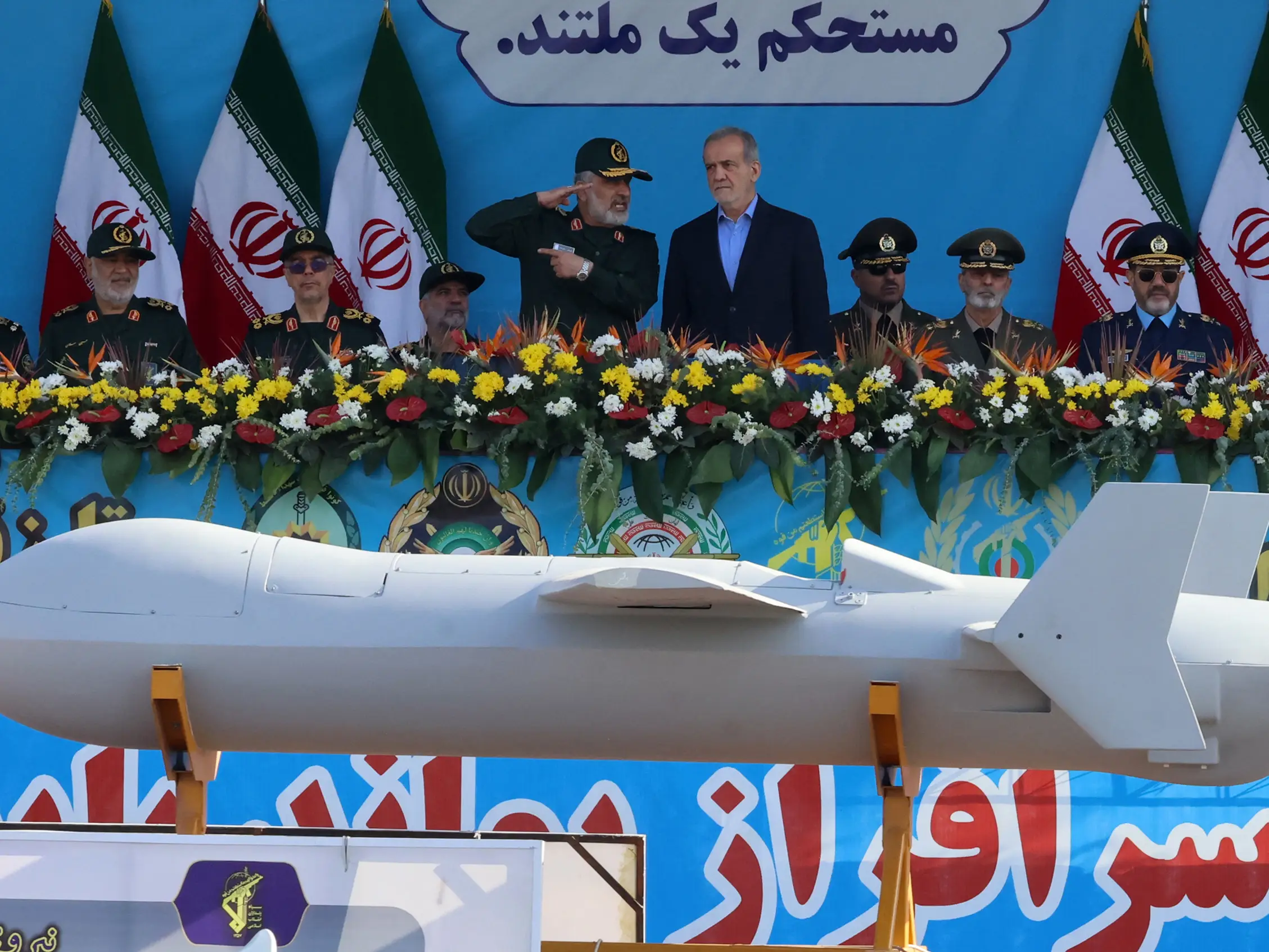
The modern battlefield is undergoing a fundamental shift. Gone are the days when military supremacy was determined solely by the sheer number of stealth fighters or aircraft carriers in a nation’s inventory. Today, the balance of power is increasingly being dictated by a humble, buzzing, and deceptively simple piece of technology: the Iranian-designed Shahed series of loitering munitions.
The economics of attrition
At its core, the Shahed-136 is a marvel of tactical pragmatism. It is not an engineering masterpiece built for longevity, but rather a consumable, one-way projectile designed for a singular, explosive conclusion. By eschewing the sophisticated sensors, satellite links, and complex landing gear found on high-end Western drones, Iran has created a weapon that is remarkably inexpensive to manufacture. Estimates place the unit cost at approximately $20,000. This low price tag is the crux of its lethality.

Also read: ‘Bring the Iranian people to throw off the yoke of tyranny’: Netanyahu calls for regime change
When Tehran deploys these systems in large waves, they trigger a profound economic and strategic imbalance. Air defence systems like the Patriot or Israel’s Iron Dome are architectural wonders of modern engineering, yet they come with a staggering per-shot cost. When a multi-million-dollar interceptor missile is launched to neutralise a $20,000 drone, the attacker wins the exchange regardless of the physical outcome. The defender is forced into an unsustainable "cost exchange" ratio that can exhaust stockpiles and deplete budgets far faster than any conventional weapon could.
Trending Stories
)
Why asking questions could be more important than memorising answers
)
BRICS Summit 2026: Iran's Pezeshkian praises PM Modi at BRICS
)
Osama Bin Laden ‘planned’ to target India, CIA reveals dozens of declassified documents
)
BRICS rejects EU carbon tax as ‘punitive’, ‘discriminatory’; warns of burden on Global South
)
BRICS Summit 2026: Global leaders of BRICS nations attend main open session
)
Why dehydration is the hidden cause of travel fatigue on long flights
)
Top 5 places to visit in Goa beyond its famous beaches
)
'He is popular...': Malaysian PM Anwar Ibrahim's praise for PM Modi during bilateral meeting | WATCH
)
BRICS Summit 2026: 30+ countries seek BRICS membership
)
Frustrated man demolishes his kitchen after thousands flock to see Mother Mary his wife spotted on the wall
)
BRICS Summit 2026: PM Modi, Xi reach key consensus on ties, China to assume BRICS chairmanship in 2027
)
Trump says Canada eager to reach a deal, it could come ‘fairly soon’ if Ottawa treats US farmers better
)
From drones to KAAN fighters: Turkey outlines 229% surge in defence spending amid regional shifts
)
‘Partners, not rivals’: Xi outlines four point plan for stronger India-China ties
&im=FitAndFill=(700,400))
Why Chinese PL-15 air-to-air missiles use dual-pulse motors compared to European interceptors
)
Could staying indoors all day affect your health?
)
Who is the smiling man beside Modi, Putin and Xi at BRICS Summit 2026?
)
Why going digital does not always mean becoming more efficient
)
800 million years old - Scientists discover 'fingerprints' of supercontinent Gondwana in ancient rocks
&im=FitAndFill=(700,400))
Why do air defence missiles explode near their target instead of hitting it?
)
Israel spent nearly $470,000 on PM's hair, makeup since 2019, data shows
)
From severe mobility problems to recovery: Madhuri the elephant’s journey of wildlife care
)
BRICS Summit day 1: New Delhi declaration adopted with full consensus, big diplomatic win for India
)
From India, Putin warns Europe against sending troops to Ukraine, Zelensky expresses willingness to meet him at G20 Summit
)
Did Iran President Pezeshkian touch feet of Hindu spiritual leader at Delhi event as shown in viral video?
)
9-year-old Chennai prodigy clears Cambridge IGCSE grade 10 exams
)
Why does your body need time to adjust after a long journey?
)
Baba Vanga's first prophecy for 2027 is out, and straight out of science fiction
)
BRICS Summit 2026: PM Modi to hold bilateral with leaders of seven countries
)
Ramanathaswamy temple takes centre stage as PM Modi welcomes world leaders at BRICS
)
Why does your skin need protection from UV rays?
)
How does the loss of forests affect the way wildlife lives and moves?
)
IND vs AFG, 1st T20I: When and where to watch live streaming in India?
)
Why do wild animals need quiet places to survive?
)
Humans may lose control of AI: Anthropic CEO calls for slowdown, Altman, Musk back him
Saturation tactics: Breaking the shield
Moreover, the Shahed is a master of saturation. It is rarely intended to strike alone. Instead, these drones are launched in swarms designed to overwhelm radar cross-sections and human operators alike. By forcing defenders to focus their limited attention and resources on a multitude of incoming, slow-moving threats, the Shahed acts as a perfect precursor to more devastating attacks. It is, in effect, a blunt instrument used to crack the shield, clearing the path for ballistic or cruise missiles to penetrate the gaps. This tactic transforms the drone from a mere nuisance into a vital strategic enabler.
A new pillar of asymmetric warfare
For a nation like Iran, facing militaries with vastly superior technological and financial resources, the Shahed is the ultimate equaliser. It embraces the philosophy of asymmetric warfare - using lower-cost, irregular assets to challenge and disrupt conventional military dominance. The drone does not need to be the fastest or the smartest to be effective; it only needs to be persistent, numerous, and cheap.

