
&imwidth=800&imheight=600&format=webp&quality=medium "Pakistan's education crisis: 25 million children out of school, reveals CSA report")
Two years after declaring a National Education Emergency, Pakistan continues to face a critical crisis with 25.1 to 26 million children out of school. A comparative policy review by the Civil Services Academy (CSA) reveals that the issue is no longer policy formulation but a failure of execution caused by weak governance, administrative fragmentation, inadequate financing, and deep provincial disparities. The report notes that public investment remains drastically low; for instance, Sindh and Balochistan spend 81% to 90% of their education budgets on salaries, leaving minimal funds for development. Renowned education economist Dr Faisal Bari of the Lahore University of Management Sciences highlights that overall education spending has dropped below 1% of GDP, far beneath the UN’s 4% benchmark.
Provincial challenges vary significantly:

- Punjab: Holds the highest absolute burden with 9.6 to 10.4 million out-of-school children, driven by high dropout rates. Stark regional inequalities exist, particularly in South Punjab, where Rajanpur reaches a 48% out-of-school rate.
- Sindh: Has 7.4 million out-of-school children. A severe institutional bottleneck between numerous primary schools and scarce secondary schools causes 54% of children to exit after the primary level. Recent floods also damaged half of its public schools.
- Khyber-Pakhtunkhwa: Accounts for 4.9 million out-of-school children due to difficult terrain, security issues, and an acute shortage of female teachers.
- Balochistan: Suffers from extreme infrastructural deficits and vast distances. Out of 15,270 schools, 3,617 are non-functional or ghost institutions, and girls comprise 78% of their out-of-school population.
- Federal/Other Territories: Rural Islamabad, Gilgit-Baltistan, and Azad Jammu and Kashmir also face high dropout rates due to informal settlements, remote geography, and maternal illiteracy.
Additionally, education expert Dr Abdul Hameed notes that nearly 30% of out-of-school children have some form of disability, exposing a major gap in mainstream inclusion. Dr Bari also connects high dropout rates to malnutrition affecting 40% of children, insufficient infrastructure, and poor learning quality that fails to translate into employment.
Trending Stories
)
Nigeria: Protesters take to the streets, police fire shots
)
US-Iran war: Tehran draws red lines — seven demands before any peace talks
)
Russia-Europe tensions: Polish PM warns Russian attacks could test NATO's unity
&im=FitAndFill=(700,400))
‘Not the US or China’: These are the countries leading the world in arable land
)
Trump says he'll build an 'AI Force' and appoint a czar, for 'high IQ' people only
)
EXCLUSIVE | Singer Hanita Bhambri on her Toxic debut, working with Vishal Mishra and more
)
Sikh bus driver assaulted, bus stolen and rammed into cars in England; video surfaces
)
Mark Carney mimics Trump in hilarious moment over C$70 billion clean-energy investment; room erupts in laughter
&im=FitAndFill=(700,400))
Before Extraordinary Minami Minami, these popular K-dramas got Japanese versions
)
'Were you here to sell chickpeas?': Wasim Akram criticises Babar Azam's captaincy
)
Aravana prasadam shortage at Sabarimala temple in Kerala triggers protests, TDB questioned
)
‘End of my career...’: NSA Doval recalls tense Sikkim mission when China captured Indian intelligence team
)
Report: Iran rebuilding Taleghan 2, nuclear site tied to past weapons research, hit twice by Israel
)
Trump defends AI amid growing alarm, announces new 'AI force' and promises an 'AI czar'
)
Iran sets 7 conditions to end war with US: What are Tehran’s demands?
)
Trump announces ‘AI Force’ as debate grows over AI risks and regulation
)
China may have gained access to US's classified F-35 jets; parts meant for repairs diverted to Hong Kong, sparking Pentagon inquiry
)
Man breaks open wall hiding hundreds of books since 15 years
)
Gaza under attack: Health chief's son killed in IDF strikes
)
S Jaishankar, former Army chief among high-profile names issued Delhi SIR notices
)
Arvind Kejriwal, family members, Delhi CM Rekha Gupta get SIR notices
)
AI actress Tilly Norwood glitches mid-interview, switches from English to Chinese | Watch
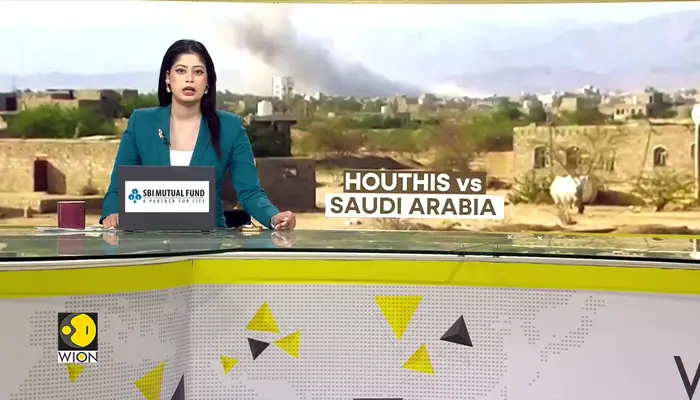)
Saudi vs Houthis: Houthis claim missiles & drones used in attack on key Saudi sites
)
Ed Sheeran addresses Macklemore's removal, Gaza conflict during Philadelphia concert: 'I cannot hide how I feel'
)
‘Will go to any extent’: Pakistan vows to defend Saudi Arabia amid Houthi attacks
66 years of the Indus Waters Treaty: How India and Pakistan settled a bitter river dispute
)
The Verdict | When precision fails: US commits war crime in Minab school strike, UN finds
)
9 women found dead near Johannesburg: South Africans rally, demand 'enough' to femicide
)
Kampala-Ankara rift deepens: Uganda suspends military ties, seeks Fred Lumbuye's extradition
)
Several petrol pumps, other businesses to refuse UPI payments above Rs 2,000 from Oct 16: Is it legal?
)
US-Iran war: Tehran sets seven conditions to re-engage in talks with US
)
Reacher star Alan Ritchson opens up about alleged blackmail, suicide attempt during difficult period
)
West Indies Squad for India Series: Hetmyer included for T20Is, Holder rested
)
China now makes advanced memory chips without the machines it was banned from buying
&im=FitAndFill=(700,400))
How many F-35s does Britain, Japan and Israel have?
)
Harry Brook targets long reign at top of T20I rankings after Sri Lanka sweep
)
Russia's deadly Ukraine strikes kill 2 in Sumy, hit Dnipro mall
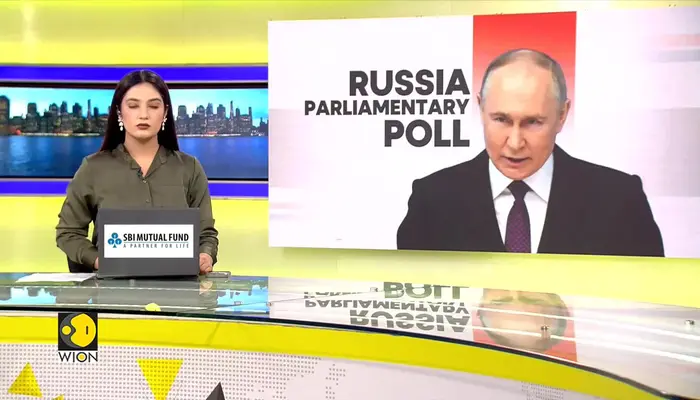)
Russia holds first parliamentary elections since the beginning of the Ukraine war
&im=FitAndFill=(700,400))
Meet top 5 Indian batters with fastest T20I centuries
)
Raphinha hat-trick powers Barcelona to 3-1 win over Sevilla in La Liga
)
Also read: UN warns Pakistan against 'reconstructions’ at Taxila sites, says can 'delist' the historical sites
To reverse this crisis, the CSA report recommends structural overhauls, including establishing a unified National Student Registry linked with NADRA’s B-Form for real-time tracking, integrating formal and non-formal data, providing targeted financial incentives for remote female teachers, and empowering autonomous district education authorities. While Punjab officials point to ongoing interventions like school meals, public-private partnerships, and outsourcing through the Punjab Education Foundation, the CSA review warns that without deep systemic accountability and funding reforms, the education emergency will remain entirely symbolic.

