

&imwidth=800&imheight=600&format=webp&quality=medium "New terror attack leading to India-Pak war; Pakistan–Afghanistan conflict and more: What may happen in 2026, according to top think tank")
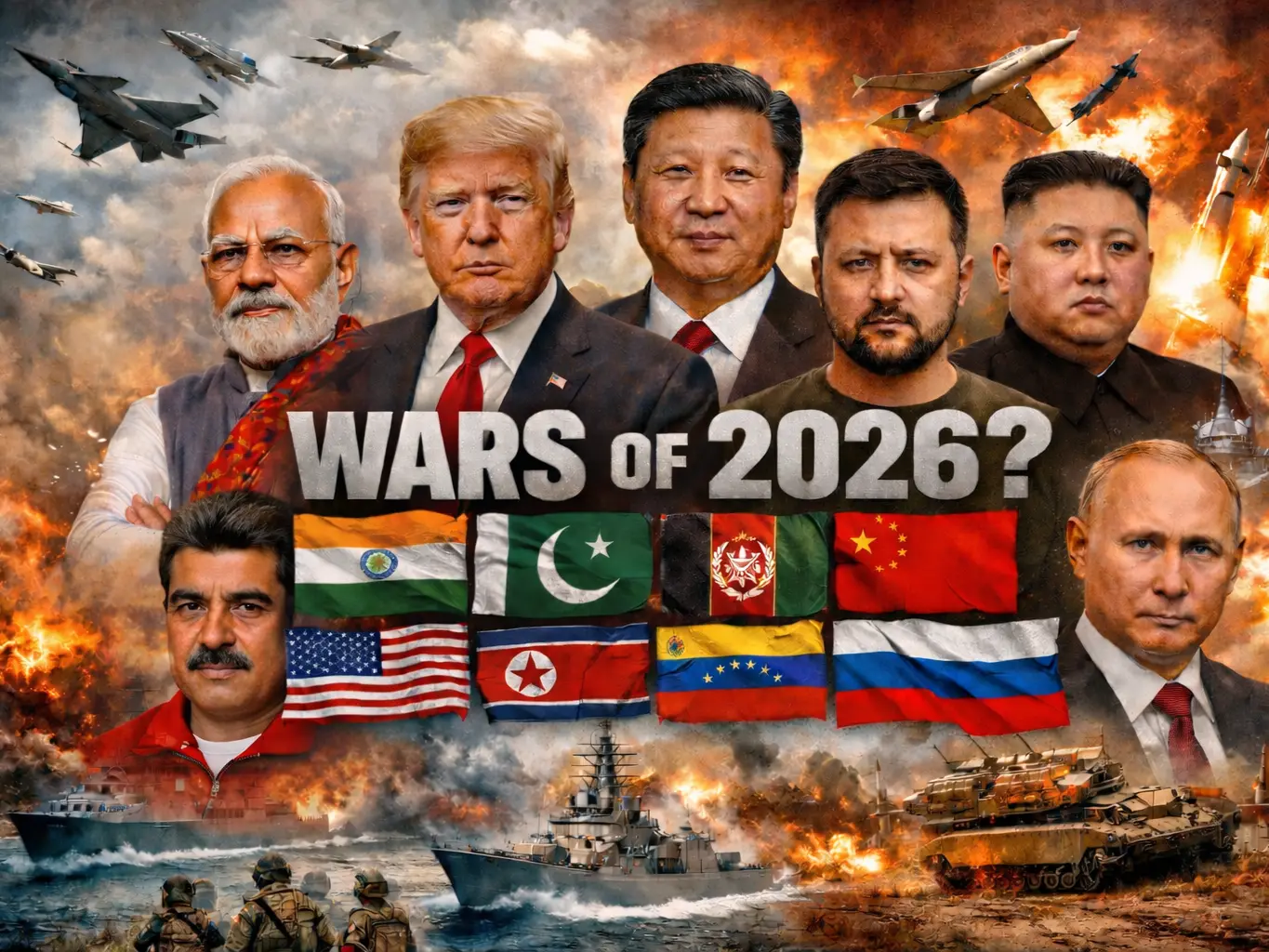
In its annual report released recently, the leading US think tank Council on Foreign Relations (CFR) said India and Pakistan could slide into another military confrontation in 2026, triggered by a terrorist incident targeting India and traced back to Pakistan-based groups. CFR’s annual Preventive Priorities Survey said Pakistan could also face armed conflict with Taliban-led Afghanistan over border tensions and militancy. Other conflicts and wars that could continue, escalate, or simmer include US–Venezuela tensions, the Russia–Ukraine war, and the Gaza conflict between Palestinian militants and Israel. North Korea’s nuclear and missile activity could further inflame tensions in East Asia, while China’s pressure on Taiwan remains a major source of regional instability. Below is a snapshot of the CFR report.
India–Pakistan risk another war in 2026
The CFR global risk map places another India–Pakistan conflict as a dangerous possibility under its Tier II category, which covers contingencies with moderate likelihood and moderate impact on US interests. A new armed confrontation could erupt in 2026, with the CFR report, released on December 18, noting that the drivers of conflict, particularly terrorism emanating from Pakistan, remain intact despite the ceasefire reached after the brief military crisis in May 2025.
Continued attacks linked to Kashmir, military modernisation and force build-ups on both sides, and limited trust between would all contribute to the risk of conflict.
Even a limited terrorist incident could again trigger retaliation, miscalculation, and escalation, especially given domestic political pressures in both countries, the report noted.
Trending Stories
&imwidth=180&imheight=135&format=webp&quality=medium)
Other Mommy leads North American box Office as Verity, Resident Evil round out top four
&im=FitAndFill=(700,400)&imwidth=180&imheight=135&format=webp&quality=medium)
Navratri 2026: 9 days, 9 forms of Goddess Durga and 9 colours- Check the complete list
&im=FitAndFill=(700,400)&imwidth=180&imheight=135&format=webp&quality=medium)
Is sending robots to Mars easier than sending humans?
&imwidth=180&imheight=135&format=webp&quality=medium)
A watchdog rated 'ChatGPT for Teens' an unacceptable risk and says keep under-18s off it
&imwidth=180&imheight=135&format=webp&quality=medium)
1,500 drones illuminate Mumbai sky as Cordelia Cruises unveils second ship, Cordelia Sky
&imwidth=180&imheight=135&format=webp&quality=medium)
'Just coincidence': Police mistakes protester as AISA chief Neha Bora, arrests her from site
&imwidth=180&imheight=135&format=webp&quality=medium)
Anthropic's AI invented a murder witness and sent the fake tip to Philadelphia police
&imwidth=180&imheight=135&format=webp&quality=medium)
CJI Surya Kant declines INDIA bloc leaders’ request for meeting ahead of march to SC, asks them to file petition
&imwidth=180&imheight=135&format=webp&quality=medium)
'Turn approver, resign, we'll forgive you': Rahul Gandhi claims receiving messages from CEC Gyanesh Kumar
&imwidth=180&imheight=135&format=webp&quality=medium)
One Indian killed in Riyadh airport attack; 11 others injured : MEA
&imwidth=180&imheight=135&format=webp&quality=medium)
Top AI models flunked a test of inventing new AI research, so much for self-improving AI
&imwidth=180&imheight=135&format=webp&quality=medium)
Wasim Jaffer blames Ajit Agarkar-led selection panel for Virat Kohli’s Test retirement
&imwidth=180&imheight=135&format=webp&quality=medium)
'Ouch!!! That must hurt': Kangana Ranaut hails Kamal Haasan's sharp reply to Elon Musk over Starlink row
&imwidth=180&imheight=135&format=webp&quality=medium)
Sidhu Moose Wala’s younger brother wins hearts by recreating late singer’s signature move at Toronto Hologram Show
&imwidth=180&imheight=135&format=webp&quality=medium)
Meta's Muse AI could be a security nightmare for India's billion-plus users
&imwidth=180&imheight=135&format=webp&quality=medium)
UK school ditches technology, shifts from screen to pen and paper for learning
&imwidth=180&imheight=135&format=webp&quality=medium)
IND vs WI, 3rd T20I: Abhishek Sharma smashes 18-ball fifty, sets record for fastest to 2,000 T20I runs
&imwidth=180&imheight=135&format=webp&quality=medium)
Prince Harry and Meghan Markle to spend Christmas away from royal family
&imwidth=180&imheight=135&format=webp&quality=medium)
Houthis claim Riyadh airport attacks, Aramco strikes; issue fresh warning to airlines, travellers and workers
&imwidth=180&imheight=135&format=webp&quality=medium)
Portugal Federation confirms Cristiano Ronaldo’s return to national team despite suspension
&imwidth=180&imheight=135&format=webp&quality=medium)
Delhi protests: 'Court should not be dragged into political activity', says CJI Surya Kant
&im=FitAndFill=(700,400)&imwidth=180&imheight=135&format=webp&quality=medium)
New OTT releases this week (October 12-18, 2026): Sacrifice, Koffee with Karan S9, Roadies Rebirth- 6 titles coming on Netflix, JioHotstar and more
&imwidth=180&imheight=135&format=webp&quality=medium)
Microsoft's Nadella says treat every AI model as already hacked, and build an 'emergency brake'
&imwidth=180&imheight=135&format=webp&quality=medium)
Delhi protest: CJI Surya Kant declines to meet India Bloc leaders
&imwidth=180&imheight=135&format=webp&quality=medium)
Telangana man allegedly recruited into Russian military dies near Ukraine border
&imwidth=180&imheight=135&format=webp&quality=medium)
China imposes first-ever sanctions on ministers from Taiwan allies: What this means
&imwidth=180&imheight=135&format=webp&quality=medium)
McSweeney reveals how studying Virat Kohli’s YouTube clips helped Australia A conquer India
&imwidth=180&imheight=135&format=webp&quality=medium)
Maharashtra appoints FDA commissioner Tukaram Mundhe as secretary of committee for MPSC overhaul amid stir
&imwidth=180&imheight=135&format=webp&quality=medium)
Iran: US accepted some conditions, Clarity needed on others
&imwidth=180&imheight=135&format=webp&quality=medium)
Nana Patekar's cause of death confirmed; here's what his postmortem report says
&imwidth=180&imheight=135&format=webp&quality=medium)
iPhone Duo price index: Tracking Apple’s latest pricing trends
&imwidth=180&imheight=135&format=webp&quality=medium)
'Say no to Muse': Meta has no control over its own moderation AI while it forces a security nightmare on everyone
&imwidth=180&imheight=135&format=webp&quality=medium)
Delhi wakes up to heavy rain, thunderstorms; yellow alert in place; temperature drops
Pakistan–Afghanistan: A high-volatility conflict
The 2026 survey introduced a new Tier III contingency, which includes the possibility of armed conflict between Pakistan and Afghanistan. CFR noted rising security frictions between the two countries that could also indirectly affect India.
Afghanistan remains a hub for regional militant groups, and instability there could feed into Pakistan–India tensions, even if indirectly.
Such a conflict could be triggered by rising cross-border militant attacks, Pakistani strikes or retaliation inside Afghan territory, and weak border control combined with mistrust between authorities. CFR assessed this scenario as moderately likely, though with relatively low direct impact on US interests.
The Middle East: The most dangerous cluster
In the survey, the Middle East is described as the epicentre of global risk in 2026, dominating Tier I concerns. Continued or intensified fighting in Gaza, escalation in the West Bank, and a growing risk of spillover into neighbouring states are key dangers in the region, according to CFR.
Examining the Israel–Iran–Lebanon triangle, the survey warned of direct or indirect confrontation between Israel and Iran, as well as escalation involving Hezbollah in Lebanon. Attacks on energy, military, or strategic infrastructure are possible in this interconnected set of conflicts, which CFR considers both highly likely and highly impactful, making it the single most dangerous theatre.
Russia–Ukraine: A grinding war that would continue into 2026
CFR placed the Russia–Ukraine war in the top Tier I, with expectations of continued large-scale fighting, possible territorial shifts, and pressure towards a ceasefire that could lock in gains for Russia. The conflict’s impact would extend beyond Europe, affecting global energy markets, food security, NATO cohesion, and great-power rivalry, the survey noted.
From North Korea to the South China Sea and Taiwan: East Asia on the boil
North Korea remains a Tier I concern, with provocations such as missile tests, nuclear escalation, or military clashes carrying catastrophic potential if they draw the US, South Korea, or Japan into a wider conflict.
The South China Sea and Taiwan are listed under Tier II. Risky encounters between China and US partners, particularly the Philippines, are possible in 2026. Escalating pressure on Taiwan driven by Chinese territorial ambitions could fall short of full-scale war, but still prove deeply destabilising for the region.
American challenges: From conflict with Venezuela to violence in Haiti
Venezuela presents an extreme scenario of direct US military escalation and is listed as a Tier I contingency by the survey. The likelihood of a full-scale war is assessed as lower, but the potential impact would be very high.
Internal violence and governance collapse in Mexico and Haiti appear in Tier II, reflecting concerns about migration pressures, criminal violence, and state fragility near US borders.
Cyberwar: Another war front of the future
Strikingly, Tier I contingencies include the possibility of a severe cyberattack on US critical infrastructure. This could target power grids, communications, or financial systems, carried out by state or state-linked actors, with cascading economic and political effects.
For the US, the survey also highlighted rising concerns about domestic political violence, reflecting how internal instability has become part of global risk calculations.
Africa's most likely wars with the least attention
Sudan conflict is among the most likely to worsen in 2026, though it is listed under Tier III due to limited US strategic impact. Similar dynamics apply to conflicts in Somalia, the Democratic Republic of Congo, and the Sahel states. These crises, according to CFR, could lead to severe humanitarian catastrophes while remaining largely out of sustained global focus.
A world harder to stabilise
CFR reached the stark conclusion that 2026 is likely to be more violent and more fragmented than previous years, with conflicts overlapping and mutually reinforcing one another.
While preventive diplomacy could avert some crises, political will and resources for conflict prevention are shrinking, it noted.

