
&imwidth=800&imheight=600&format=webp&quality=medium "Missiles over the Gulf: The war that changed the region in 72 hours and who actually wins this conflict?")
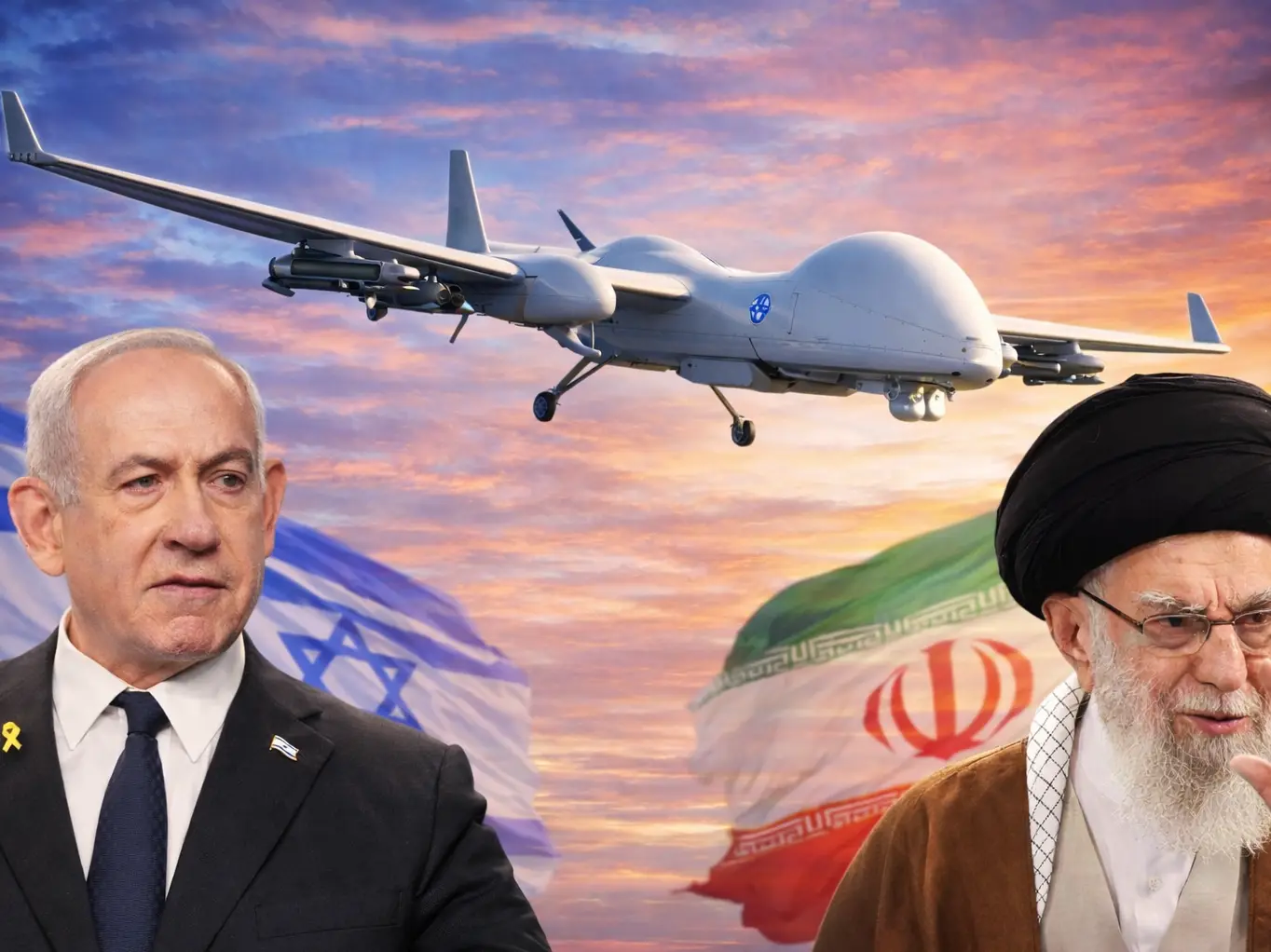
Four days into open war between the United States, Israel and Iran, the fighting has already widened beyond a bilateral confrontation. Tehran’s decision to strike Arab neighbours aligned with Washington has turned the clash into a broader regional war. The United Kingdom has stepped back from its earlier reluctance and now permits US forces to operate from its bases. Events are unfolding at dizzying speed. Reports of fresh missile launches arrive by the hour. In one alarming development, US Central Command confirmed that American F-15E jets were downed in what appears to be friendly fire involving Gulf air defences. The tempo suggests that by the time any analysis is finished, new strikes will have reshaped the battlefield yet again. Predicting the war’s conclusion at this stage is impossible. Once set in motion, wars rarely unfold according to plan. Still, each of the major players has a vision of what “winning” would look like.
Donald Trump’s vision: Destruction and pressure
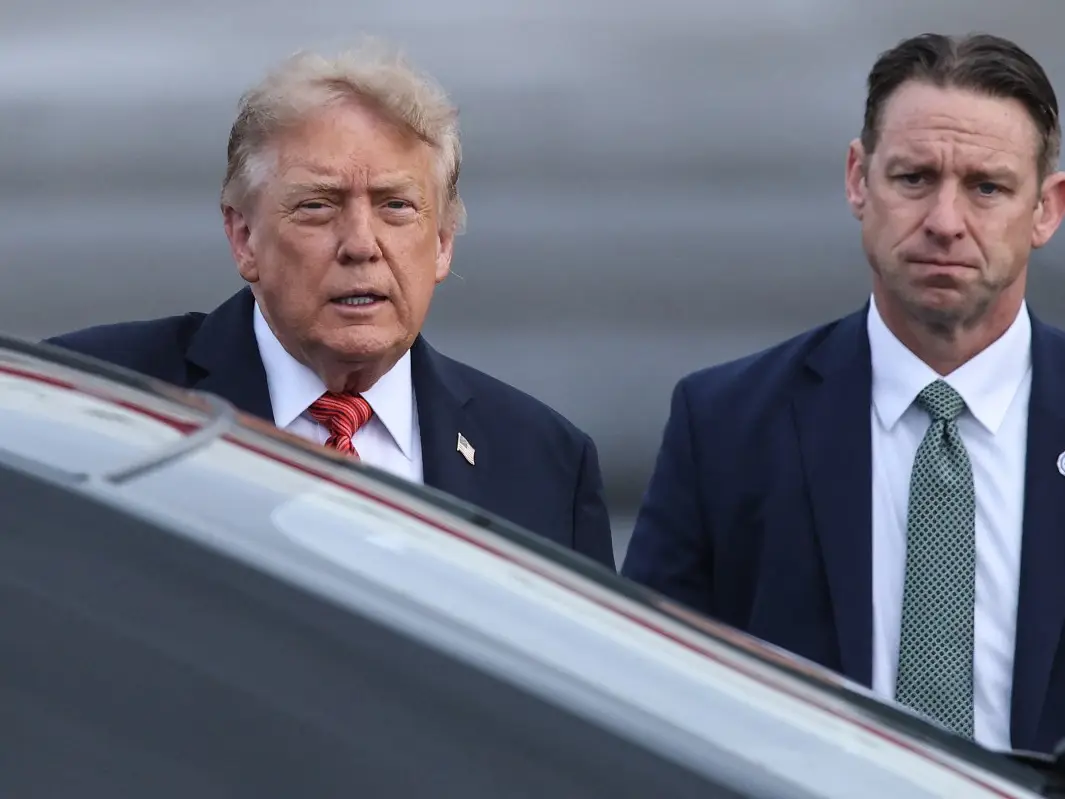
In an address delivered from his Florida residence rather than the Oval Office, President Donald Trump projected certainty. He framed Iran as a long-standing menace dating back to the 1979 revolution and outlined a sweeping objective: dismantle Iran’s missile capabilities, neutralize its naval forces and cripple the regional proxy networks aligned with Tehran.

He further suggested that sustained military pressure could create an opening for Iranians themselves to overturn their government. By encouraging popular uprising while stopping short of committing US ground forces, Trump leaves room to claim success without direct occupation. It is a strategy that places the burden of regime change on Iranian citizens, while simultaneously amplifying expectations that Washington will not abandon them midway.
History, however, offers sobering lessons. Air campaigns alone have rarely toppled entrenched governments. The 2003 invasion of Iraq required ground troops to remove Saddam Hussein. In Libya, NATO’s air power aided rebels who ultimately overthrew Muammar Gaddafi. Betting that bombing alone will fracture Tehran’s power structure is a high-risk calculation. An internal coup is conceivable but improbable in the opening days of war. More likely, Iran’s leadership may endure by absorbing punishment and rallying loyalists around nationalist and religious narratives.
Trending Stories
)
Did India risk its US trade deal despite softer stance at BRICS?
&im=FitAndFill=(700,400))
How 2nm technology improves iPhone performance
&im=FitAndFill=(700,400))
Shahid Kapoor to Rajkummar Rao: Actors who rule both theatres and OTT
)
First naval drone battle? Ukraine says Sargan 3000 sank Russian unmanned boat
)
BRICS Summit 2026: Trump wants to weaken BRICS, but maybe doing the opposite
&im=FitAndFill=(700,400))
Meet top 5 batters fastest to 3000 runs in T20Is
)
Delhi’s balancing act: BRICS serves as a stage for West Asia diplomacy
&im=FitAndFill=(700,400))
Why European Meteor missiles use ramjet engines compared to standard US solid rockets
)
'He is popular...': Malaysian PM Anwar Ibrahim's praise for PM Modi during bilateral meeting | WATCH
)
Iran, India agree to deepen humanitarian and political ties, President Pezeshkian says
)
‘Want to reset ties with India, have engagement based on mutual interests,’ says Bangladesh minister
)
BRICS Summit 2026: PM Modi, Xi reach key consensus on ties, China to assume BRICS chairmanship in 2027
)
UK breakup on the cards? Scotland, Wales and Northern Ireland push for independence
)
Russia-Ukraine-US talks in October? Kremlin says not ruling out possibility of trilateral
)
Trump says Canada eager to reach a deal, it could come ‘fairly soon’ if Ottawa treats US farmers better
)
‘Partners, not rivals’: Xi outlines four point plan for stronger India-China ties
&im=FitAndFill=(700,400))
Why Chinese PL-15 air-to-air missiles use dual-pulse motors compared to European interceptors
)
NATO under Russian threat? Drone strikes just 2 km from Poland, narrow escape for former UK PM, CIA chief
)
Who is the smiling man beside Modi, Putin and Xi at BRICS Summit 2026?
)
BRICS Summit: New Delhi declaration adopted with full consensus, big diplomatic win for India
)
800 million years old - Scientists discover 'fingerprints' of supercontinent Gondwana in ancient rocks
)
Russian drone hits Warsaw-bound train near Polish border, Zelensky accuses Moscow of ‘deliberate’ targeting
)
War is making Russia stronger? How Ukraine is shaping Moscow’s next generation of weapons
)
Why Xi skipped PM Modi's gala dinner hosted for BRICS leaders
)
NEET-UG to move to computer-based test soon, NTA DG says ‘CBT is the future’
)
9-year-old Chennai prodigy clears Cambridge IGCSE grade 10 exams
)
Indian importers urge Bangladesh to lift export ban on 'Hilsa' fish ahead of Durga Puja
)
Baba Vanga's first prophecy for 2027 is out, and straight out of science fiction
)
Humans may lose control of AI: Anthropic CEO calls for slowdown, Altman, Musk back him
)
US diplomat accused of possessing child abuse images secretly flown out of UK by US Marines
)
BRICS Summit 2026: Modi-Xi moment highlights India-China thaw at BRICS
&im=FitAndFill=(700,400))
From Rinku Singh to Mayank Yadav, 5 players dropped from India’s squad for Afghanistan T20Is
)
PM Modi and China's Xi offered to help resolve Russia-Ukraine war: Kremlin
)
Akram, Afridi, Mushtaq tear into PCB after Pakistan’s Test series collapse in UK
Benjamin Netanyahu’s objective: Strategic elimination
For Benjamin Netanyahu, Iran has long represented Israel’s most dangerous adversary. He argues that Tehran’s ultimate ambition is nuclear capability aimed at threatening the Jewish state. His stated goal in this conflict is decisive: permanently degrade Iran’s military infrastructure and eliminate its ability to rebuild proxy forces across the region.
Like Trump, Netanyahu has urged Iranians to challenge their rulers. But if internal revolt fails to materialize, Israel’s priority remains security, ensuring that Iran cannot rearm in ways that endanger Israeli cities. Domestic politics also loom large. Netanyahu faces elections and lingering criticism over security lapses preceding the 7 October 2023 Hamas attacks. A conclusive blow against Iran could reshape his political standing at home.
Tehran’s definition of victory: Survival
While the death of Iran’s supreme leader would represent a profound shock, the Islamic Republic was engineered to withstand precisely such crises. Unlike regimes built solely around a ruling family, Iran’s system distributes authority across religious, military and political institutions designed to overlap and reinforce one another. At the heart of that structure stands the Islamic Revolutionary Guard Corps (IRGC), tasked with protecting the revolution at home and abroad. It commands vast manpower and economic resources. Alongside it operates the Basij militia, known for suppressing dissent.
For Tehran, victory does not necessarily mean defeating the US or Israel outright. It means enduring. If the system survives intact, even badly damaged, it can claim resilience as triumph. The ideological dimension is also powerful. Concepts of martyrdom and resistance are deeply embedded in the regime’s narrative. External attack may consolidate, rather than fracture, its core support.
The shadow of history
The United States and its allies believe that overwhelming military force can alter the strategic balance without triggering prolonged chaos. Yet the examples of Iraq and Libya remain cautionary tales. Removing a government does not automatically produce stability. Iran’s scale compounds the risk. With a population exceeding 90 million and diverse ethnic communities, a power vacuum could unleash instability far beyond its borders. Civil conflict or fragmentation would reverberate across the Middle East, potentially eclipsing previous crises in scale.
A gamble with regional consequences
US and Israeli strikes are already reshaping the regional equation by degrading Iran’s military assets. Even if the regime holds on, its capacity to project force may be diminished. Many Iranians may yearn for political change. But replacing an entrenched system through external force is fraught with uncertainty. The assumption that this war will inevitably produce a safer Middle East is far from guaranteed.
Three days in, the conflict has already altered the region’s trajectory. Whether it ends in regime collapse, negotiated settlement or prolonged instability will depend on calculations being made in Washington, Jerusalem and Tehran, and on how much punishment each side believes it can endure.

