Maldives Minister Saeed sees FTA with India opening opportunities for Maldivian marine industry

&imwidth=600&imheight=450&format=webp&quality=medium "Maldives Minister Saeed sees FTA with India opening opportunities for Maldivian marine industry")
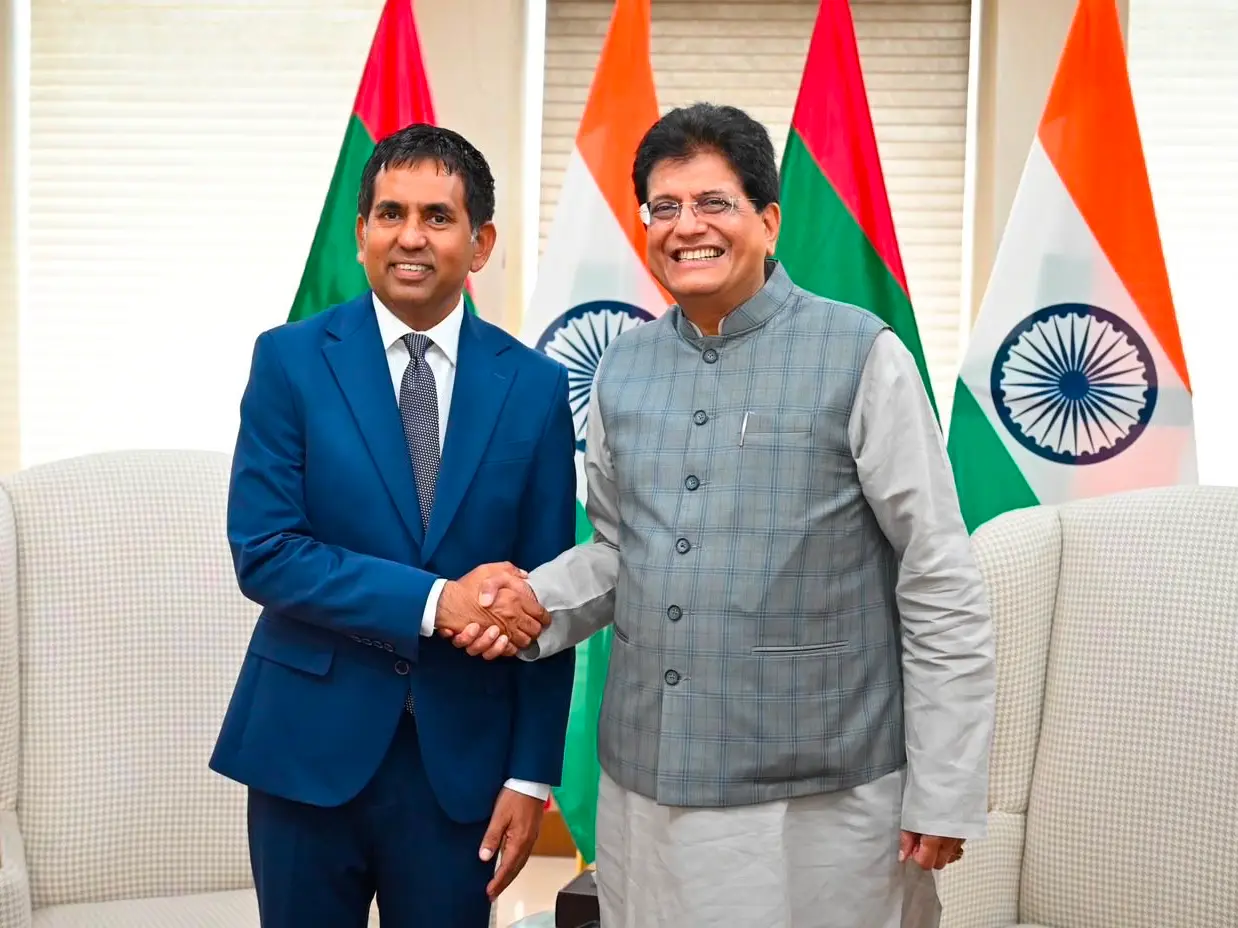
Maldives’ minister Mohamed Saeed with India’s Commerce and Industry Minister Piyush Goyal Photograph: (X\@em_saeed)
For the Maldives, the agreements offer preferential access to India’s vast market for fisheries, seafood, digital services and creative industries, while encouraging Indian investment in tourism, renewable energy, healthcare and education.
Maldives’ senior official Mohamed Saeed has described talks with Indian Commerce and Industry Minister Piyush Goyal as “highly productive”, signalling ongoing momentum in bilateral economic relations. The discussions in New Delhi last week focused on deepening cooperation in the digital economy, tourism connectivity and trade facilitation, building on recent high-level visits by Maldivian President Dr Mohamed Muizzu to India and Prime Minister Narendra Modi to the Maldives.
The Minister of Economic Development Transport and Trade, Saeed said the meetings reaffirmed both countries’ commitment to expanding partnership for “tangible benefits”. Negotiations for a Bilateral Investment Treaty (BIT) have now been concluded, while work on a Free Trade Agreement (FTA) has been fast-tracked.
For the Maldives, the agreements offer preferential access to India’s vast market for fisheries, seafood, digital services and creative industries, while encouraging Indian investment in tourism, renewable energy, healthcare and education. Saeed highlighted the potential for job creation, technology transfer and economic diversification, aligning with President Muizzu’s goal of growing the digital economy to 33% of GDP.
The FTA is expected to streamline customs, reduce trade barriers and boost tourism through better air links. Full interview:
Sidhant Sibal: How was your meeting with Indian Trade minister Piyush Goyal, and what substantive outcomes came from the meeting?
Mohamed Saeed: It was an honour to meet with Piyush Goyal. Our discussions were highly productive and reaffirmed the strong economic partnership between the Maldives and India, as well as our shared commitment to expanding cooperation in areas that will deliver tangible benefits for both countries. The momentum we are witnessing today builds on the successful visit of His Excellency President Dr. Mohamed Muizzu to India and the subsequent visit of His Excellency Prime Minister Narendra Modi to the Maldives. These high-level engagements reaffirmed the shared commitment of both leaders to further deepen our economic partnership and laid the foundation for advancing several important initiatives. A significant focus of our discussions was strengthening the Maldivian economy through deeper economic cooperation. In particular, we explored opportunities to advance collaboration in the digital economy, in line with His Excellency President Dr. Mohamed Muizzu’s vision of increasing the digital economy’s contribution to 33 percent of the national economy. We discussed how closer collaboration with India can support digital transformation, innovation, and the development of a modern, technology-driven economy in the Maldives. Recognising the importance of tourism as the backbone of the Maldivian economy, we also discussed improving air connectivity between our two countries to facilitate greater travel and further boost tourist arrivals. Enhanced connectivity will not only strengthen people-to-people ties but also create new opportunities for trade, investment, and business engagement. In addition, we exchanged views on trade facilitative reforms aimed at making bilateral trade more efficient and predictable. By improving the ease of doing business and addressing practical barriers to trade, we can unlock greater commercial opportunities for businesses in both the Maldives and India. I believe these discussions have laid a strong foundation for even closer economic cooperation between our two countries. As we build on this momentum, I am confident that the outcomes will translate into meaningful opportunities that support the Maldives’ economic development while further strengthening our longstanding partnership with India.
Trending Stories
&imwidth=280&imheight=210&format=webp&quality=medium)
&imwidth=280&imheight=210&format=webp&quality=medium)
&imwidth=280&imheight=210&format=webp&quality=medium)
&imwidth=280&imheight=210&format=webp&quality=medium)
&imwidth=280&imheight=210&format=webp&quality=medium)
&imwidth=280&imheight=210&format=webp&quality=medium)
&imwidth=280&imheight=210&format=webp&quality=medium)
&imwidth=280&imheight=210&format=webp&quality=medium)
&imwidth=280&imheight=210&format=webp&quality=medium)
&imwidth=280&imheight=210&format=webp&quality=medium)
&imwidth=280&imheight=210&format=webp&quality=medium)
&imwidth=280&imheight=210&format=webp&quality=medium)
&imwidth=280&imheight=210&format=webp&quality=medium)
&imwidth=280&imheight=210&format=webp&quality=medium)
&imwidth=280&imheight=210&format=webp&quality=medium)
&imwidth=280&imheight=210&format=webp&quality=medium)
&imwidth=280&imheight=210&format=webp&quality=medium)
&imwidth=280&imheight=210&format=webp&quality=medium)
&imwidth=280&imheight=210&format=webp&quality=medium)
&imwidth=280&imheight=210&format=webp&quality=medium)
&im=FitAndFill=(700,400)&imwidth=280&imheight=210&format=webp&quality=medium)
&imwidth=280&imheight=210&format=webp&quality=medium)
&imwidth=280&imheight=210&format=webp&quality=medium)
&imwidth=280&imheight=210&format=webp&quality=medium)
&imwidth=280&imheight=210&format=webp&quality=medium)
&imwidth=280&imheight=210&format=webp&quality=medium)
&im=FitAndFill=(700,400)&imwidth=280&imheight=210&format=webp&quality=medium)
&imwidth=280&imheight=210&format=webp&quality=medium)
&imwidth=280&imheight=210&format=webp&quality=medium)
&imwidth=280&imheight=210&format=webp&quality=medium)
&imwidth=280&imheight=210&format=webp&quality=medium)
&imwidth=280&imheight=210&format=webp&quality=medium)
&imwidth=280&imheight=210&format=webp&quality=medium)
&imwidth=280&imheight=210&format=webp&quality=medium)
&imwidth=280&imheight=210&format=webp&quality=medium)
&imwidth=280&imheight=210&format=webp&quality=medium)
&imwidth=280&imheight=210&format=webp&quality=medium)
&imwidth=280&imheight=210&format=webp&quality=medium)
Sidhant Sibal: India and the Maldives have concluded negotiations for a bilateral investment treaty (BIT), & fast-tracked negotiations for the proposed free trade agreement (FTA). How will it be significant for both sides, gain essentially for both sides?
Mohamed Saeed: The conclusion of negotiations on the Bilateral Investment Treaty and the significant advancements we have made in fast-tracking the India–Maldives Free Trade Agreement build on the strong foundation established during the visit of His Excellency President Dr. Mohamed Muizzu to India. These efforts have been further reinforced through a series of business forums held in New Delhi, Mumbai, and Bengaluru, during His Excellency, President Dr Muizzu’s visit which have strengthened engagement between the public and private sectors of both countries and created new opportunities for trade and investment. For the Maldives, these initiatives go far beyond increasing trade. They represent a strategic opportunity to diversify our economy, strengthen our economic resilience, and create new avenues for sustainable growth. The FTA will provide Maldivian businesses with preferential access to one of the world’s largest and fastest-growing markets, creating new opportunities for our fisheries sector, value-added seafood products, marine industries, digital services, creative industries, and other emerging sectors. It will also enable our small and medium-sized enterprises to become more competitive, expand into new markets, and integrate more effectively into regional value chains. The Bilateral Investment Treaty will complement these efforts by providing a transparent, predictable, and rules-based framework for investment. This will give investors greater confidence while encouraging increased Indian investment into priority sectors such as tourism, logistics, healthcare, education, renewable energy, and the digital economy. Such investments will generate employment, facilitate technology transfer, enhance skills development, and support innovation, contributing to the Government’s broader objective of building a more diversified and future-ready economy. The Free Trade Agreement will also promote trade facilitation by streamlining customs procedures, strengthening regulatory cooperation, and reducing unnecessary barriers to trade. These measures will lower the cost of doing business, improve supply chain efficiency, and create a more conducive environment for trade and investment, ultimately benefiting businesses and consumers alike. For India, these agreements further strengthen economic engagement with one of its closest maritime partners while creating greater opportunities for Indian businesses and investors. As trade, investment, and business partnerships continue to expand, I believe these agreements will deliver tangible and lasting benefits for both countries. More importantly, they will support the Maldives’ long-term vision of building a resilient, diversified, and globally competitive economy while further strengthening the enduring partnership between the Maldives and India.