Japan sentences Shinzo Abe’s assassin Tetsuya Yamagami to life in prison

&imwidth=600&imheight=450&format=webp&quality=medium "Japan sentences Shinzo Abe’s assassin Tetsuya Yamagami to life in prison")
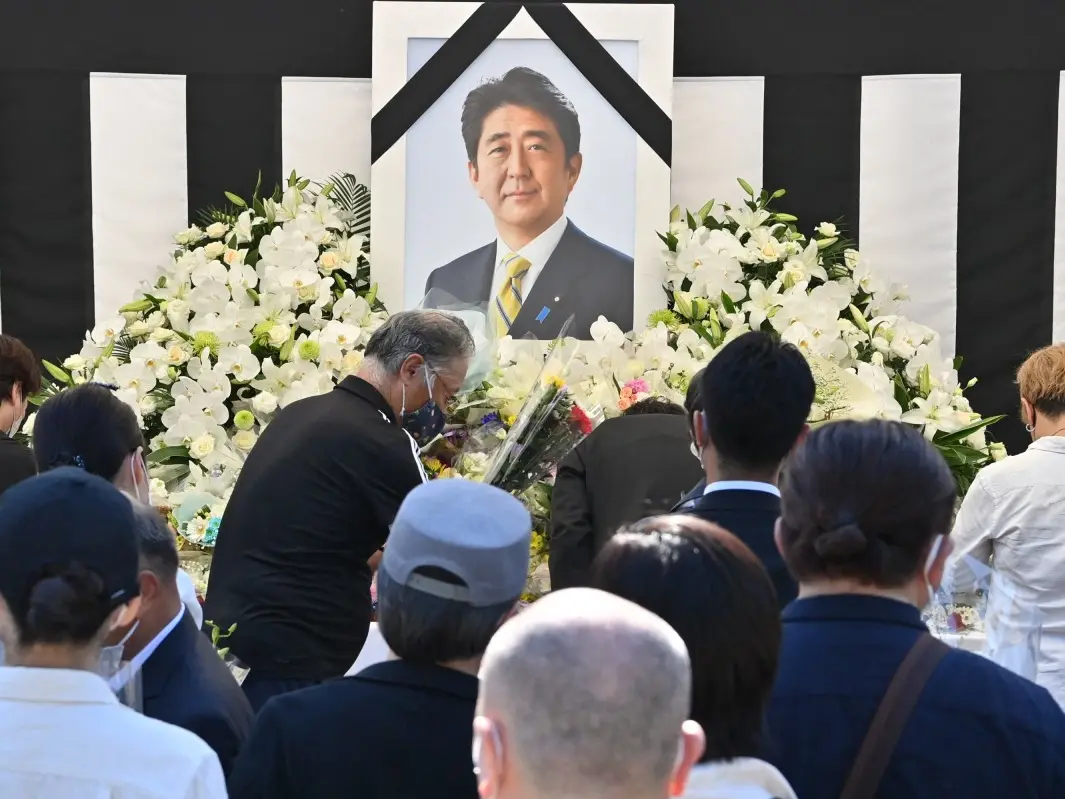
This photo taken on September 27, 2022 shows people offering their respects to former Japanese prime minister Shinzo Abe outside the Nippon Budokan in Tokyo, ahead of his state funeral later in the day. Photograph: (AFP)
A court in Nara sentenced Shinzo Abe’s killer, Tetsuya Yamagami, 45, to life in prison for murder and firearms violations, more than three years after the 2022 assassination. Yamagami had admitted to shooting with a homemade gun.
Shinzo Abe's killer on Wednesday (Jan 21) was sentenced to life in prison, more than three years after the assassination stunned a country unaccustomed to gun violence. A court in Nara found 45-year-old Tetsuya Yamagami guilty of murder and violations of Japan's firearms laws for using a homemade gun to shoot Abe during a campaign speech in July 2022.
Three years since the shocking killing, Abe's killer sentenced
Judge Shinichi Tanaka handed down the sentence following months of testimony that laid bare both the planning behind the attack. Public interest in the case remained intense throughout. As per AFP, long queues formed outside the courthouse on Wednesday morning, with people hoping to secure limited seats inside the courtroom.
Yamagami admitted to killing Abe when the trial opened in October, though he disputed some of the additional charges. Under Japan’s legal system, a defendant’s confession does not halt proceedings. Prosecutors sought a life sentence, calling the killing "unprecedented in our post-war history" and arguing that its social impact was "extremely serious".
The motive
Trending Stories
)
)
)
&im=FitAndFill=(700,400))
)
)
)
)
&im=FitAndFill=(700,400))
)
)
)
)
)
)
)
)
)
)
)
)
)
)
)
)
)
)
)
)
)
)
)
)
)
&im=FitAndFill=(700,400))
)
)
)
&im=FitAndFill=(700,400))
)
Central to the trial was Yamagami’s motive. Prosecutors said he targeted Abe not for personal or ideological reasons tied to policy, but to besmirch the Unification Church, a controversial religious group founded in South Korea in 1954. Yamagami believed the Church had ruined his family financially through relentless donations made by his mother and that "influential politicians" were helping it flourish.
Abe had appeared at events linked to groups associated with the Church, a fact prosecutors said convinced Yamagami that killing such a prominent figure would force public scrutiny of the sect. Yamagami "thought if he killed someone as influential asformer prime minister Abe, he could draw public attention to the Church and fuel public criticism of it," a prosecutor told the church.
In the aftermath of the assassination, investigations revealed extensive links between the Church and lawmakers from the ruling Liberal Democratic Party, leading to the resignation of four cabinet ministers.
The defence urged leniency, describing Yamagami’s upbringing as one marked by what they called religious abuse. His mother’s donations reportedly reached around 100 million yen ($1 million at the time), leaving the family bankrupt. Yamagami abandoned plans for higher education, attempted suicide in 2005, and later lost his brother, who also took his own life.
Prosecutors countered that whatever his past, the crime was carefully planned. Yamagami began handcrafting tthe firearm in 2020, and spent months crafting and test-firing the weapon in remote areas, demonstrating clear premeditation.

