'In the name of the Father'

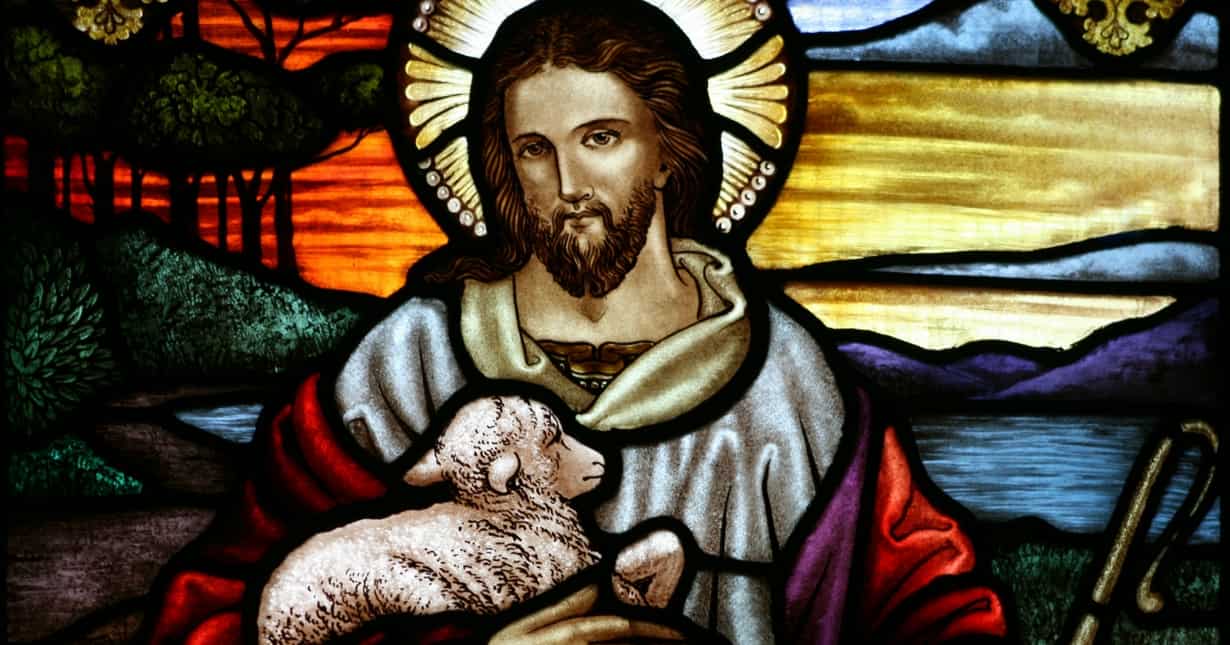
Poles Apart
Religious intolerance has exacerbated polarisation
Buddhism, Christianity, Islam, Jainism, Judaism, Hinduism, Zoroastrianism. That’s in order of the alphabet, not of preference, or greatness. These major world religions were either founded by prophets who trod the earth or, evolved through the mists of ancient mythology. And they contain one, common message: tolerance, even of those who choose another God. In terms of followers, the world’s biggest religions are Christianity, Islam and Hinduism. Then there are other small but equally global faiths, Judaism and Buddhism. The last, especially, is legendary for its consistency in preaching and largely practicing compassion.

Some choose a mosque. Others a temple. Some attend churches, others frequent synagogues. We inhabit the same cities, eat the produce of the same earth, work at similar jobs. We hang out at my place for Diwali, his for Christmas, hers for Id, yours for Rosh Hashanah. At least that’s what most thought till - it all began to change.
It’s Christians vs, Muslims, Muslims vs Jews, Buddhists vs Christians, Hindus vs Muslims today. It’s either my way or - the highway. You either worship my God or - I’ll force you to do so. Religious tolerance is yesterday’s news. Polarisation is the hallmark of today’s world. Be it in society or politics, in the classroom or the boardroom, religious intolerance is polarising the world today.
Christianity:
)
Mushtaq Khan dies at 56: When Welcome actor opened up about his salary for iconic role Ballu
)
US Supreme Court backs Trump administration's use of SAVE database to check voter citizenship
)
Heart of the Beast review: Brad Pitt leads a gripping tale of survival and loyalty
)
Outrage erupts after 3-year-old is married to 60-year-old man in Pakistan, link to her sister's murder being probed
)
Pakistan deploys over 20,000 security personnel as PTI vows march for Imran Khan's release
)
Asian Games: Shooting spree continues as India win silver in women’s 50m rifle 3P team event
)
‘Not just a local tragedy’: Nepal PM Shah warns UN of growing climate threat, says Nepal floods were 'a warning to the world'
)
OpenAI AI Agents hacked 4 websites before Hugging Face, researchers reveal
)
Pentagon quietly adds 37 wounded troops to Iran war tally without explaining when or how
)
Asian Games 2026: India women’s kabaddi team edge Iran 37-34 to clinch 3rd gold medal
)
Saudi Arabia still harbours intent to develop nuclear weapons, reveals US intelligence: Report
&im=FitAndFill=(700,400))
New Friday OTT releases (September 25, 2026): Don’t Be Shy, Hunkkaar: The Roar, Mango Pachcha- 6 movies and TV shows on Netflix, Prime Video and more
)
Yemen's war escalates: Saudi-backed leader calls for general mobilisation against the Houthis
)
‘Attack on Mecca a red line for Pakistan’: Shehbaz Sharif warns Houthis at UN
)
Tesla is preparing something big for Optimus: new Gen 3 models surface in app
)
Did Hitler kill his niece Geli Raubal? Newly found records reopen a 95-year-old mystery
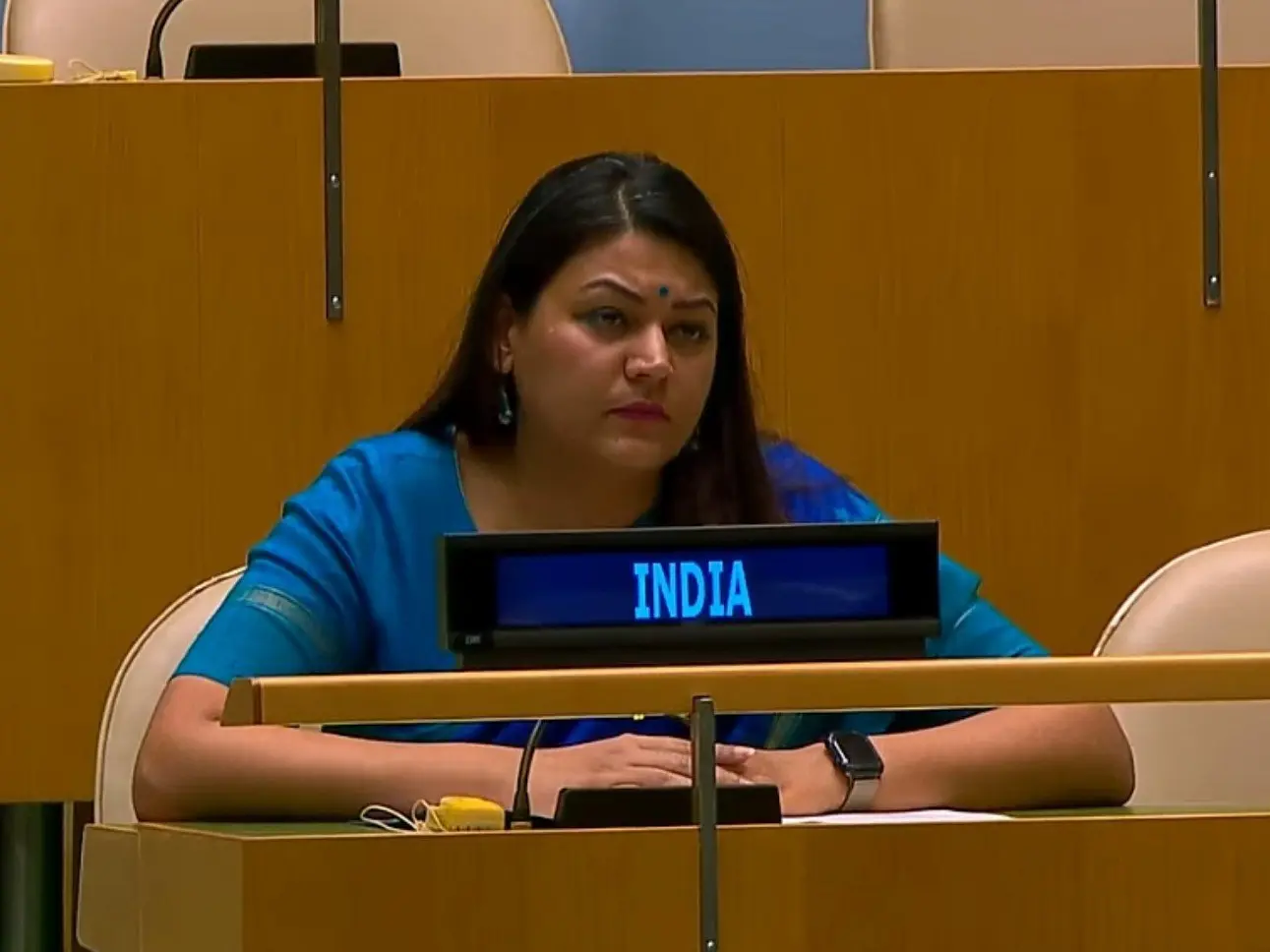)
Indian diplomat Petal Gahlot raises deteriorating situation in Pakistan-occupied Kashmir in right of reply at UN
)
Nigeria Navy moves to boost oil security, tackle crude theft and infrastructure threats
)
Scientists detect first radio signals directly from faraway planet
)
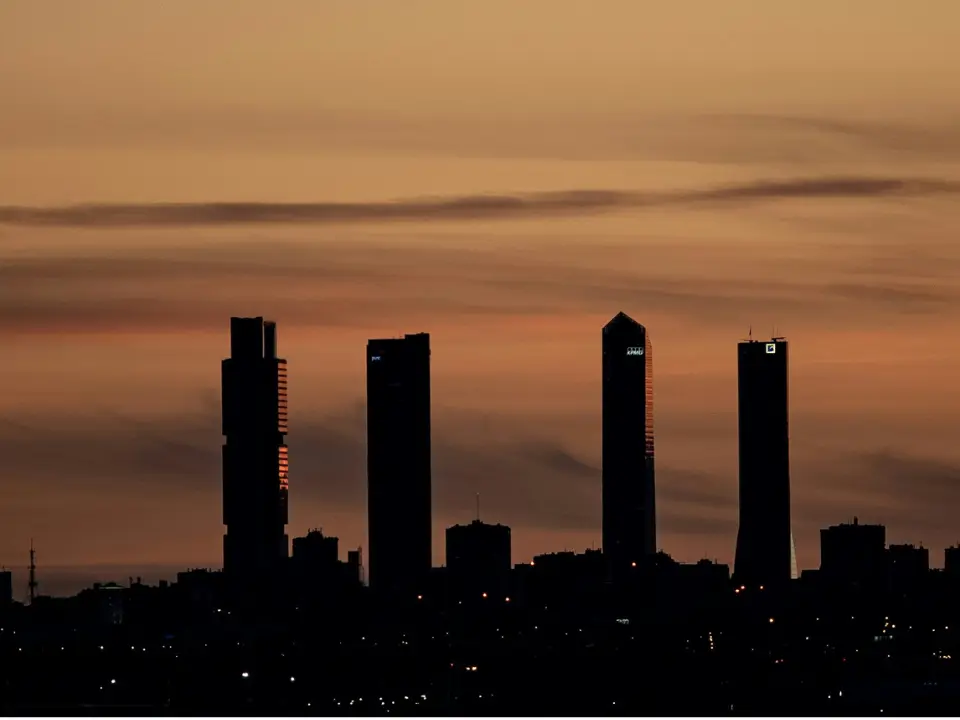
‘It is all possible’: Putin weighs next steps on Ukraine talks, rules out Europe conflict
)
10,000 gather in support of 87-year-old forcefully evicted from home of 71 years
)
India flags brutal violence in Pak-occupied Jammu Kashmir
)
Trump rejects Iran's 7-day ceasefire proposal as US weighs renewed bombing after midterms: Report
)
Gaza's war turned environmental damage into second crisis
)
Saudi oil exports surge despite Iran war
)
Trump-Xi summit wrap: Big pageantry, Iran talks, few major developments and more meetings planned
)
'Making history': Xi Jinping praises Trump as US-China leaders dine at White House
)
India's UN Envoy slams Pakistan: 'They claim security by day, terrorism by night'
)
Jay-Z rape case: Accuser says allegations were false, never met rapper
)
Myanmar training camp case: US national, 6 Ukrainians allowed to meet their families abroad
)
Trump-Xi summit: Xi wraps up us visit with 21-gun salute as Trump, Xi lock in 'strategic stability'
)
'FIRST LOOK from inside Noah’s Ark': Researchers share video from inside mysterious mound in Turkey
)
Cindy Crawford’s son Presley Gerber cremated as death probe continues
)
India's insurance regulator overhauls policies
)
WATCH | As Shehbaz Sharif claims Pakistan’s ‘victory’ during 2025 conflict, Indian diplomat R Srinivas laughs at UN
)
‘Goal is to win it’: Virat Kohli confirms 2027 ODI World Cup will be his final tournament for India
)
'A terrorist country is asking me that question?': Jaishankar hits back at Pakistani journalist at UN; flags attacks on commercial shipping
)
US court backs Pentagon's decision to exclude Anthropic over Claude AI restrictions
"One person believes he may eat anything, while the weak person eats only vegetables, let not the one who abstains pass judgment on the one who eats. Who are you to pass judgment on the servant of another?"That’s the Sixth Book of the New Testament - the Bible, the holy scripture for 2.2 billion people in the world ie, 31.5 per cent of the globe’s population.
But way back in the 12th century, early practitioners of the faith opened one of the worst chapters in the history of Christianity: the Inquisitions. This kind of 'portable' religious court was first held in France. It was a period marked by witch-hunt, lynching and forcible conversions.
The intention was to prosecute Catholics who were attracted by other churches. The practice soon spread to other countries like Spain and Portugal. Those colonial powers took it to the next level. They began to hold harsh, cruel inquisitions in their colonial properties in Africa, Asia and the America. Their favourite targets were those Jews and Muslims who had converted to Christianity only to find that the Catholic colonial masters hauled them again: this time, to question their commitment.
By the end of the 14th century, mistrust had turned into deep hatred. Hundreds of Jews were killed in Spain and later across its South American colonies.
Historians say the Portuguese were far worse. Their inquisition began in 1536 and soon, a cruel and tyrannical version moved to Brazil and - to Goa, their tiny colony on India’s West Coast. In Goa, the chief targets were Hindus and Muslims. First, there were conversions by force. Anyone who resisted was tortured or burnt alive.
Those who converted but practised Indian rituals soon faced harsh inquisitions because the slightest deviation raised doubts about their commitment to Christianity. This tyranny began in 1560 and continued for 252 years. Anyone in Goa could be tortured merely for possessing a Hindu religious symbol. In the late 1800s, the inquisitions also hunted down practitioners of witchcraft, cult-leaders and even bigamists. The horrors are depicted vividly in Guardians of The Dawn, a bestselling historical novel set in Portuguese Goa.
WION spoke to Richard Zimler, its author. "We’re talking about fundamentalists even way back then. That’s the danger and there is a need for all of us to oppose fundamentalism of any kind. The Portuguese would not allow anyone who had converted to Christianity to continue to practice their traditional religion," he says. "My book did very well in Portugal. There were some who said I was painting Portugal in a bad light but I am happy to expose the truth and fight against fundamentalism".
Mindless executions, forcible conversions, unmitigated cruelty and violence towards all who oppose them. These are the hallmarks of terror groups like the Islamic State (I.S.) today. Only their God has a different name, as does their holy book. Zimler agrees that today's violence is nothing but a repeat of the crusades.
The Inquisitions gradually stopped but - anti-semitism persisted. Indeed, hatred for Jews pervaded even literature and the fine arts and didn’t escape many of the world's greatest writers. Like William Shakespeare's clichéd caricature, that of the greedy moneylender, Shylock. Or Charles Dickens' conniving villain, Fagin. That xenophobia reached its pinnacle under Adolf Hitler.
In a cold-blooded and systematic operation that included instruments of torture and factories of death that boggle the mind, 6 million innocent Jewish men, women and children were killed. The Holocaust is one of the worst genocides known in the history of mankind. And three generations of Germans continue to struggle with the question: how could their forefathers have allowed Hitler and his Nazis to carry out this unbridled manslaughter?
"Crimes against humanity should never be forgotten," said German Chancellor Angela Merkel at a sombre memorial service for the victims of the Holocaust. "We have the perpetual responsibility to transmit the knowledge of the atrocities committed in the past and to keep alive their memory."
Unsurprisingly and given that murderous past, Germany and all EU member-states have grounded their constitutions firmly in the tenets of the European Convention on Human Rights. Germany has more than adhered to its own, by taking in millions of refugees fleeing from troubled countries, even economic refugees in the guise of persecution.
But is darkness really a thing of the past in Europe?
There has been a steady rise of the extreme right-wing all over the Continent again in recent years. Its graph rose upwards even and especially during a crippling recession. And when refugees on the run from the US-led war in Syria and Iraq started pouring into Europe in 2015, even Scandinavian countries with the most magnanimous asylum policies, like Sweden, began to see a rise in neo-Nazi popularity.
Today, Europe is simmering with intolerance. Xenophobia even finds representation in various provincial parliaments. There are the Swedish Democrats, there is the Alternative for Germany, there is the Front National in France, there’s the Freedom Party in Austria which is slated to form the next coalition government.
And much like in the United States, there’s a new scapegoat here in Europe too: Muslims. When France’s right-wing leader Marine Le Pen was asked by a television interviewer whether Muslim people should be allowed to wear headscarves, she said, "No I am opposed to headscarves being worn in public places. France is not burqinis on the beach. France is Brigitte Bardot".
Since the September 11 attacks in New York in 2001, there have been more than 900 terror strikes in Europe. The fact that most were at the hands of Islamist terror groups like the Islamic State has only fanned the fires of religious intolerance.
Islam:
"For you is your religion, and for me is my religion". That’s what the Quran says, possibly the most hotly debated holy book of all in recent times. Islamist terrorism is wreaking havoc and spilling rivers of blood across the world. The criminals have several motives, to convert the entire world to Islam and reduce women to subservience.
They swear by the Quran and that’s unfortunate because by doing so, they are maligning millions of tolerant Muslims too. The Quran also makes one thing very clear, "There shall be no compulsion in the religion".
So how and when did this fanaticism begin? This unholy ‘holy war’, or ‘jehad’? Where does the Quran tell its followers to kill innocents in the name of faith? Or is everyone except Islamist terrorists, many of whom are nurtured, trained and armed by Pakistan to target India misreading the Quran?
Are millions of moderate Muslims living in La-La Land? Many scholars point to the West’s own unholy Crusades to enforce Christianity around the world. Some of the unholiest Crusades were in Islamic countries, including in the Middle East, where Islam was born.
Much like the cosmopolitan capitals of the west, Iran was a turnpike on the global map of the swinging sixties, mini skirts, bars, the races, balls, concert halls, fashion, theatre and emancipated women working alongside men, and dressed as they pleased. So when and how, did all that change, and was the change really all that bad? Are those elements really the criteria, as the West likes to believe of a stable and democratic society? When Iran’s Islamic Revolution brought radical changes, were the Iranians quite relieved to be rid of a tyrannical regime?
Thirty-five years ago, the Iranian Revolution changed the fabric of Iranian society. But it also changed the geopolitics of the Middle East and redrew the map of global alliances. It was a populist Shia uprising that replaced the dictatorial monarchy with an Islamic theocracy. And it was unique and surprised the world because it carried none of the usual hallmarks of a revolution: War, financial crisis, national debt or a weak army. A renowned scholar of Iranian studies, Dr Majid Tafreshi spoke to WION and explained what led to the Revolution and beyond.
"In the 40s and 50s, the then-new King Mohammed Reza Shah had good relations with the Olama (Ullema / clergy) but after the death of an Ayatollah in the early 60s, that relationship turned confrontational", says Dr Tafreshi. "Then came the new phenomenon Ayatollah Khomeini. He was a charismatic character and had dedicated followers. Gradually, he became the political and religious leader in Iran. An early confrontation of the Shah in 1963 was put down. But though most people took that as a sign that the Shah was in control, 1963 was, in reality, the beginning of the end of the Shah and monarchy in Iran."
Predictably, the inordinate interest in Iran’s affairs on part of the West. They wanted to control the Shah whose importance had grown along with that of Iran’s oil reserves. A revolution and an ouster of the Shah at that point in time was considered "highly inconvenient". Dr Tafreshi says that this is the reason why the United States government tried hard to prevent an uprising.
But it met with no success. The revolution changed the face of Iran drastically. It also inspired similar uprisings across the Middle East. There is western perception about life in today’s Iran. But there is also the Iranian determination to never bow to western hegemony. To experience what life in Iran is really like, observers would do themselves a favour by avoiding media reports emanating in the West and experiencing it for themselves.
During the 7th century, Caliphate Arabs made their way onwards to Afghanistan. That country’s subsequent history has seen many constitutional changes including the establishment of the Sharia as the state religion in 1931. By 1977, Afghanistan’s constitution had twice been tweaked and made more secular to use a contested word. By then, Afghanistan was fully modelled along the lines of a modern country with a penal code and civil law.
Islamic movements in Afghanistan were born in the late fifties but had remained relatively passive. By the late seventies, they gained in popularity among sections of the population which felt alienated by Western-style democracy. By the time the Soviet Union invaded in support of a communist force in Kabul, there was a solid resurgence of the Islamic movement.
But from the birth of a unified mujahedin to push out a foreign invader to a radical Islamist Al Quaida, Taliban and now the Islamic State is a long leap of the leap for the imagination. But happen it did. Afghanistan changed from a secular state into a turbulent republic, struggling to strike a compromise between conservative Islam and Western-style modernity and remains to this day, in search of its true identity.
Hinduism:
‘’For those who live magnanimously, the entire world is a family.”
This is stated in the Upanishads, Hinduism’s ancient philosophical texts that are said to have been compiled between 800 and 500 BCE, ie, before the birth of Jesus Christ. The message is repeated in various ways in other Hindu religious texts, even after reformers began to question some of its practices and beliefs.
Valmiki’s Ramayana, the epic poem on the banishment of God Rama, describes the god as one "who cared for equality to all". Hinduism has been the mothership of many other new religions – Jainism, Buddhism – and has always been viewed as a way of life, a tolerant philosophy, more than as a diktat to worship a particular set of divinities.
Critics of Hinduism point to its division of society into castes and the inequality that persists between those castes, even in modern India. Other scholars claim that the caste system, in ancient times, was merely an administrative division of people according to their professions. In the seventy years since India’s independence, laws have been passed, the abhorrent concept of ‘untouchability’ long stands banned. Surely a radical improvement? Not according to former police officer and Dalit rights activist, S.R. Darapuri.
"The rigours of the caste system in the past have undoubtedly been very harsh", Darapuri told WION. "There was a lot of distance between various castes and the lower caste was subjected to much discrimination. It is true caste rigors have slackened to an extent in modern India. The caste system doesn’t seem to work particularly in the urban context. In rural India, the law has not been able to overcome caste discrimination.
When untouchability was abolished, the practice decreased to an extent. But it still very much exists. The caste system has the religious sanction of Hinduism. And as long as Hinduism remains in its present form, the caste system will continue because there is no Hindu who has no caste. Indeed, it is the religious duty of a Hindu to observe caste practices and obligations.
Darapuri emphatically dismisses the racial theory on the origin of caste and points to Dr Ambedkar’s book, The Untouchables. In it, the author of India’s Constitution cites the anthropological evidence that lower and higher castes belong to the same racial stock. The activist makes no bones to point that the division of labor theory about caste holds no water too. After all, he argues, if it caste originated only to distinguish professions, then surely it ought to change when an individual change his area of work. "The caste system is one of superiority and inferiority", sums up Darapuri.
Though the caste system can even be discerned even among converts to other religions in India, caste wars were essentially a Hindu phenomenon. To other foreigners like Arab traders who came landed in Kerala, the relationship with the Hindus was good. Soon Arab and Persian traders began to settle in Gujarat. Ismaili Islam took root in the western Indian state.
But by the 12th century, a different kind of Islam, one more strident and eerily similar in zeal and ferocity to the Christian Crusades, began to arrive in Northern India. Sindh in today's Pakistan became a province of the Umayyad caliphate. Then came Mahmud of Ghazni, leaving a bloody trail of loot, plunder and murder along with his way.
He conquered Punjab and his marauding armies even reached Gujarat. By the end of the 12th century, the Delhi Sultanate was born. Then came the Mughals, some cruel and zealous about forcing conversion, others benign and more bent on creating an integrated society.
But those were harsh conquerors, ancient times. By the time the last Mughal was overthrown by the British Empire and before the latter could indulge one more time in its classical game of Divide and Rule that saw India and Pakistan separate, Muslims and Hindus had come together with one common goal: to shake off British rule. And succeed they did. But what happened decades later? For an old mosque to be destroyed? For riots to erupt between India’s Hindus and Muslims? Call it the debut of religion in politics, lay it at opportunism’s door.
Judaism and Buddhism:
"The Torah was given to mankind in order to establish peace," reads an excerpt from Judaism's holy book. But the Jews of Israel continue to live in one of the most turbulent regions in the world. Followers of Judaism don't outnumber Christians, Muslims or Hindus. And yet, it is their controversial politics that continues to take centre-stage in the global arena today.
"One is not called noble who harms living beings", reads the Dhammapada. One of the Buddha's most renowned followers, Emperor Ashoka, carried that message forward: "The faiths of others all deserve to be honoured for one reason or another". If there is one religious teaching that focuses entirely on the principle of tolerance and non-violence, it is Buddhism.
And yet, there are militant factions even among followers of Gautama Buddha. In Sri Lanka, where radicalised monks have targeted Muslims and other minorities. In Myanmar, where the Rohingya Muslim minority has borne the wrath of similarly militant Buddhists. What happened to the world's most gentle religion? If Buddhists can be polarised, is there any hope left for the rest of the world?
This is the second article of WION's three-part series "Poles Apart". The first article was published on 17/10/17.