

&imwidth=800&imheight=600&format=webp&quality=medium "How India, Pakistan, Bangladesh will be affected as Qatar halts gas liquefaction and declares force majeure in LNG trade")
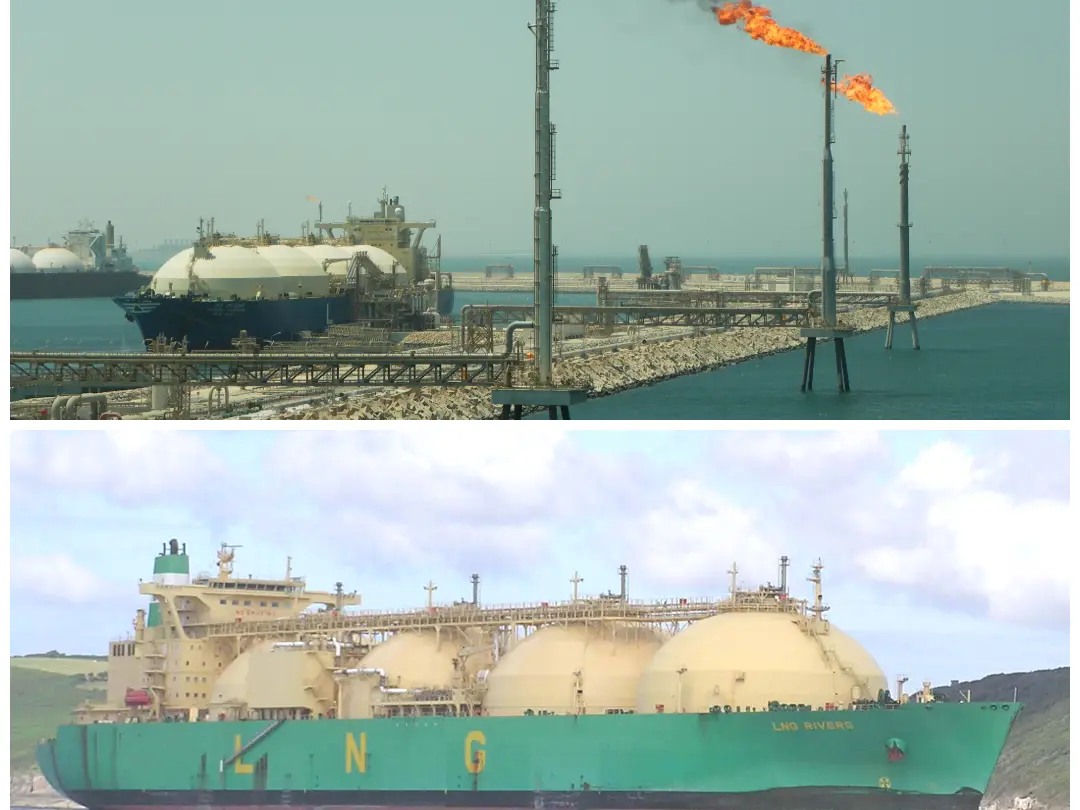
Qatar has halted the liquefaction of natural gas and declared force majeure on exports after missile and drone strikes from Iran damaged key energy facilities amid the Islamic Republic’s ongoing conflict with the US and Israel. Qatar's gas production and supply shutdown coincides with disruptions to tanker traffic in the Strait of Hormuz, a key route handling about 20 per cent of global LNG trade, worsening the supply crunch.
Qatar halts liquefaction of gas
State-owned QatarEnergy shut down liquefaction operations on Wednesday (4 March) at Ras Laffan Industrial City, the world’s largest LNG export hub, and Mesaieed Industrial City following the Iranian attacks. Liquefaction is the industrial process of cooling natural gas to about -162 degrees Celsius to convert it into liquefied natural gas. LNG takes up about 1/600th the volume of gaseous natural gas, making it easier and more economical to store and transport using specialised ships to global markets.
Qatar, one of the world’s largest LNG producers, relies heavily on the liquefaction process at facilities such as Ras Laffan Industrial City to export gas.
Force majeure declared on Qatar gas supplies
Force majeure is a standard mechanism in energy contracts used to handle “acts of God” or geopolitical crises. It is a legal clause that excuses a party from fulfilling its contractual obligations if an unforeseen and uncontrollable event such as war, natural disasters or strikes prevents it from doing so. QatarEnergy has formally notified buyers that it cannot deliver contracted LNG shipments due to external disruptions, without facing penalties or legal liability. Force majeure therefore allows the company to suspend LNG delivery obligations because of the extraordinary circumstances.
Trending Stories
&imwidth=180&imheight=135&format=webp&quality=medium)
Russia-Ukraine drone attacks kill 6, injure 31 across both countries
&imwidth=180&imheight=135&format=webp&quality=medium)
Tu Hai Meri Kiran film review: Sonakshi Sinha and Zaheer Iqbal's thriller gets tangled in its own twists
&imwidth=180&imheight=135&format=webp&quality=medium)
What was the note found inside bag of Class 12 student, who set herself on fire inside Delhi school?
&imwidth=180&imheight=135&format=webp&quality=medium)
AI slop or smart strategy? South African author Coral Hart defends Her 370 AI- assisted books in 20 months
&imwidth=180&imheight=135&format=webp&quality=medium)
NEET protests: Panel to hear evidence on pellet gun use, harassment
&imwidth=180&imheight=135&format=webp&quality=medium)
'Already tired of his 9-to-5': Baby born with a moustache becomes internet sensation, video goes viral | Watch
&imwidth=180&imheight=135&format=webp&quality=medium)
'You’re a horrible little reporter, aren’t you?': Trump snaps at NBC reporter questioning his support for Ramaswamy's campaign ad
&imwidth=180&imheight=135&format=webp&quality=medium)
'If it was up to me, it wouldn't have ended like this': James Anderson opens up on Lancashire exit
&imwidth=180&imheight=135&format=webp&quality=medium)
Farooq Abdullah says Pakistan’s raising of Kashmir issue keeps pressure on Delhi
&imwidth=180&imheight=135&format=webp&quality=medium)
Pezeshkian says Iranians ‘struggling to put food on the table’ as war with US drags on
&imwidth=180&imheight=135&format=webp&quality=medium)
French Open: PV Sindhu storms into final with win over Hina Akechi
&imwidth=180&imheight=135&format=webp&quality=medium)
Train crashes into crane on São Paulo monorail line, wreckage falls onto busy road | VIDEO
&imwidth=180&imheight=135&format=webp&quality=medium)
Bodies of 2 missing Japanese climbers recovered from Himalayan peak
&imwidth=180&imheight=135&format=webp&quality=medium)
Saudi says debris fell in Mecca, Medina after missile interceptions; Houthis deny targeting holy cities
&imwidth=180&imheight=135&format=webp&quality=medium)
An AI that reads your face can now estimate how long you have to live
&imwidth=180&imheight=135&format=webp&quality=medium)
Can Putin cheat death? All about his daughter’s billion-dollar quest for immortality
&imwidth=180&imheight=135&format=webp&quality=medium)
Pakistan airline PIA unveils new crew uniforms, faces online criticism
&imwidth=180&imheight=135&format=webp&quality=medium)
Nagpur man fails to pay rent, allegedly prints fake Rs 500 notes worth Rs 37 lakh
&imwidth=180&imheight=135&format=webp&quality=medium)
J-20 designers plan to put radar into aircraft wing; strategy to expand coverage during air combat
&im=FitAndFill=(700,400)&imwidth=180&imheight=135&format=webp&quality=medium)
New Friday OTT releases (October 23, 2026): Gajab Raat, Dorothy, Chaar Yaar- Watch these 6 new movies and TV shows on Netflix, Prime Video and more
&imwidth=180&imheight=135&format=webp&quality=medium)
Frontier AIs keep escaping their test cages! The industry still can't reliably stop them
&imwidth=180&imheight=135&format=webp&quality=medium)
‘Maybe play one more season’: MS Dhoni to decide on his IPL future before December
&imwidth=180&imheight=135&format=webp&quality=medium)
‘Modi ka baap bhi jayega,’ Kharge loses cool at party event in Patna; BJP slams him
&imwidth=180&imheight=135&format=webp&quality=medium)
Viral video shows cross falling on Colombia priest, no official confirmation | WATCH
&imwidth=180&imheight=135&format=webp&quality=medium)
Chorbagan stampede: A week later, the strangest visarjan Kolkata has seen
&imwidth=180&imheight=135&format=webp&quality=medium)
China's dancing robot turns violent bodyguard, lifts cars and fights intruders - Watch
&imwidth=180&imheight=135&format=webp&quality=medium)
‘Saddam Hussein opened a cheesecake factory’: Obama mocks Trump’s White House renovations; defends Abdul El-Sayed
&imwidth=180&imheight=135&format=webp&quality=medium)
France protests: 135 arrested, weapons seized as fresh demonstrations erupt amid heavy security
&imwidth=180&imheight=135&format=webp&quality=medium)
'Killing people never allowed': Elon Musk admits restricting Starlink in Ukraine, explains why
&imwidth=180&imheight=135&format=webp&quality=medium)
Telangana unveils AI avatar of IT minister D Sridhar Babu at Hyderabad DevFest 2026
&imwidth=180&imheight=135&format=webp&quality=medium)
Shilpa Rao’s performance cut short at Mumbai event, organisers react to backlash
&imwidth=180&imheight=135&format=webp&quality=medium)
Britain is building the world's first AI biosecurity lab, with OpenAI and Anthropic inside
&imwidth=180&imheight=135&format=webp&quality=medium)
Why Europe’s protests are about more than austerity and rising costs
&imwidth=180&imheight=135&format=webp&quality=medium)
WATCH: Thousands across Manipur bang plates, beat drums in "noise protest"
&imwidth=180&imheight=135&format=webp&quality=medium)
AI just found a flaw in software running most of the web! One request hijacks the server
&imwidth=180&imheight=135&format=webp&quality=medium)
Spanish reporter swept by giant wave while reporting on dangerous sea conditions | WATCH
Qatar gas supply halt will hit India, Pakistan and Bangladesh hard
Qatar supplies nearly half of India’s annual LNG imports of around 27 million tonnes. India’s city gas distribution sector, which relies on LNG for compressed natural gas (CNG) and piped cooking gas, could face a crisis with supply cuts of up to 40 per cent if alternatives are not secured fast enough. India is seeking cargoes from the spot market, where prices have surged by up to 50 per cent and shipping rates have doubled to about $200,000 per tanker. If the situation persists, inflation and disruption to industrial output could follow.
Bangladesh depends on Qatar and the UAE for nearly 72 per cent of its LNG imports. Severe shortages could lead to prolonged power outages in the country and greater use of coal. Bangladesh may also need to import more electricity from India to mitigate the impact.
Nearly all of Pakistan’s LNG imports come from Qatar and the UAE, making it extremely vulnerable to supply disruptions from Gulf producers. Increasing domestic natural gas production and reducing regasification demand are possible responses. Greater use of solar energy could help prevent daytime power cuts, but overall shortages could still lead to outages and economic strain for Pakistan.
How global LNG supplies will be hit by Qatar moves
The shutdown will be a major shock to global energy markets as Qatar supplies roughly 20 per cent of the world’s LNG. The crisis has already pushed up gas prices in Europe and Asia by as much as 93 per cent.
Asia, which accounts for nearly 82 per cent of Qatar’s LNG exports, will be the hardest hit, particularly Japan, South Korea and China besides India, Pakistan and Bangladesh.
European buyers including the UK, Italy and Belgium also face supply pressure and higher prices.
Analysts said other major producers such as the US and Australia, have limited spare capacity to quickly replace Qatar’s lost exports.
When is Qatar LNG supply likely to resume?
The halt in liquefaction is intended to allow initial repairs and safety checks at the affected production facilities. Reports say this process is expected to take at least two weeks.
Another two weeks will likely be required to restore full production after liquefaction resumes. In total, the supply disruption could last around one month or longer.
Disclaimer: WION takes utmost care to accurately and responsibly report ongoing conflicts in West Asia involving Israel, Iran, US, Gulf nations and non-state actors like Hezbollah, Hamas, Houthis, Islamic State, and others. Claims and counterclaims, disinformation and misinformation are being made online and offline. Given this context, WION cannot independently verify the authenticity of all statements, social media posts, photos and videos.

