Georges Abdallah, 'the longest prisoner of Israeli-Palestinian conflict', freed by France after 41 years

&imwidth=600&imheight=450&format=webp&quality=medium "Georges Abdallah, 'the longest prisoner of Israeli-Palestinian conflict', freed by France after 41 years")
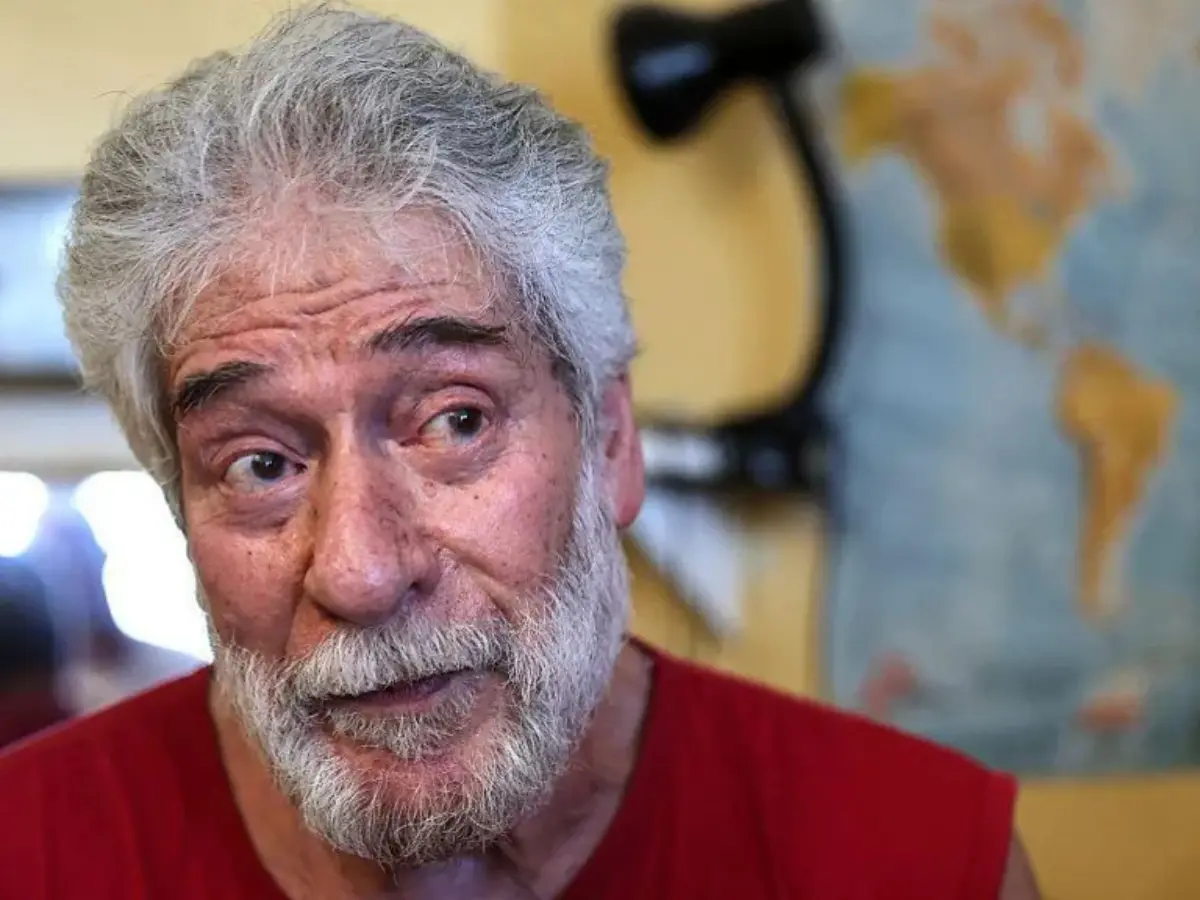
Georges Abdallah Photograph: (AFP)
Georges Abdallah was convicted in 1987 for complicity in the murders in France of two diplomats – one American, one Israeli
Georges Abdallah, a 74-year-old Lebanese schoolteacher who became a left-wing symbol for the Palestinian cause, has been released by France on Friday (July 25) after spending 41 years behind bars. Described by his lawyer as "the man who has spent the longest time in prison for events connected to the Israeli-Palestinian conflict," Abdallah left jail in the south of France on Friday morning and was set to be placed on a flight directly to Beirut.
Abdallah was convicted in 1987 of complicity in the murders, in France, of two diplomats – one American, one Israeli. Still, his release remained a cause celebre among activists in the Marxist-Leninist left with whom he still identifies.
His bearded face, scowling behind banners, still looked out over left-wing protests; and every year demonstrators would assemble to call for his liberty outside his Pyrenean prison. Three left-wing French municipalities declared him an "honorary citizen".
Though eligible for parole since 1999, he had successive applications for freedom being turned down. This, according to his supporters, was due to pressure exerted by the US and Israel on the French government. Interviewed recently by the French news agency AFP at his cell in Lannemazan jail, he said he had kept sane by focusing on the Palestinian "struggle". "If I had not had that… well, 40 years – it can turn your brain to mush," he was quoted saying.
On the walls of his prison cell, Abdallah had a photo of Che Guevara, a 1960s revolutionary, and postcards from admirers everywhere. A desk was piled with stacks of newspapers. Born in 1951 to a Christian family in northern Lebanon, in the late 1970s Abdallah assisted in establishing the Lebanese Armed Revolutionary Factions (LARF) – a tiny Marxist organisation committed to fighting Israel and its closest ally, the United States.
Trending Stories
)
)
)
)
)
)
)
)
)
)
)
)
)
)
)
)
)
)
)
)
)
)
)
&im=FitAndFill=(700,400))
)
)
)
)
)
)
)
)
)
&im=FitAndFill=(700,400))
)
)
&im=FitAndFill=(700,400))
)
Lebanon was mired in a civil war at the time. In 1978 and once more in 1982 Israel occupied south Lebanon to fight Palestinian militants based there. Abdallah's group planned to attack Israeli and American targets in Europe, and attempted five attacks in France. In 1982, members of the group shot and murdered US diplomat Charles Ray in Strasbourg, and Israeli diplomat Yakov Barsimantov in Paris.
Further, a car bomb attributed to LARF killed two French bomb-disposal technicians.
Abdallah was arrested in Lyon in 1984. Tailled by French intelligence agents, he believed he was being pursued by Israeli hitmen and turned himself in at a police station. At first, he was charged with merely possessing false passports and criminal association. Soon after a French national was taken hostage in northern Lebanon, and the French secret service moved into a negotiation through Algeria to stage an exchange.
The French citizen was released, but the night before Abdallah was to be released police in Paris discovered a stash of weapons at his apartment, including the gun that had been used to murder the diplomats. This rendered his release impossible.
Two years on during the build up to his trial, Paris was targeted by a series of terrorist attacks which claimed 13 lives. These were attributed by politicians and the media to supporters of Abdallah attempting to bully France into releasing him. It later transpired that in reality they were carried out by the Lebanese Shia militant group Hezbollah, on behalf of Iran.
At the trial, Abdallah had insisted on not being involved in the killings but rationalised their rightness. He was sentenced to life.
"This is a triumph for justice but also a political scandal that he was not let go before, due to the conduct of the United States and successive French presidents," said his lawyer Jean-Louis Chalanset. One of those who lobbied for his release was 2022 Nobel literature prize winner Annie Ernaux, who described him as a "victim of state justice of which France should be ashamed".

