From weed joke to agreed deal: Inside Musk's $44 billion Twitter buyout

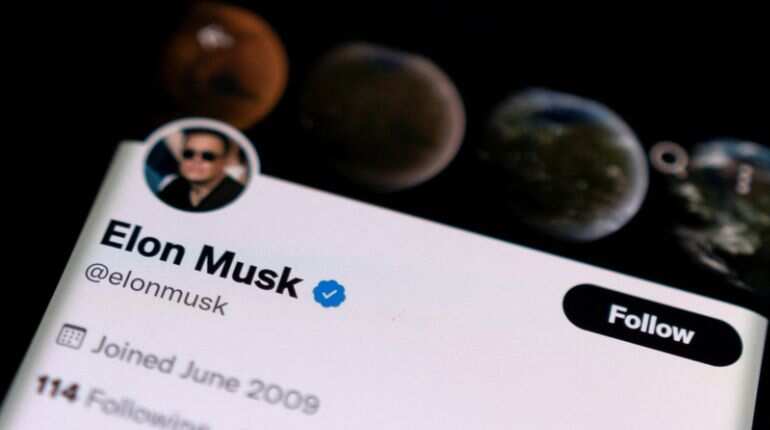
elonmusk- twitter
TwitterInc and its advisers were not sure at first how seriously to take him.
ElonMusk's$54.20-per-share offer price for the social media company on April 14 contained the digits 420, a reference to a trope for smoking marijuana. Financing documents he submitted last week in support of his bid were signed on April 20, abbreviated as 4/20.
Such references harken back to his 2018 "funding secured" tweet stating that he was considering taking electric car maker Tesla Inc private for $420 per share. Tesla and Musk subsequentlyagreedto pay $20 million each to settle charges that he misled investors.

Musk said he rounded the price up to $420 because he had recently learned about the number's significance in marijuana culture and thought his girlfriend would find it funny, "which admittedly is not a great reason to pick a price," according to a US Securities and Exchange Commission complaint filed at the time.
Discussions withTwitterturned serious, however, when the San Francisco-based company's advisers, including bankers at Goldman Sachs Group Inc, JPMorgan Chase & Co and Allen & Co, started poring throughMusk'sfinancing documents in support of his $44billionbid on April 21.
Many of the biggest Wall Street banks, led by Morgan Stanley, Bank of America Corp and Barclays Plc, committed to providing $25.5billionin debt, some of it secured againstTwitterand some of it tied toMusk'sTesla stock. Musk himself committed another $21billionin cash.
Twitter's board, which was still reviewingMusk'sbid after he had presented it with little detail a week earlier, went into overdrive. It rushed to complete an analysis to assign a value on its standalone plan which Parag Agrawal, five months into his role asTwitterchief executive, was delivering on. And it asked its bankers to triple-check if there was any other bidder who could offer more than Musk.
This account of howMusk'sdealforTwittercame together is based on interviews with four people familiar with the negotiations, who requested anonymity to discuss them.
Representatives for Musk,Twitterand the banks either declined to comment or did not respond to requests for comment.
Overseeingdealnegotiations forTwitterwas its board chairman Bret Taylor, who is also co-chief executive of Salesforce. It became clear toTwitter's board directors there was no white knight, as technology and media companies fretted about the potential antitrust risk, while private equity firms could not saddle the company with enough debt to juice returns, given its limited cash flow.
Watch |'Musk may control content for his own purpose,' mixed reactions on Elon Musk's Twitter acquisition
Musk had said he did not care about the economics of thedeal"at all" and was pursuingTwitterto advance free speech, disillusioned by many of its platform moderation decisions.
His bid was not rich by historical standards. While it came with a 38% premium to whereTwittershares were trading before April 4, when he emerged as aTwittershareholder, the stock had traded higher than his offer for most of last year.
Twitter's bankers projected, however, that even if the company did as well as last year, investors would value it less, because the advertising market in the social media world had become more price-competitive. The board did not believe Agrawal could bring the stock back to $54.20 anytime soon.
That view was shared by manyTwittershareholders, including big active mutual funds, who reached out toTwitterafter Musk showed he had financing for his offer. These shareholders asked the company not to let the opportunity for adealslip away.
IfTwitterignored Musk, some of the investors threatened to side with him in a tender offer that he had said he was exploring. A poison pill thatTwitterhad adopted would protect the companyfroma takeover, but it would not spare itfrompublicly losing the support of its shareholders.
Bleak backdrop
The stars aligned for Musk in more ways. Technology stocks plunged for most of April amid concerns over inflation and an economic slowdown - a bleak backdrop forTwitter.
Musk also had some allies onTwitter's board. Egon Durban, the co-head of private equity firm Silver Lake who partnered with Musk on his abandoned bid for Tesla, serves onTwitter's board. Jack Dorsey, another board director and the company's former CEO, sharesMusk'spassion for cryptocurrencies and has often exchanged compliments with him online.
"Elon is the singular solution I trust. I trust his mission to extend the light of consciousness," Dorsey tweeted on Monday, adding that takingTwitter"backfromWall Street is the correct first step."
Twitter's advisers met with Musk on Sunday and tried to convince him to raise his offer, but he stuck to his position that the $54.20-per-share offer was his "best and final".
As a small concession, Muskagreedto offerTwittera chunky break-up fee in the event he changed his mind and walked away. The exact fee is expected to be disclosed in regulatory filings on Tuesday.
In the small hours of Monday, the two sidesagreedto adeal, andTwitter's board met to approve it later in the day.Twittershares, which had ended trading at $45.08 the day that Musk unveiled his bid, closed at $51.70, only a small discount to thedealprice.
Four years after walking awayfroma $72billionacquisition of Tesla he once contemplated, the world's richest person now has a megadealto brag about.
"I hope that even my worst critics remain onTwitter, because that is what free speech means," Musk tweeted on Monday.

