EXPLAINED: Who are the major armed groups fighting Afghanistan's Taliban regime?

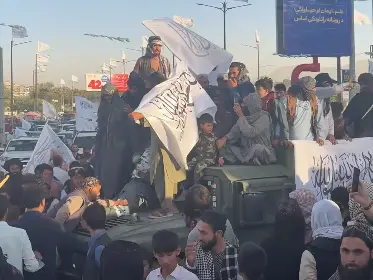&imwidth=600&imheight=450&format=webp&quality=medium "EXPLAINED: Who are the major armed groups fighting Afghanistan's Taliban regime?")
Representational image. Photograph: (X/@ElianPeltier)
The UN reported claims that at least 22 armed groups had been opposing the Taliban by September 2022. UNAMA recorded that three main groups (the NRF, the Afghanistan Freedom Front (AFF) and the Afghanistan Liberation Movement (ALM)) had launched attacks in eight provinces in 2023.
Afghanistan's Taliban regime is confronting one of its most serious internal security challenges since seizing power in 2021, as armed resistance activity intensifies across the country's north and northeast. Reports indicate that over 10 organisations are launching attacks against citizens, where ministers and mayors have also been killed.
Who is fighting the Taliban?
Ever since the Taliban regime came into power, several armed factions have been reportedly active against them; however, a handful dominate the fighting. The UN reported claims that at least 22 armed groups had been opposing the Taliban in 26 provinces by September 2022. UNAMA recorded that three main groups (the NRF, the Afghanistan Freedom Front (AFF) and the Afghanistan Liberation Movement (ALM)) had launched attacks in eight provinces in 2023.
The National Resistance Front (NRF), led by Ahmad Massoud, remains the most established, operating chiefly out of Panjshir and neighbouring provinces. Basically, the NRF is led from headquarters located in Tajikistan.
The NRF emerged in the aftermath of the Taliban's takeover of Kabul in August 2021. Its ranks are said to bring together ordinary civilians, veterans of the former Afghan security forces, many of them junior officers, and figures from past opposition movements, united by their backing of the previous Islamic Republic and firm opposition to Taliban rule.
In addition, anti-Taliban resistance groups like the Turkestan Freedom Tigers, the National Resistance Council, the National Liberation Front of Afghanistan (NLFA), the Unknown Soldiers of Hazaristan, the allegedly Hazara-centred Freedom and Democracy Front and the Freedom Corps are also active.
Trending Stories
)
)
)
)
)
)
)
)
)
)
)
)
)
)
)
)
)
)
)
)
)
)
)
)
)
)
)
)
)
)
)
)
)
)
&im=FitAndFill=(700,400))
)
)
)
)
Other groups also include, the Afghanistan Freedom Front (AFF), made up largely of former republic-era security personnel, which has escalated from guerrilla tactics to direct confrontations, with a senior AFF figure saying the group has moved into direct combat against the Taliban rather than relying solely on guerrilla warfare.
Newer, lesser-known outfits such as Sepahian-e Mihan (Patriotic Soldiers Front) and the Homeland Soldiers Front have also claimed significant operations, alongside the Islamic State-Khorasan (IS-K), which continues to target Taliban officials directly. The epicentre of the violence is Afghanistan's mountainous northeast, particularly in Badakhshan, Takhar, Panjshir and Baghlan.
Why has Badakhshan become a hotspot?
Several factors intersect in Badakhshan to make it the hotspot, including a predominantly ethnic-Tajik population historically resistant to Taliban (mostly Pashtun) rule, rugged terrain suited to guerrilla warfare, and fierce disputes over lucrative gold and lapis lazuli mines. Internal Taliban strains have compounded this; dissident commander Juma Khan Fateh, once a Taliban deputy governor, has turned against the movement amid disputes over mining control, triggering clashes that resistance groups have exploited. Two senior Taliban-appointed officials in Badakhshan, including the Faizabad mayor, have been assassinated within weeks of each other.
Why does Taliban control still hold?
Despite mounting pressure, the opposition remains fragmented, with distinct commands, limited coordination, and no unified political platform, historically the resistance's core weakness. The Taliban, meanwhile, has responded by rushing reinforcements and helicopters to contested districts and leaning on its still-superior manpower and weaponry.

